 Listicle
Are Dystopian Fashion Trends Worth Wearing Every Day?
Last Updated: November 3, 2026
Quick Summary
Dystopian fashion is a worn, utilitarian streetwear style inspired by post-apocalyptic and cyberpunk imagery, built on layering, distressed fabrics, and muted earth tones. Wear it every day by building a three-layer outfit around one statement piece, such as a heavyweight graphic tee.
- Build outfits in three layers: a fitted base, a relaxed middle, and an outer shell.
- Distress heavyweight cotton slowly, checking progress often, and stop before the garment loses structure.
- Use one neon or metallic accent against muted charcoal, olive, rust, or sand tones.
- Keep one fitted anchor in every look to avoid a flattened silhouette.
- Spend on outerwear and footwear, since they shape the silhouette and take the most wear.
Table of Contents
- What Dystopian Fashion Means and Where It Comes From
- The Core Elements of Dystopian Streetwear
- Dystopian Outfits for Women: Layering Formulas for Different Climates and Budgets
- Dystopian Outfits for Men: Utility Layers and Graphic Statement Pieces
- Techwear Streetwear vs. Dystopian Style: Where the Lines Blur
- Fit, Comfort and Responsible Care for Statement Pieces
- Building Your Own Dystopian Wardrobe Starting With One Graphic Tee
- Frequently Asked Questions
What Dystopian Fashion Means and Where It Comes From
Dystopian fashion is a style built around worn-down, utilitarian, and futuristic clothing that imagines life after collapse or under heavy control. It borrows from post-apocalyptic films, cyberpunk fiction, military surplus, and street culture. Many people wear it because it looks rugged and deliberate rather than polished. The aesthetic is less about a single look and more about a mood: resilience, rebellion, and a sense that the clothes have a history.
The style grew out of science fiction and film long before it reached everyday streetwear. Cyberpunk imagery of neon-lit cities and utility-heavy costumes shaped how many designers picture the future. Over time, those ideas moved from screens into shops and street corners.
The Core Elements of Dystopian Streetwear
Most dystopian outfits share a few recognizable traits. Layering is central, with pieces that look practical enough to survive a rough day. Silhouettes tend to be oversized or relaxed, and color palettes lean dark. Details such as straps, hardware, and weathered textures do most of the visual work.
Distressed, Torn and Weathered Fabrics
Distressing is where the aesthetic feels most lived-in. Fabrics are abraded, faded, or torn on purpose to suggest wear. Heavyweight cotton is a common choice for this look because it holds its shape. Start with a sturdy base. Thin, cheap fabric tears in ways that look accidental rather than styled.
If you distress clothing yourself, go slowly. Sand small areas, check your progress often, and stop before the garment loses structure.
Muted Earth Tones with Neon and Metallic Accents
Most dystopian palettes start with charcoal, olive, rust, sand, and washed black. These tones read as industrial and weathered. A single neon or metallic accent, such as a bright graphic, a silver buckle, or a neon-trimmed strap, can carry the outfit. Using one accent keeps the look focused. Using five turns it into costume.
Dystopian Outfits for Women: Layering Formulas for Different Climates and Budgets
The practical question, how do you actually build a wearable look for your climate, your budget, and your body, is worth answering directly. The formulas below treat dystopian streetwear as a layering system: a base, a middle, and an outer shell, with hardware and graphics doing the storytelling.
The three-layer formula
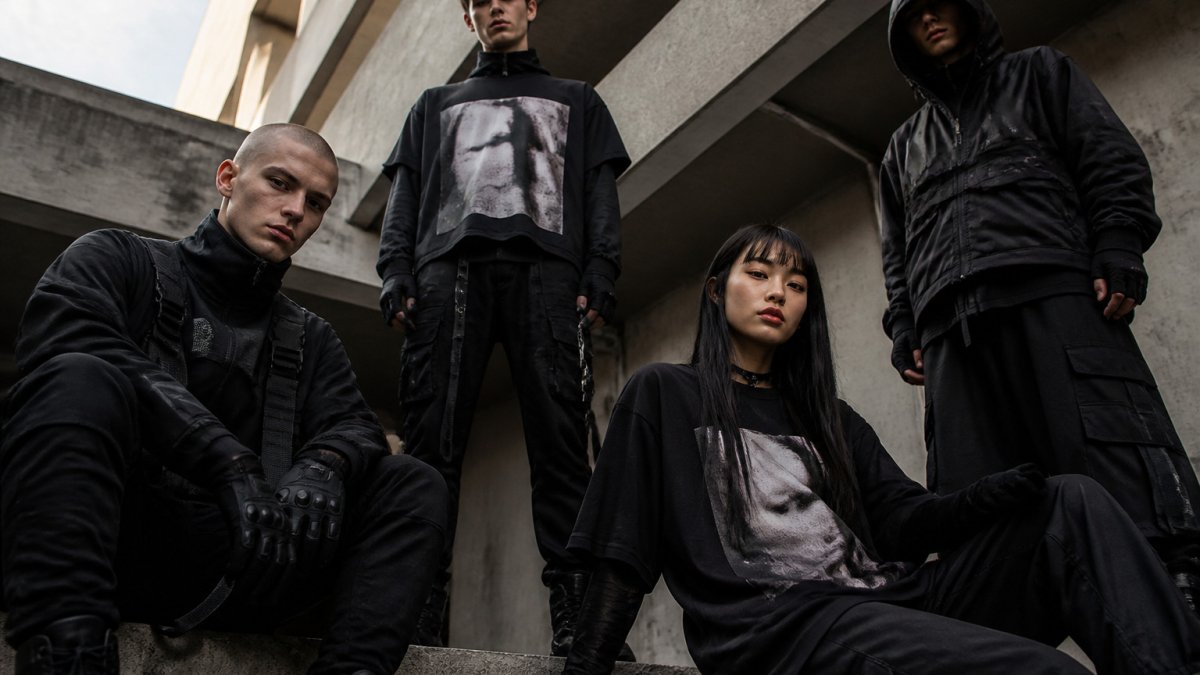
Start with a fitted base layer (a ribbed tank or long-sleeve tee) that sits close to the skin. Add a middle layer, a relaxed heavyweight graphic tee, a cropped utility vest, or a boxy overshirt. Finish with an outer shell: a technical jacket, a distressed denim jacket, or a military-style parka. The middle layer is where the dystopian read lives, so let the graphic or the distressing carry the outfit and keep the base and shell quiet.
Warm climates
In heat, drop the shell and treat the middle layer as the outer layer. A relaxed heavyweight tee over a fitted tank, paired with wide-leg cargo trousers or a utility midi skirt, keeps the silhouette intentional without trapping heat. Choose lighter colors within the muted range, sand, washed olive, faded charcoal, because dark heavy layers read as costume in direct sun. Footwear can shift from boots to chunky sneakers or strapped sandals without losing the look.
Cold climates
Cold weather is where dystopian layering looks most natural. Build outward: thermal base, heavyweight graphic tee, fleece or quilted mid-layer, then a technical shell or long coat. The key is varying texture, smooth shell over nubby fleece over cotton, so the layers read as deliberate rather than bulky. Add one hardware element, such as a carabiner at the waist or a buckled strap across the chest, to tie the stack together.
Budget tiers
A convincing look does not require a large spend. At the entry level, a single heavyweight graphic tee, thrifted cargo pants, and a secondhand utility jacket cover the essentials. At the mid level, add one purpose-built piece, a technical shell or a proper pair of combat boots, where function shows. At the higher level, spend on outerwear and footwear, since those pieces define the silhouette and take the most wear. A practical approach is to spend where fabric meets skin and where the cut shapes the body, and to save on accessories and layers that change often.
Fit across body types
The oversized silhouette is the hardest part to get right. Petite frames often look best when the oversized piece is the top and the bottom stays closer to the leg, so the volume has a counterweight. Taller or broader frames can carry volume top and bottom, but should keep one element fitted, usually the base layer or the waistband, to avoid a shapeless read. Curvier frames often find that a relaxed tee with a slight drop shoulder drapes cleanly over a fitted base, while a cropped utility vest defines the waist without cinching. The goal is drape, not disguise: check shoulder seams, sleeve length, and hem placement before committing.
Watch out: stacking too many oversized pieces at once can flatten the silhouette. Keep one fitted anchor in every look.
Dystopian Outfits for Men: Utility Layers and Graphic Statement Pieces
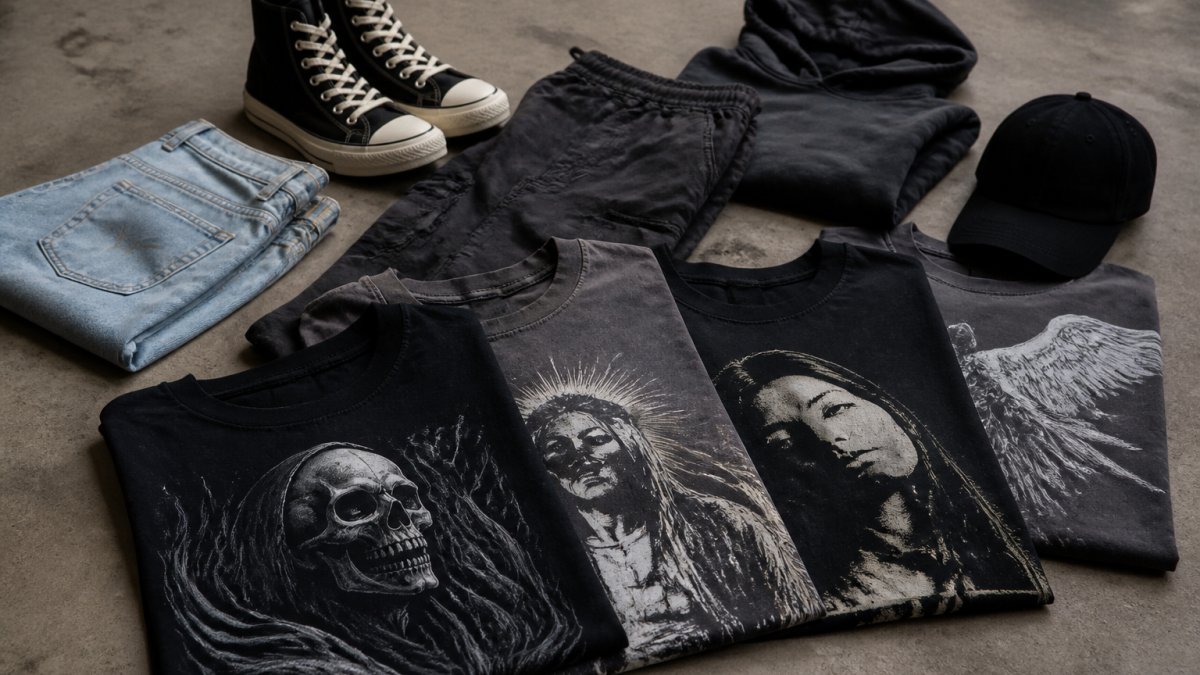
For men, the strongest dystopian outfits usually center on one statement piece. An oversized heavyweight graphic tee works well here because the artwork can carry the look while the rest of the outfit stays simple. Layer it under an open utility jacket or a sleeveless vest, then pair it with dark straight-leg or cargo trousers and grounded footwear.
Graphic T‑Shirt — Dark Samurai Illustration Back Print →
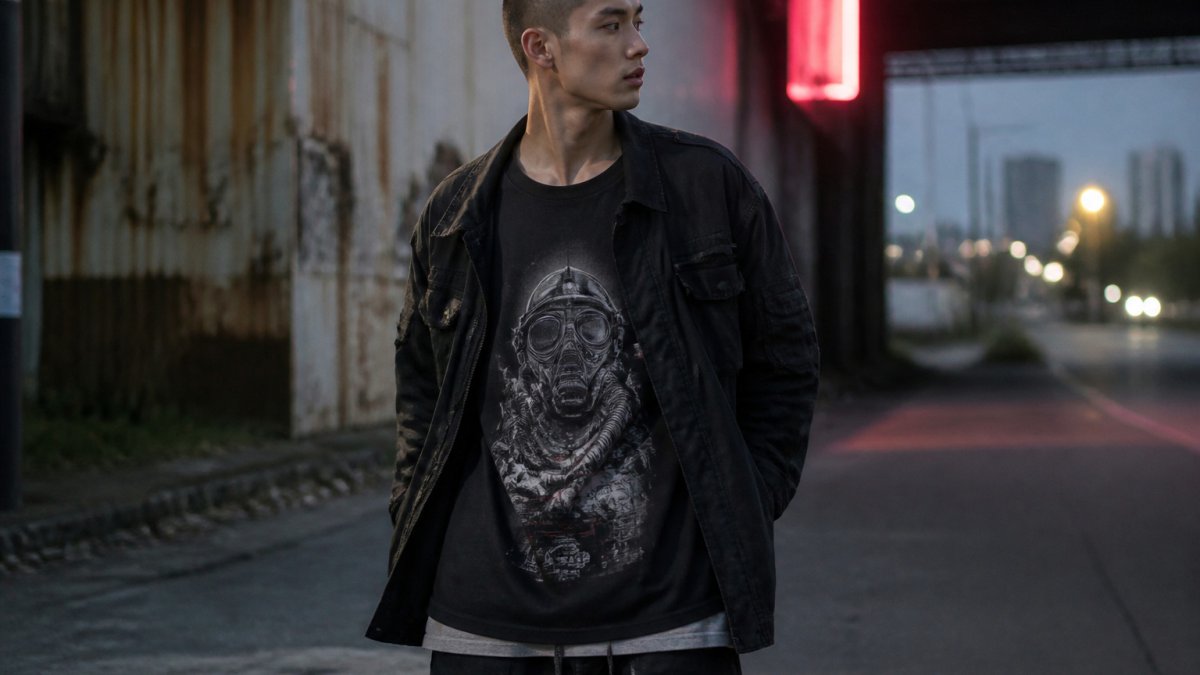
Keep the palette restrained. Let the graphic be the only loud element, and balance it with muted layers.
Techwear Streetwear vs. Dystopian Style: Where the Lines Blur
Dystopian streetwear sits in a crowded neighborhood. Techwear, cyberpunk, grunge, and post-apocalyptic style all overlap with it, and most guides blur them together. Telling them apart helps you choose a direction and combine elements without the outfit reading as confused. For a closer look at the differences, read cyberpunk fashion vs techwear style: key differences.
The four adjacent aesthetics
Techwear prioritizes performance: technical fabrics, sealed seams, articulated knees, and pocket systems built for function. Its palette is usually monochrome and its silhouette engineered. Dystopian style borrows techwear's utility language but prioritizes atmosphere, worn textures, visible repair, and a sense that the clothes have survived something. Cyberpunk leans futuristic and synthetic: neon accents, reflective panels, and high-contrast color against black. Grunge is rooted in the 1990s and in music culture: flannel, ripped denim, band graphics, and a deliberately unkempt fit. Post-apocalyptic style is the most theatrical of the group, with heavy distressing, improvised armor, and scavenged layering that often reads as costume off the runway.
A quick comparison
| Aesthetic | Priority | Signature pieces | Palette |
|---|---|---|---|
| Techwear | Performance | Shell jackets, cargo pants, technical sneakers | Monochrome, muted |
| Dystopian | Atmosphere | Heavyweight graphic tees, utility vests, combat boots | Charcoal, olive, rust, washed black |
| Cyberpunk | Futurism | Neon-trimmed jackets, reflective layers | Black with neon |
| Grunge | Music culture | Flannel, ripped denim, band tees | Faded, earthy |
| Post-apocalyptic | Theatrical survival | Improvised armor, heavy distressing | Dust, sand, ash |
Where they combine well
The strongest everyday looks mix two, not four. A technical shell over a distressed heavyweight graphic tee works because the shell supplies function and the tee supplies atmosphere. A grunge flannel under a utility vest works because both share an earthy palette and a relaxed fit. Cyberpunk accents, a single neon strap or reflective detail, can lift a dystopian outfit without turning it into cosplay.
Where they clash
Mixing cyberpunk neon with post-apocalyptic heavy distressing usually fights itself: one signals a high-tech future, the other a scavenged present. Similarly, pairing a performance-first techwear shell with theatrical improvised armor reads as costume. The rule of thumb is to let one aesthetic lead and use the second only for accents.
Choosing your starting point
If you want everyday wearability, start with dystopian style and add techwear function where you need it. If you want a sharper, more futuristic read, start with techwear and add one dystopian texture. If you want a music-culture edge, start with grunge and layer in utility pieces. The point is not to pick a label but to know which signals you are sending, so the outfit reads as intentional.
Fit, Comfort and Responsible Care for Statement Pieces
Dystopian looks depend on fit. To judge whether smart fabrics or cotton suit everyday wear, compare smart fabric vs cotton: what actually matters. Oversized cuts should drape, not swallow the body. Check shoulder seams, sleeve length, and hem placement before buying.
Care extends the life of statement pieces. Wash in cold water, avoid bleach, and skip high-heat drying.
Building Your Own Dystopian Wardrobe Starting With One Graphic Tee
You do not need a full wardrobe to start. One graphic tee can anchor an entire dystopian outfit. A piece with a strong back print and a restrained front makes it easy to wear with muted layers.
At AW3SOME CLOTHES INC, our Graphic T-Shirt - Dark Samurai Illustration Back Print is a practical starting point. It is made from 100% US spun cotton at 7.5 oz (245-255 GSM), with an oversized, relaxed fit, a slight drop shoulder, and a stretch-proof collar. Its back illustration reads like a worn technical schematic. It is priced at $39.53. Add a utility layer, dark trousers, and boots, and you have a complete look you can wear every day. You can shop the Dark Samurai Illustration Back Print graphic tee directly.

Frequently Asked Questions
What is dystopian fashion?
Dystopian fashion is a streetwear aesthetic inspired by post-apocalyptic, cyberpunk and wasteland imagery. It combines distressed and weathered fabrics, utility-style layers, muted earth tones and occasional neon or metallic accents. Its roots draw on dystopian film and fiction, and it has moved into everyday streetwear through oversized graphic tees, worn-in textures and functional details like straps and hardware. Most people wear it as a mood layered into familiar pieces rather than a full costume.
How do you style dystopian streetwear for everyday wear?
Start with one statement piece, such as an oversized graphic tee with a dark back print, and build around it with neutral bottoms like black or charcoal cargo pants. Add a functional layer such as a utility vest or open jacket for structure. Keep the palette muted and use one accent, like a small metallic buckle or neon detail, so the look reads deliberate rather than costume-like. Comfortable, sturdy footwear completes the outfit for daily use.
What pieces are essential for a dystopian outfit?
The core pieces are a heavyweight graphic tee, layered utility outerwear, dark cargo or distressed denim, and sturdy boots or boots-style sneakers. Hardware such as straps, buckles or zips adds the functional character the style is known for. A hoodie works well as a midweight layer in cooler weather. Choosing a few well-made pieces that fit comfortably matters more than buying many trend items.
How can you create a dystopian streetwear look on a budget?
Build the look around one graphic tee and keep the rest of the wardrobe neutral. Dark jeans or cargo pants you already own, plus a thrifted utility layer, can carry the aesthetic at little cost. Distressing with a seam ripper or light sanding creates worn textures without buying new pieces. AW3SOME's Geometric Emblem Graphic Tee is priced at $22.58 and Tokyo Street Racing T-Shirt is priced at $21.99.
Ready to build your look? SHOP THE LATEST DROP →