 blog
blog
Smart Fabric vs Cotton: What Actually Matters
Table of Contents
- What Defines Smart Fabric Clothing vs Traditional Cotton
- Durability of 7.5 oz Cotton Fabric and Smart Textiles Compared
- Benefits of Heavyweight Cotton Apparel for Everyday Wear
- Breathability and Comfort: Smart Fabrics vs Natural Fibers
- Care and Maintenance: A Practical Comparison
- Cost-Benefit Analysis: Smart Textiles vs Cotton
- The Future of Wearable Technology and Smart Fabrics
- Conclusion: Choosing Between Smart Fabric and Cotton
- Frequently Asked Questions
Last Updated: September 22, 2026
What Defines Smart Fabric Clothing vs Traditional Cotton
Smart fabric clothing integrates electronic components, sensors, and conductive fibers directly into textiles, creating garments that respond to environmental conditions or monitor biometric data. Traditional cotton remains a natural fiber, breathable, durable, and proven over centuries. Understanding how smart fabric vs cotton stacks up helps you make an informed choice about what your wardrobe actually needs.
How Smart Textiles Work
Smart textiles embed electronics within the fabric structure using conductive fibers, microcontrollers, and sensors that detect temperature, moisture, movement, or heart rate. Synthetic polymers like polyester and nylon serve as the base, with conductive threads, often silver or copper-infused, creating data transmission pathways. This enables applications ranging from fitness tracking to temperature control: a smart shirt might monitor your heart rate during a workout, or a smart jacket could warm or cool based on ambient temperature.
What Makes Cotton the Standard
Cotton earned its place as the global textile standard through simplicity and reliability. It breathes, absorbs moisture without feeling clammy, and becomes softer with wear. Heavyweight cotton at 7.5 oz offers density without rigidity, drapes naturally, resists pilling, and maintains shape through countless washes. For graphic apparel, cotton provides an ideal canvas: the fibers accept direct-to-garment printing without degradation, and the weight ensures graphics stay vibrant longer. Long-staple cotton varieties create stronger yarns that resist breaking, while quarter-turned construction distributes stress more evenly across seams, extending garment life.
Durability of 7.5 oz Cotton Fabric and Smart Textiles Compared
Heavyweight cotton at 7.5 oz (245-255 GSM) outperforms lighter fabrics under repeated stress, and double-needle stitching creates redundancy: if one thread fails, the second holds. Smart textiles introduce durability variables that cotton doesn't face: electronic components can fail, conductive fibers degrade with repeated flexing, and moisture exposure that cotton tolerates can damage circuitry.
Longevity Under Stress
A 7.5 oz cotton tee withstands hundreds of wash cycles without significant degradation. Smart textiles face different pressures: flexing at joints stresses conductive pathways, repeated bending can crack connections, moisture can corrode metal components, and heat can damage circuitry. Most smart garments require hand washing and air drying, restrictions that heavyweight cotton doesn't impose.
Graphic Retention and Fabric Integrity
Direct-to-garment printing bonds ink directly to cotton fibers, creating a durable surface that resists cracking. On 7.5 oz fabric, the weight supports the ink layer without distortion. Smart textiles complicate printing: embedded electronics create uneven surfaces that disrupt ink flow, and some manufacturers resort to screen printing, which offers less durability. Heavyweight cotton maintains printed graphics longer because the stable base supports the ink consistently.
Benefits of Heavyweight Cotton Apparel for Everyday Wear
Heavyweight cotton at 7.5 oz delivers reliability: the fabric holds its shape, resists pilling, and maintains breathability through hundreds of wears. Maintenance is straightforward, standard washing and drying with no special care routines. For graphic apparel, the stable base ensures printed designs remain centered and undistorted, with excellent color retention and consistent aesthetic through hundreds of wears.
Breathability and Comfort: Smart Fabrics vs Natural Fibers
Cotton breathes passively: its hollow fiber structure allows air to pass through and moisture to wick away from skin. Smart fabrics vary widely, some maintain reasonable breathability, others trap heat. During physical activity, cotton keeps you dry through continuous moisture absorption and release. For most everyday scenarios, cotton's passive breathability outperforms smart alternatives without requiring batteries or active systems.
Care and Maintenance: A Practical Comparison
Cotton and smart fabrics require fundamentally different care approaches. Understanding these differences matters when deciding which garment type fits your lifestyle, and how much time and attention you're willing to invest in upkeep.
Washing and Drying Requirements
Heavyweight cotton tolerates aggressive washing: hot water, standard detergent, regular spin cycles, and high-heat drying without damage. Smart textiles demand gentler treatment: cold water, careful detergent selection to avoid corrosion, gentle or hand-wash cycles only, and air drying or low-heat settings to protect circuitry.
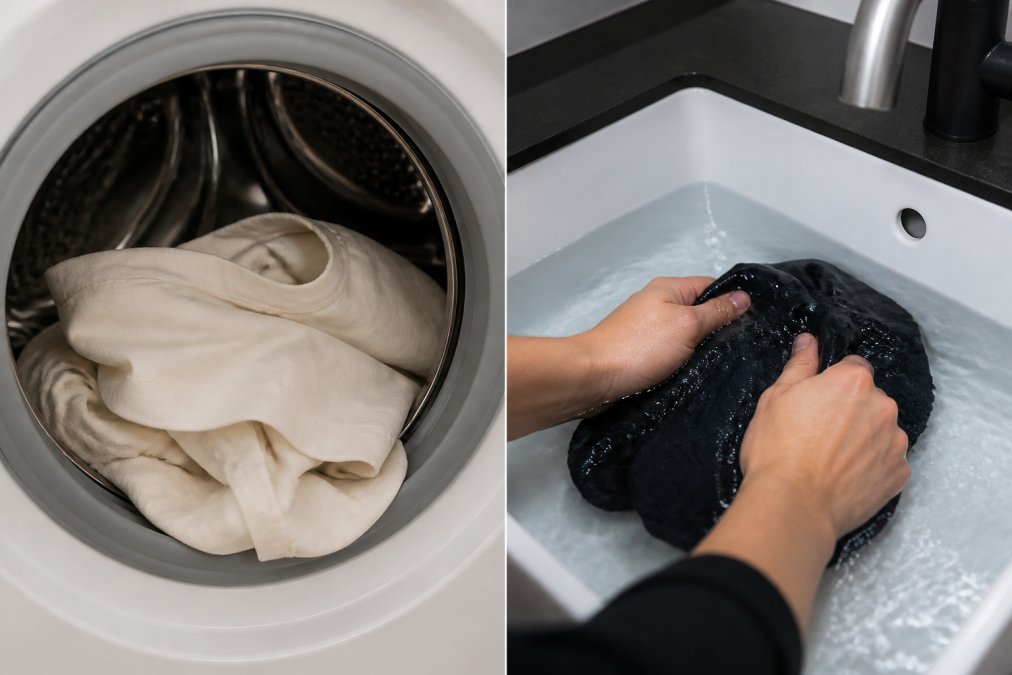
Cotton fits seamlessly into standard laundry routines. Smart fabrics require separate washing protocols, adding 15-30 minutes per month to your routine.
Storage and Lifespan Management
Cotton stores simply with no special requirements. Smart textiles need climate-controlled storage to prevent corrosion and component failure, and some require periodic charging even when not worn. A quality heavyweight cotton tee remains wearable for years, while smart textiles have a defined lifespan of 2-5 years determined by electronic component durability. After that window, repair is often impossible because replacement components aren't available or are prohibitively expensive.
Real-World Maintenance Scenarios
With cotton, spills are rinsed and washed normally. With smart fabric, you must assess whether the spill reached electronics and may face repair costs or replacement. Cotton can go directly into a hamper even if damp; smart fabric must be air-dried completely before storage. For graphic apparel, cotton's stable surface holds DTG-printed graphics consistently through standard washing, while smart textiles' uneven surfaces can cause ink to crack or peel unevenly.
Repair and Replacement
Cotton apparel is repairable: torn seams can be re-stitched and holes patched inexpensively. Smart textiles are rarely repairable, if a sensor fails, the garment is usually discarded because repair costs often exceed the original purchase price.
Cost-Benefit Analysis: Smart Textiles vs Cotton
Smart fabrics command premium pricing because of manufacturing complexity and embedded technology. Cotton's cost reflects material simplicity and established supply chains. The value question depends on your actual needs and total cost of ownership, not just the upfront price tag.
Upfront Cost Comparison
For graphic apparel, DTG printing on cotton is efficient. Printing on smart textiles with embedded electronics creates technical challenges: conductive fibers disrupt ink flow, and uneven surfaces can cause inconsistent color saturation.
Total Cost of Ownership
Smart textiles introduce ongoing costs that cotton doesn't: separate washing cycles and storage checks add time; smart textiles have a defined lifespan of 2-5 years versus 5-10+ years for cotton; repairs are rare and expensive or impossible; and some require periodic battery replacement or charging.
When Smart Fabrics Justify the Cost
Smart textiles make financial sense in specific scenarios:
Medical monitoring. If you have a condition requiring continuous heart rate, temperature, or movement monitoring, a smart garment can replace a separate wearable device and reduce overall healthcare costs. The garment becomes a medical tool, not just apparel.
Professional athletic performance. Elite athletes and serious fitness enthusiasts who use real-time biometric feedback to optimize training may see ROI through improved performance. The data justifies the cost if it directly improves outcomes.
Industrial or military applications. Workers in hazardous environments (extreme heat, cold, or contamination) benefit from smart fabrics' active temperature regulation or hazard detection.
When Cotton Offers Better Value
For most everyday wear, cotton delivers superior value:
Casual wear and graphic apparel. If you're buying a tee for its design, comfort, and durability, cotton's simplicity wins. You're not paying for features you don't use, and you're not managing the complexity of active systems. For casual wear and graphic apparel, cotton's simplicity wins. You're not paying for features you don't use, and you're not managing the complexity of active systems.
The Hidden Cost: Obsolescence
Smart textiles face a unique risk: technological obsolescence. A smart shirt designed to sync with a specific fitness app may become incompatible when the app updates or the company discontinues support. The garment is physically fine but functionally useless. Cotton has no software, no compatibility issues, and no risk of becoming obsolete.
Practical Decision Framework
Ask yourself three questions:
- Do I actually need the smart features? If the answer is "it would be nice" rather than "I need this to do X," cotton is the better choice.
- Will I use the features consistently? If you buy a temperature-regulating smart jacket but live in a climate with stable weather, you're paying for a feature you won't activate.
- Am I willing to manage the maintenance? If separate laundry cycles, careful drying, and periodic checks feel like a burden, the hidden cost of ownership will frustrate you.
For most consumers, the math favors cotton. The upfront savings, lower maintenance costs, longer lifespan, and freedom from compatibility concerns make traditional textiles the economically rational choice for everyday apparel.
The Future of Wearable Technology and Smart Fabrics
Smart fabric technology is advancing rapidly. Conductive fibers are becoming more durable. Energy-harvesting systems are improving efficiency. Microcontrollers are shrinking and consuming less power. The gap between smart textiles and traditional fabrics will narrow as manufacturing scales up.
Conclusion: Choosing Between Smart Fabric and Cotton
The smart fabric vs cotton decision hinges on what you actually wear your clothes to do. If you need performance monitoring, temperature regulation, or biometric tracking, smart fabrics offer capabilities that traditional textiles can't match. If you need comfortable, durable, low-maintenance apparel that looks consistent over time, cotton delivers better value and reliability.
Frequently Asked Questions
What does 'smart fabric' mean in modern streetwear?
Smart fabrics integrate electronic components like sensors, conductive fibers, or microcontrollers directly into textiles. They can monitor biometric data, adjust to temperature changes, or transmit information wirelessly. In streetwear, smart fabrics represent the intersection of functional apparel and wearable technology, though most current applications remain in specialized performance wear rather than everyday graphic tees.
Is heavyweight cotton still relevant compared to smart textiles?
Yes. Heavyweight cotton excels at durability, comfort, and simplicity for everyday wear. A 7.5 oz cotton fabric resists shrinkage better than lighter weights, maintains graphic integrity through repeated washing, and requires no special care. Smart fabrics excel in specific use cases like athletic monitoring or temperature regulation, but for casual streetwear, heavyweight cotton delivers proven longevity without electronic complexity or maintenance concerns.
How do maintenance requirements differ between smart garments and cotton tees?
Cotton tees tolerate regular machine washing and drying. Smart garments often require hand washing, air drying, and avoiding heat to protect embedded electronics. Cotton's straightforward care makes it practical for frequent wear and washing. Smart textiles demand more attention, which impacts real-world usability for someone who simply wants durable, low-maintenance everyday clothing.
What are the main disadvantages of smart fabrics compared to natural fibers?
Smart fabrics face challenges in durability (electronics can fail), cost (significantly higher than cotton), maintenance complexity, and limited lifespan once electronics degrade. They also present biocompatibility questions for skin-sensitive wearers. Natural fibers like cotton offer simplicity, breathability, and proven longevity. For most consumers, smart fabrics remain niche solutions for specific performance needs rather than everyday alternatives to traditional cotton.