 how-to
How to Identify Premium Heavyweight Cotton
Table of Contents
- What Is GSM in T-Shirts
- Heavyweight vs. Lightweight Cotton: Key Differences
- T-Shirt Construction Details to Look For
- Tactile Identification: How to Feel Quality
- Visual Inspection Techniques
- How to Style Oversized Heavyweight Shirts
- Care and Maintenance for Longevity
- Conclusion
Last Updated: August 18, 2026
What Is GSM in T-Shirts
GSM stands for grams per square meter, a standardized measurement of fabric weight. A square meter of fabric is weighed in grams, lightweight tees measure 150-180 GSM, while premium heavyweight cotton typically sits between 245-255 GSM. That difference translates directly to durability, drape, and long-term performance.
Weight alone doesn't determine quality. A 200 GSM tee with superior yarn construction can outperform a 280 GSM tee made from lower-quality fibers. What matters is the combination of weight, fiber quality, and construction technique working together.
AW3SOME CLOTHES INC uses 245-255 GSM heavyweight cotton for all their graphic tees, paired with 16-singles yarn and double-needle construction. That specific combination creates a shirt that holds its shape, resists pilling, and provides the substantial hand-feel that separates premium apparel from disposable basics.
Heavyweight vs. Lightweight Cotton: Key Differences
Lightweight cotton (150-180 GSM) feels airy and breathable, ideal for summer wear or layering. The trade-off is durability, lightweight cotton shows wear faster, loses shape readily, and can feel thin after repeated washing.
Heavyweight cotton (200+ GSM) offers immediately obvious differences: substantial weight, thicker hand-feel, and visible structure. Heavyweight tees maintain shape longer, resist pilling and fading, and develop character as they age rather than looking worn out. A quality heavyweight tee often lasts five years or longer with proper care, while lightweight alternatives may degrade within two years.
Construction details amplify these differences. A lightweight tee with single-needle stitching fails faster than a heavyweight tee with double-needle construction. Combed ring-spun cotton in a heavyweight tee creates a noticeably softer, more durable garment than carded cotton at the same weight.
T-Shirt Construction Details to Look For
Stitching and Seams
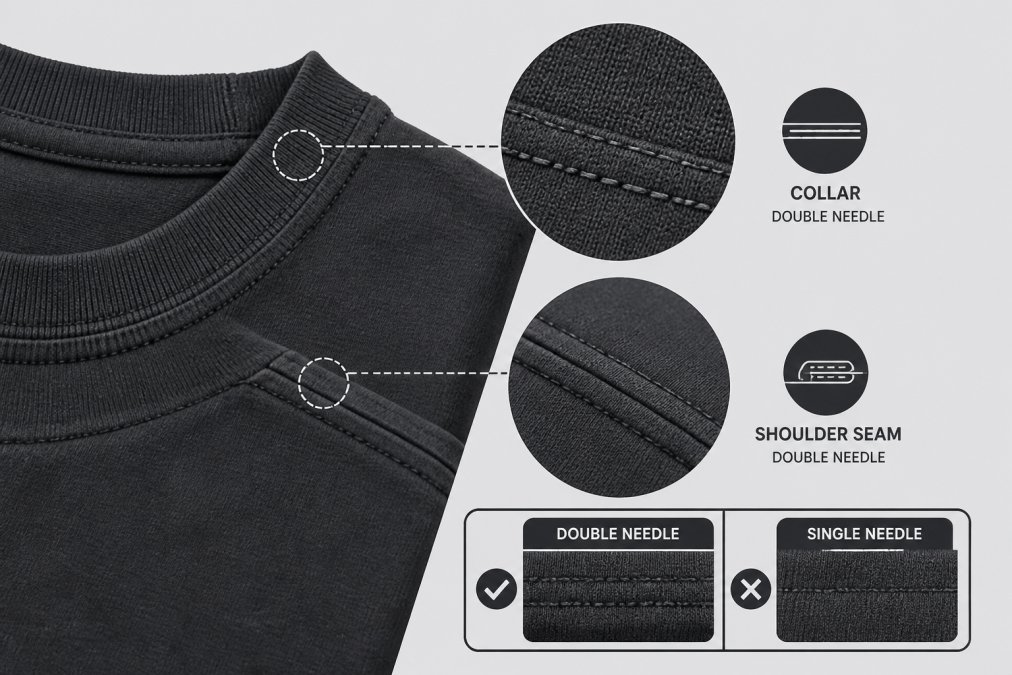
Double-needle stitching is the hallmark of premium construction. Two parallel threads reinforce the same line, creating a stronger, more flexible seam that resists tearing and stretching. Look at the side seams, sleeve hems, and neckline, quality construction shows consistent, even stitching with no loose threads or gaps.
Quarter-turned construction rotates body panels during cutting and assembly, distributing stress more evenly across the garment. It's more complex and expensive than straight construction, but it extends the tee's lifespan significantly.
Neck Ribbing and Collar Stability
The neckline takes more stress than any other part of a tee. Premium tees feature a stretch-proof collar with reinforced ribbing that resists stretching out and sagging. Feel the ribbing, quality collar ribbing should be thick, dense, and slightly elastic, bouncing back when stretched rather than staying deformed.
A shoulder-to-shoulder neck tape (a reinforcement strip sewn inside the neckline) adds structural integrity and prevents the neckline from twisting or shifting during wear. The neckline seam should be smooth and even, with no visible puckering.
Yarn Count and Fiber Quality
Yarn count refers to how tightly fibers are twisted together. A 16-singles yarn means 16 individual fiber strands twisted into a single ply. Higher counts create finer, stronger yarn that resists pilling and produces a softer hand-feel.
Combed ring-spun cotton represents the highest tier of fiber processing. The combing process removes short fibers and impurities, leaving only long-staple fibers. These are then twisted using ring-spinning, creating yarn with superior strength and smoothness. The result is a tee that feels luxurious, resists pilling, and maintains color vibrancy longer.
Carded cotton skips the combing step and is cheaper but contains more short fibers that create pilling and a coarser hand-feel. After a few washes, carded cotton tees often show fuzzy matting on the surface.
Check the tag, premium tees explicitly state "combed ring-spun cotton." If the tag just says "100% cotton," the fiber quality is likely standard-grade carded cotton.
Tactile Identification: How to Feel Quality
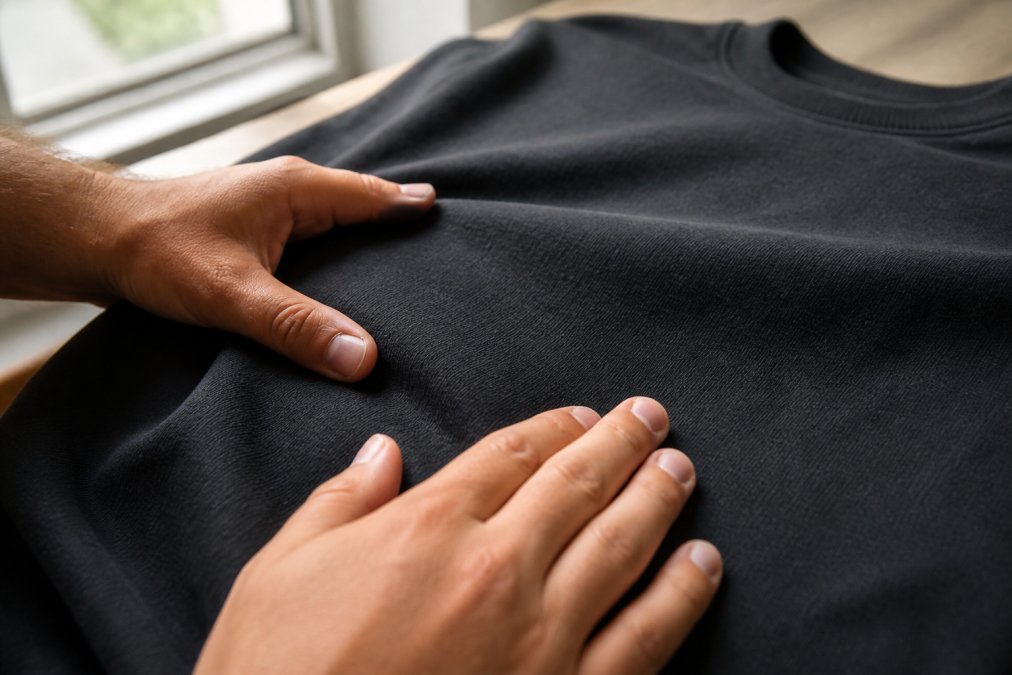
Run your palm across the chest. Premium heavyweight cotton has a distinctive smooth, dense surface that feels substantial without being stiff. The fabric should have a slight give when stretched but snap back immediately. Cheap cotton feels thin, loose, or slightly rough.
Squeeze the fabric between your fingers. Quality cotton compresses slightly but maintains structure. Hold the tee at shoulder width and let it hang, premium heavyweight cotton drapes with intention, not clinging to your body or feeling papery.
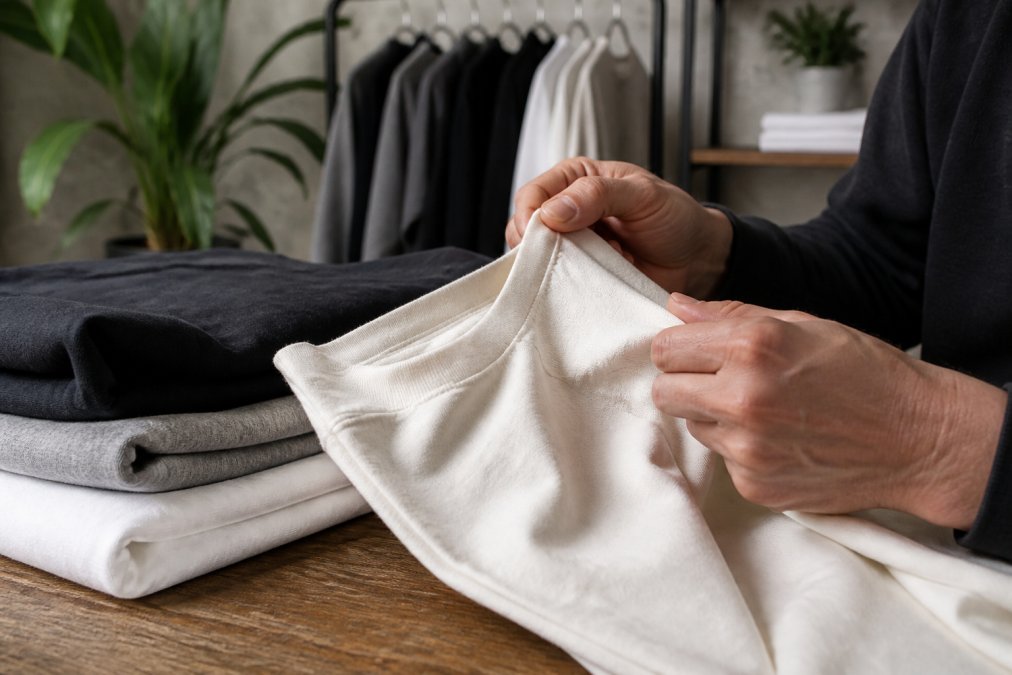
Feel the neckline specifically. Pinch the collar ribbing and stretch it gently. Quality ribbing resists stretching and bounces back immediately. Check the sleeves, pinch the fabric at the upper arm and feel the density. Quality construction maintains consistent weight throughout.
Run your fingernail along the side seam. You should feel a clean, smooth line with no loose threads or gaps. Double-needle stitching creates a slightly raised, reinforced seam.
Visual Inspection Techniques
A quality tee looks intentional. The fit is consistent, graphics are crisp and properly centered, and construction appears thoughtful. Examine the neckline seam closely, it should be perfectly smooth with consistent stitching and no puckering or loose threads.
Check the sleeve hems. The 1-inch double-needle hem creates a visible, reinforced edge that lies flat without curling. The side seams reveal construction quality, premium tees use flat-lock or safety-stitch techniques that create smooth, flexible seams.
For DTG (direct-to-garment) printing, the ink should sit on the fabric without cracking or peeling at the edges. Colors should be vibrant and evenly applied. Run your finger across the graphic, quality DTG feels smooth and integrated with the fabric, not plasticky or raised.
Look at the fabric surface under good lighting. Quality heavyweight cotton has a subtle sheen and even color. Check for any visible defects, loose fibers, thin spots, or discoloration. The label itself signals quality, premium tees use woven labels with clear, legible printing.
How to Style Oversized Heavyweight Shirts
Oversized heavyweight tees have become a staple of modern streetwear. The relaxed fit and drop shoulder create a contemporary silhouette that works across multiple style contexts. Balance the volume with fitted or structured pieces elsewhere.
Pair an oversized heavyweight tee with slim-fit jeans or tailored trousers. The contrast between the relaxed top and fitted bottom creates visual balance. Layer the tee over a long-sleeve thermal or fitted turtleneck for cooler months. The substantial weight makes it ideal for layering without bunching.
Try a half-tuck style, tucking the front half into your pants while keeping the back loose. This maintains the relaxed vibe while creating definition at the waist. Wear it oversized and untucked with structured shorts or cargo pants, the weight of the fabric prevents the tee from riding up or shifting.
Add a structured jacket or overshirt. An oversized tee works beautifully under a denim jacket, blazer, or utility jacket, with the jacket's structure framing the relaxed tee.
Care and Maintenance for Longevity
Wash in cold water using a gentle cycle. Hot water accelerates fading and can cause shrinkage. Turn the tee inside out before washing to protect the graphic from friction and fading.
Use mild detergent designed for cotton or delicates. Avoid bleach and fabric softeners, bleach weakens fibers and can cause discoloration, while fabric softeners reduce breathability and durability.
Dry on low heat or air dry. High heat damages fibers and can cause shrinkage. Air drying is ideal; hang on a line or lay flat. Store tees folded rather than hanging to prevent shoulder and neckline stretching over time.
Treat stains immediately with cold water and appropriate stain remover. Inspect seams and graphics periodically to catch any loose threads or peeling graphics early.
Conclusion
Identifying premium heavyweight cotton comes down to understanding the interplay between fabric weight (245-255 GSM), fiber quality (combed ring-spun vs. carded), construction technique (double-needle stitching, quarter-turned assembly), and yarn count (16-singles). These elements working together create tees that maintain their shape, resist pilling, and develop character over years of wear.
The tactile and visual inspection techniques outlined here, feeling the density, checking the stitching, examining the neckline ribbing, and inspecting the graphics, give you concrete ways to evaluate quality before purchasing.
When you're ready to invest in heavyweight graphic tees that deliver on both construction and design, AW3SOME CLOTHES INC offers original artwork on 245-255 GSM heavyweight cotton with double-needle stitching and premium finishing. Every tee features exclusive graphics that are never reprinted, ensuring your pieces remain genuinely unique. Check out the Moonlit Wanderer Graphic Tee or the Soldiers Graphic T-Shirt to experience the difference premium construction and original design make.


Frequently Asked Questions
What is considered heavyweight cotton?
Heavyweight cotton typically ranges from 6 to 7.5+ ounces per square yard (200-255 GSM). This weight indicates denser fabric with more fiber per square inch, resulting in thicker, more durable material. Standard lightweight tees usually weigh 4-5 ounces. The extra weight in premium heavyweight cotton comes from tighter weave density and higher-quality yarn construction, which contributes to better shape retention and longevity.
How can you tell if a cotton t-shirt is high quality?
Examine the stitching first, double-needle seams on the neck, sleeves, and hem indicate quality construction. Feel the fabric for consistent softness and density without thin spots. Check the weight: quality tees typically weigh 7-7.5 ounces. Look for a stretch-proof collar that holds its shape. Inspect the yarn for a smooth, even appearance. High-quality cotton often uses combed or ring-spun fiber, which creates a softer, more durable hand-feel than carded cotton.
What does GSM mean in clothing?
GSM stands for grams per square meter, a standard measurement of fabric weight and density. It tells you how heavy a piece of fabric is per unit area. A higher GSM indicates denser, thicker fabric. For t-shirts, 245-255 GSM is considered premium heavyweight, while 150-170 GSM is standard weight. GSM is useful for comparing fabric quality, but weight alone doesn't determine durability; construction, yarn type, and fiber quality matter equally.
Does fabric weight determine the quality of a t-shirt?
Fabric weight is one factor, but not the only one. A 7.5-ounce tee might feel premium, but poor stitching, weak neck tape, or low-quality yarn undermines durability. True quality combines weight with construction details: double-needle stitching, shoulder-to-shoulder neck tape, quarter-turned construction, and combed or ring-spun cotton. Heavier fabric provides better opacity and shape retention, but without proper construction, it won't perform as well over time.
This article was written using GrandRanker