 How-to
How Do You Keep Graphic Print Quality on Shirts?
Last Updated: November 16, 2026
Quick Summary
To maintain graphic print quality on shirts, wash cold and inside out on a gentle cycle, skip fabric softener and bleach, and air-dry instead of using a hot dryer. Never iron directly on the print, and fold or store tees so the graphic isn't creased.
- Heat from a hot dryer or direct iron breaks down the ink bond and causes cracking.
- Fabric softener leaves a coating on DTG ink that dulls the print over time.
- Blot fresh stains with a clean white cloth instead of scrubbing the print.
- Fold graphic tees so the print faces outward or against soft fabric, never a hard fold.
- Match care to print method: heat-transfer prints peel at edges, so hand wash cold.
Table of Contents
- Why Graphic Print Quality Fades (and What Actually Causes It)
- How to Maintain Graphic Print Quality on Shirts After Washing
- How to Keep Print on Shirts From Cracking
- How to Fix Peeling Print on a Shirt
- How to Maintain Graphic Print Quality on Shirts at Home: Stain Removal and Ironing
- Reading the Care Label and Matching Care to Print Method
- Storing Graphic Tees So Prints Stay Crisp
- Choosing a Tee Built to Hold Its Print
- Frequently Asked Questions
Why Graphic Print Quality Fades (and What Actually Causes It)
Graphic print quality fades because three forces attack the ink: heat, friction, and chemistry. Heat softens the bond between ink and fabric. Friction grinds the print surface. Harsh detergent and bleach break down the ink itself.
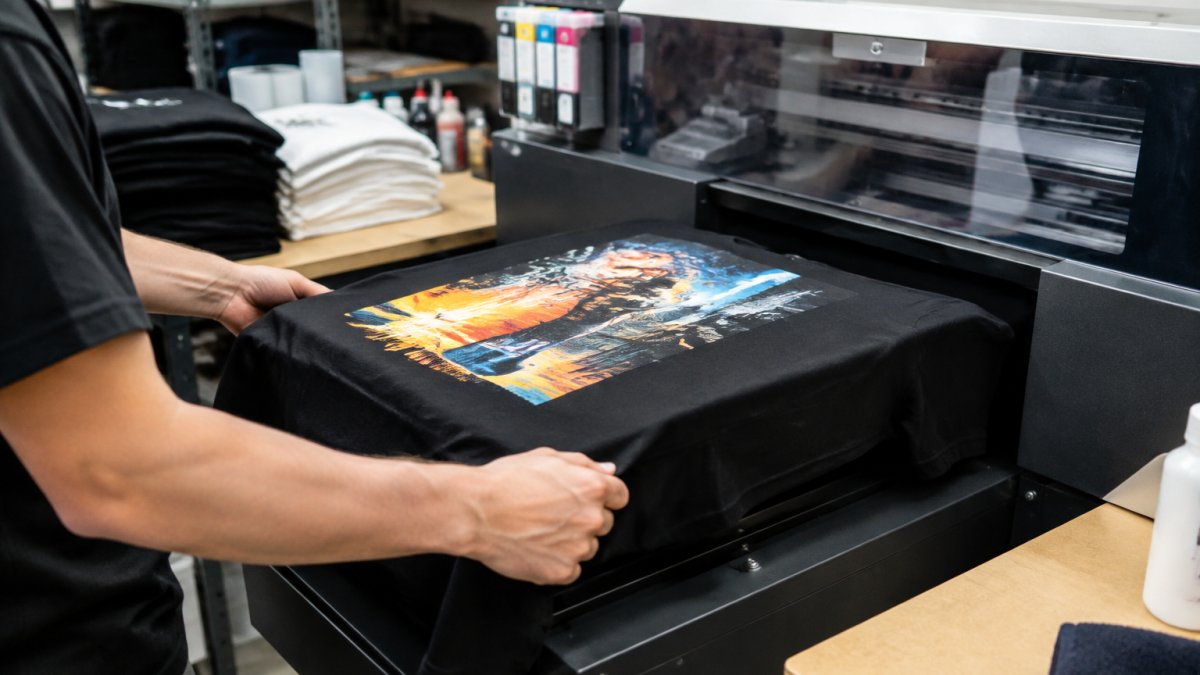
Direct-to-garment (DTG) ink bonds into the cotton fibers rather than forming a thick plastic layer on top. It feels softer and responds differently to heat and abrasion than a heavy plastisol print.
The biggest mistake is treating every graphic tee the same. A heat-transfer print and a DTG print have different weak points, and care that protects one can wear out the other faster.
So what actually causes damage?
- Heat from a hot dryer or a direct iron breaks down the ink bond
- Friction from a crowded drum rubs the print against itself and other clothes
- Bleach and harsh detergent attack the ink and the cotton at once
- Sunlight fades dyes over long exposure
- Stretching a cold print cracks the ink film
Below, we'll show you how to maintain graphic print quality on shirts through washing, drying, stain removal, and storage. But first, a common misconception: people often blame the shirt when the dryer is a frequent culprit.
How to Maintain Graphic Print Quality on Shirts After Washing
The short answer: wash cold, wash inside out, and skip the dryer. For the full streetwear-specific print maintenance routine, see how to maintain streetwear graphic prints. Those three habits protect graphic print quality more than any product you can buy.
Washing is where most print damage starts. A hot wash loosens the ink bond. An aggressive cycle adds friction. A full drum of heavy clothes grinds prints together.
Wash Settings That Protect the Print
Follow these settings every time:
- Turn the shirt inside out. This puts the print against itself, not against zippers or buttons.
- Use cold water. Cold water keeps the ink bond stable and reduces color loss.
- Pick a gentle or delicate cycle. Less agitation means less friction on the print.
- Wash with similar colors. Dark dyes can bleed onto lighter prints.
- Use a mild laundry detergent. Skip bleach and fabric softener entirely.
- Don't overload the machine. A crowded drum means more rubbing.
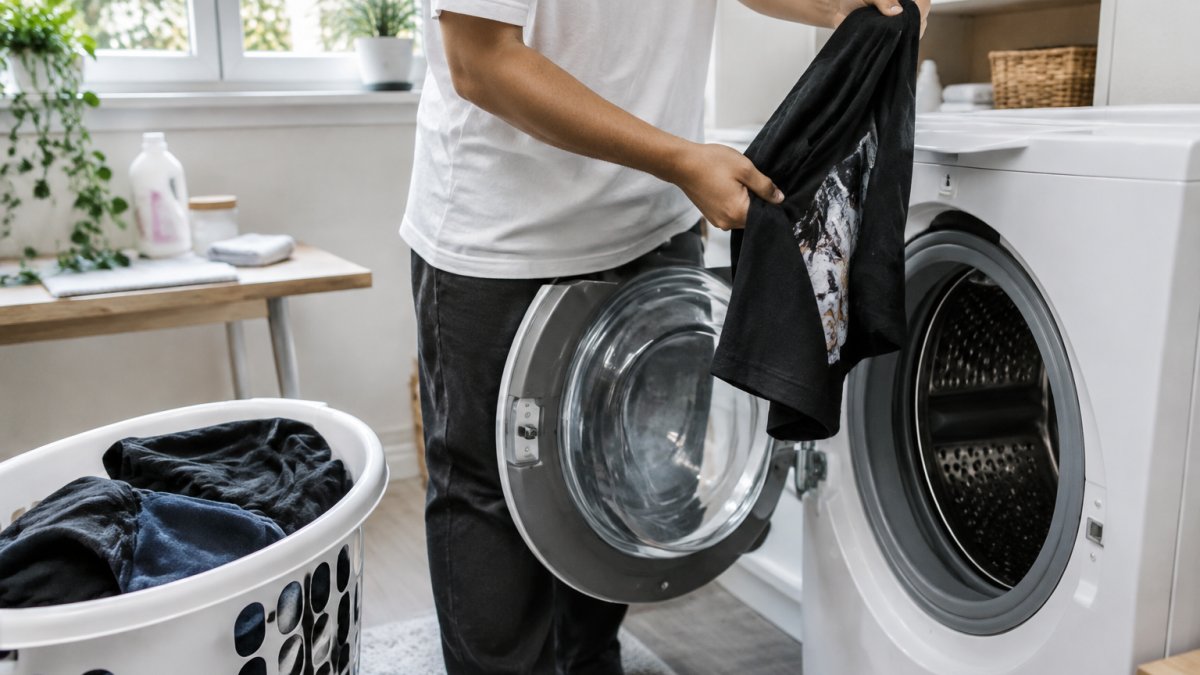
Watch out: fabric softener leaves a coating on DTG ink that dulls the print over time. Skip it on any graphic tee.
Drying Without Heat Damage
Air-dry whenever you can. Hang the shirt or lay it flat, print side up, away from direct sun. Dryer heat is the fastest way to crack a print.
If you must use a machine, choose the lowest heat setting or no heat at all. Pull the shirt out while it's still slightly damp and hang it to finish.
How to Keep Print on Shirts From Cracking
Cracking happens when the ink film loses flexibility and then gets stretched or folded. The fix depends on whether the ink sits on the fabric or in it.
A cracked print usually starts small: thin white lines across the graphic, often at fold points or along the edge of a large solid area. Either way, prevention is everything.
How to keep print on shirts from cracking:
- Never iron directly on the print. Heat plus pressure equals cracks, and a hot iron can also glaze or scorch the ink.
- Skip the hot dryer. Sustained heat makes surface ink brittle and softens the bond on absorbed ink.
- Wash inside out on gentle to reduce surface abrasion against zippers, buttons, and heavy seams.
- Avoid folding along the graphic when you store the shirt, and rotate fold lines if you stack tees.
- Don't stretch a cold shirt right after it comes out of the wash. Let it relax before you pull it over your head.
- Keep the print away from direct sun during long storage, since UV exposure degrades inks over time.
Here's the insider point most care guides miss: fold lines matter as much as the wash.
If a crack has already started, triage it honestly:
- Small hairline cracks at a fold: stop folding there, wash inside out cold, and air-dry. You can slow the spread but not close the crack.
- Cracks across a large solid area: the ink film has lost flexibility. Avoid the dryer entirely and consider hand washing to cut abrasion.
- Cracks plus flaking: the ink is failing at the bond, not just the film. Treat it like a peeling print and move the shirt out of heavy rotation.
A pressing cloth and low heat can sometimes flatten a lifted edge, but it will not restore a cracked film.
To judge whether the print was well made to begin with, how to identify high quality screen printing on T-shirts walks through what crisp edges and even ink coverage should look like.
How to Fix Peeling Print on a Shirt
You can slow a peeling print, but you can't fully reverse it. Once ink lifts from the fabric, the original bond is gone.
Peeling is different from cracking. Cracking is the ink film breaking; peeling is the ink separating from the fabric entirely, usually at the edges of the graphic.
What you can do:
- Stop machine washing the shirt. Hand wash cold, inside out, and air-dry.
- Don't pick at the lifted edge. It spreads the peel.
- Use a pressing cloth and low heat to gently re-adhere a small lifted edge. Keep the iron moving and never touch it to bare ink.
- Retire the shirt from heavy wear if the peel is widespread.
To judge whether the print was well made to begin with, how to identify high quality screen printing on T-shirts walks through what crisp edges and even ink coverage should look like.
How to Maintain Graphic Print Quality on Shirts at Home: Stain Removal and Ironing
Stains and irons cause more accidental print damage than washing does. Both involve concentrated heat or chemicals right on the graphic.
Treat a stain fast, but treat it gently. And never let an iron touch bare ink.
Handling Stains Without Damaging the Print
Blot, don't scrub. Scrubbing pushes the stain into the fibers and abrades the print at the same time.
- Blot fresh stains with a clean white cloth from the outside in
- Rinse with cold water before any detergent touches the spot
- Apply a small amount of mild detergent and pat, don't rub
- Skip bleach and stain sticks with harsh solvents on or near the print
- Air-dry the shirt to check the stain before washing again
For grease, a tiny dot of dish soap on the fabric (not the print) works well. Rinse cold and repeat if needed.
Ironing Around a Print
Never iron directly on a DTG or heat-transfer graphic. The heat melts or cracks the ink.
Turn the shirt inside out and iron the back of the fabric, or place a pressing cloth between the iron and the print. Keep the iron on low heat and keep it moving. If a shirt's care label says "do not iron," trust it.
For a full method that protects the graphic, ironing screen-printed shirts: a safe step-by-step guide covers temperature, pressing cloths, and what to do if you scorch a print.
Reading the Care Label and Matching Care to Print Method
The care label is the first place to look, but the print method matters just as much.
Always check the garment care label before the first wash.
Then match care to the print method.
| Print Method | How the Ink Sits | Main Weak Point | Best Care Habit |
|---|---|---|---|
| Direct-to-garment (DTG) | Absorbed into and bonded to cotton fibers | Heat and surface abrasion | Cold wash inside out, air-dry, no direct iron |
| Screen printing | Thick ink film cured on top of the fabric | Cracking at fold lines and edges | Gentle cycle, no hot dryer, fold away from the graphic |
| Heat transfer / vinyl | Film adhered to the surface with heat | Peeling at edges and corners | Hand wash cold or gentle bag, low heat only |
| Sublimation | Dye bonded into polyester fibers | Fading from heat and UV light | Cool wash, dry away from sun, avoid high heat |
Screen printing. A screen print is a cured ink film sitting on the fabric surface.
Heat transfer and vinyl. These prints are adhered at the edges, and edges are where they lift.
Sublimation. Sublimation dyes the fiber instead of coating it, so it does not crack or peel the way surface prints do.
None of these methods is universally better than another.
Storing Graphic Tees So Prints Stay Crisp
Storage damage is slow and easy to miss. A shirt folded print-to-print for a year can develop creases that crack the ink.
Fold graphic tees so the print faces outward or sits against soft fabric, never against a hard fold. Stack them loosely so the weight doesn't press creases into the graphic. Keep them out of direct sunlight and away from damp.
For shirts you won't wear for a while, hang them on wide hangers or roll them loosely. Avoid wire hangers, which stretch the shoulders and pull the neck out of shape.
For a folding method built around print protection, the best way to fold graphic T-shirts for storage shows the exact folds that keep graphics flat.
Choosing a Tee Built to Hold Its Print
The best care routine can only protect what the shirt was built to do.
Construction matters here. Reinforced neck tape and double-needle stitching help keep the shirt's shape.
Our current tees use the Shaka Wear SHMHSS heavyweight body: 7.5 oz, 245-255 GSM, with a slight drop shoulder, shoulder-to-shoulder neck tape, and a stretch-proof collar.
If you're deciding what to buy next, what makes a graphic tee print last longer breaks down the print and fabric factors that matter most.
Print care comes down to a few habits: cold water, inside out, gentle cycle, and air-dry. Get those right and most graphics outlast the trend cycle.
Get started with AW3SOME CLOTHES INC and keep your graphics crisp drop after drop.
Frequently Asked Questions
How do you preserve prints on T-shirts?
Turn the shirt inside out, wash it in cold water on a gentle cycle, and skip the dryer. Heat and friction break down the ink bond, so air-drying is the single biggest step. Use a mild detergent without bleach or fabric softener, . Store them folded rather than hung on wire hangers.
Can you fix a peeling print on a shirt?
Small lifts can sometimes be re-bonded. Place parchment paper over the print, press with a warm iron on low with no steam, and let it cool flat before moving the shirt. This works best on edges that have just started to lift. Once a print has cracked across the design or flaked off in patches, the ink is gone and cannot be restored.
Should you turn graphic shirts inside out before washing?
Yes. Turning the shirt inside out puts the fabric between the print and the drum, which cuts the friction that wears down ink edges. It also limits direct contact with other garments and zippers. Combine it with cold water and a gentle cycle for the best protection. This one step takes seconds and is the most repeated advice across garment care guidance.
What should you avoid when caring for printed shirts?
Avoid hot water, high-heat drying, bleach, fabric softener, and direct ironing on the print. Skip dry cleaning unless the label allows it. Don't wash graphic tees with heavy items like jeans or towels, since the abrasion speeds up cracking. Also avoid hanging a wet printed shirt in direct sunlight, which can fade the ink before the fabric even dries.