 how-to
How to Maintain Streetwear Graphic Prints
Table of Contents
- Why Graphic Print Maintenance Matters
- The Best Way to Wash DTG Printed Shirts
- Drying Methods to Prevent Graphic Cracking
- How to Prevent Graphic Tee Fading
- Heavyweight Cotton Tee Care Instructions
- How to Store Oversized Streetwear
- Repairing Cracked Graphics and Stain Removal
- Conclusion
- Frequently Asked Questions
Last Updated: September 29, 2026
Why Graphic Print Maintenance Matters
Streetwear graphic prints are investments. You buy them for the design, the story, the statement they make. But a cracked graphic or faded artwork turns that $30+ shirt into something you'll never wear again.
The difference between a print that lasts years and one that deteriorates in months comes down to how you care for it. DTG (direct-to-garment) printing bonds ink directly to fabric fibers, which means the print's longevity depends entirely on your washing, drying, and storage habits. Get this wrong, and even premium heavyweight cotton won't save you.
At AW3SOME CLOTHES INC, we've built our reputation on original graphics that deserve to stay pristine. Our tees use 7.5 oz heavyweight cotton (245-255 GSM) with DTG printing that holds detail through proper care. But no fabric can protect itself. You have to.
This guide covers exactly how to maintain streetwear graphic prints so they look as bold on wash 50 as they did on day one.
The Best Way to Wash DTG Printed Shirts
The foundation of graphic print longevity is the wash. One careless cycle can crack ink that should have lasted years.
Temperature and Cycle Settings
Cold water is non-negotiable. Heat accelerates ink breakdown and weakens cotton fibers. Machine wash in cold water, maximum 30°C (90°F), every time.
Use a gentle or delicate cycle. Aggressive agitation flexes the fabric and stresses ink adhesion. Standard cycles work if you have no alternative, but gentle is always better.
Here's the rhythm that works:
- Cold water only
- Gentle cycle preferred
- Never use hot water for printed garments
- Avoid heavy-duty cycles
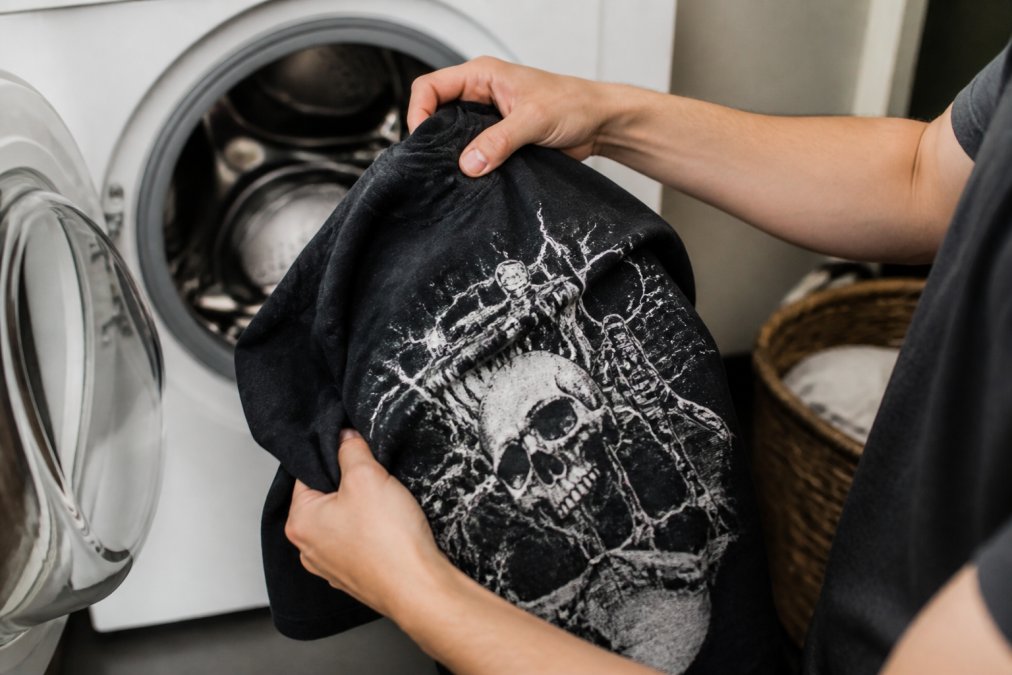
Turn the shirt inside out before washing. This simple step keeps the print facing inward, away from the agitation and friction that breaks down ink. The fabric itself takes the wear, not your artwork.
Inside-Out Washing Technique
Inside-out washing is the single most effective habit you can adopt. It's not complicated, just flip the shirt before it goes in the machine.
Why this matters: DTG ink sits on top of the fabric surface. When the print faces outward, it rubs against the drum, other garments, and agitation. Inside-out eliminates that direct contact.
Do this every wash, no exceptions:
- Flip the shirt inside out
- Place it in the machine
- Add detergent (see below for specifics)
- Run cold water on gentle cycle
- Remove immediately when done
The print stays protected while the sturdy cotton backing takes normal wear. Over time, this habit is the difference between a graphic that stays sharp and one that shows cracks and fading.
Drying Methods to Prevent Graphic Cracking
Heat is the enemy of DTG prints. High temperatures cause ink to become brittle and crack, especially in areas with heavy color saturation.
Never use a tumble dryer on heat. Air drying is the only method that guarantees print preservation.
Hang dry your shirt every time. Use a hanger or clothesline in a well-ventilated space. Direct sunlight speeds drying but can fade certain colors over time, so shade is ideal. The shirt will dry in 4-8 hours depending on humidity and air movement.
If you must use a dryer:
- Use no-heat or air-only settings only
- Remove the shirt while still slightly damp
- Never run a heat cycle with printed garments
The patience here pays off. A shirt dried properly lasts indefinitely. One heat cycle can create cracks that spread with each subsequent wash.
How to Prevent Graphic Tee Fading
Fading happens when UV light and heat break down ink molecules. DTG prints are especially vulnerable because the ink sits on the surface rather than being absorbed into fibers.
Wash in cold water and dry in shade. These two habits prevent 90% of fading issues.
Store printed tees away from direct sunlight. A dark closet or drawer protects the color far better than a shelf by a window. If you're building a collection of original graphics that won't be reprinted, storage matters.
Avoid chlorine bleach entirely. Non-chlorine bleach is acceptable if needed, but it's not recommended for printed garments. Stick to gentle detergent and cold water as your standard approach.
Fading is often irreversible, so prevention is everything. The graphic that fades in year two will never fully recover its original vibrancy.
Heavyweight Cotton Tee Care Instructions
Premium heavyweight cotton (7.5 oz / 245-255 GSM) is durable, but it still requires proper care to maintain shape and print quality.
Detergent and Chemical Considerations
Use mild, gentle detergent. Avoid powders with harsh abrasives or brightening agents. Liquid detergent is often gentler than powder because it dissolves fully before the wash cycle begins.
Skip fabric softener.
Washing guidelines:
- Mild liquid detergent preferred
- No fabric softener
- No bleach on prints
- Cold water only
Ironing and Heat Sensitivity
Don't iron printed tees. The heat and pressure from an iron can melt ink and create permanent damage.
How to Store Oversized Streetwear
Proper storage protects your collection between wears. Oversized fits are prone to stretching if hung improperly, and folded storage can create permanent creases.
Keep printed tees away from:
- Direct sunlight (causes fading)
- Moisture (mold and mildew)
- Heat sources (accelerates ink degradation)
- Rough surfaces (snagging)
Repairing Cracked Graphics and Stain Removal
Cracks and stains are the two most common threats to printed tees after they leave the wash cycle. Unlike fading or general wear, both are visible failures that make a shirt unwearable, but they require different intervention strategies.
Understanding Graphic Cracks: Prevention vs. Repair
Cracks form when DTG ink loses flexibility. This happens through repeated heat exposure, aggressive washing, or simply the natural brittleness that develops over years of wear and flexing. The ink sits on the fabric surface, so every time the cotton stretches (during wear, washing, or drying), the ink layer cracks.
Can cracked graphics be repaired? Partially, but not invisibly. Fabric paint and textile ink restoration products designed for garment repair can fill hairline cracks and prevent them from spreading further. These products work by:
- Filling the gap in the ink layer
- Restoring some flexibility to the damaged area
- Preventing moisture from seeping into the crack and degrading the underlying fabric
Stain Removal on Printed Areas: Speed and Technique Matter
Stains on graphic prints are harder to remove than stains on blank fabric because you cannot use aggressive scrubbing, hot water, or strong chemicals without risking ink damage. The window for successful removal is also narrower, fresh stains are far easier to treat than set-in ones.
Immediate response (first 2-4 hours):
-
Blot, don't rub. Use a clean, damp cloth to blot the stain from the back of the fabric if possible. Rubbing spreads the stain and can damage the ink layer through friction.
-
Rinse with cold water. Hold the stained area under cold running water from the back side of the shirt. This pushes the stain out rather than deeper into the fibers. Never use hot water, heat sets stains permanently and can damage DTG ink.
-
Assess the stain type. Different stains require different approaches:
- Oil-based stains (grease, butter, makeup): Apply a tiny amount of dish soap directly to the stain on the back side, let it sit for 5 minutes, then rinse with cold water. Do not apply soap directly to the print itself.
- Protein stains (blood, egg, dairy): Soak the area in cold water with a pinch of mild detergent for 15-30 minutes, then rinse gently.
- Tannin stains (wine, coffee, tea): Soak in cold water with a small amount of white vinegar (1 tablespoon per cup of water) for 20 minutes, then rinse thoroughly.
- Dye stains (ink, food coloring): These are the hardest to remove from prints. Soak in cold water with mild detergent for 30 minutes; do not scrub.
-
Wash normally. After spot treatment, wash the entire shirt in cold water on a gentle cycle with mild detergent. This removes any remaining stain residue and any treatment chemicals.
For stubborn or set-in stains:
If the stain has dried or set (more than 4 hours old), the removal process is slower and less likely to succeed completely:
- Soak the entire shirt in cold water with mild detergent for 1-2 hours before washing.
- Do not use oxygen-based bleach or stain removers containing bleach, even if labeled "color-safe." These can fade DTG ink.
- Avoid enzyme-based stain removers on the print itself; they can break down ink binders.
- Air dry after washing. Heat from a dryer will permanently set any remaining stain.
Conclusion
Learning how to maintain streetwear graphic prints comes down to cold water, inside-out washing, air drying, and storage in darkness. These habits cost nothing and take minimal effort, but they're the difference between a shirt that looks new for years and one that fades or cracks in months.
SHOP THE LATEST DROP →
Frequently Asked Questions
Why do graphic prints on streetwear crack after washing?
Graphic prints crack when exposed to high heat, excessive agitation, or prolonged tumble drying. DTG prints bond to fabric through heat curing, and repeated stress from hot water and mechanical friction weakens this bond. Using cold water, gentle wash cycles, and air drying prevents the ink layer from becoming brittle and separating from the cotton fibers.
Should I wash my graphic tees inside out?
Yes. Washing inside out is one of the most effective ways to maintain graphic prints. This method reduces direct friction between the print and the wash drum, minimizing abrasion and color fading. Turn the shirt inside out before loading the machine, use cold water, and select a delicate or gentle cycle for best results.
How does DTG printing differ from other methods in terms of care?
DTG (direct-to-garment) printing applies ink directly onto fabric without intermediate steps. DTG prints require careful handling because the ink sits on the surface rather than being pressed into fibers. Avoid high heat, bleach, and harsh detergents. Cold water washing and air drying preserve DTG print longevity far better than tumble drying or hot water.
Can I iron over graphic prints on my streetwear?
No. Direct heat from an iron can damage or melt DTG prints and cause the ink to crack or fade. If your graphic tee needs wrinkle removal, hang it to air dry or use a steamer on low heat, keeping the steamer several inches away from the print. For heavyweight cotton pieces, wrinkles often release naturally during air drying.