 How-to
Sustainable Practices in Streetwear Manufacturing
Last Updated: November 19, 2026
Quick Summary
Sustainable practices in streetwear manufacturing start with fabric weight, because GSM decides drape, durability and how much material a factory needs. Factories then cut waste through tighter markers, scrap sorting, batch dyeing and right-sized runs, and buyers should verify every supplier claim in writing before ordering.
- Heavier fabric is not automatically better; GSM is a weight measurement, not a quality score.
- Batch dyeing similar colors together cuts dye-bath changes and rinse cycles.
- Track material yield, waste rate, marker efficiency, sample-to-production ratio and deadstock rate per run.
- Ask suppliers for an RSL and test reports rather than accepting vague eco-friendly claims.
- Put waste, water and chemical expectations in the purchase order, not just an email.
Table of Contents
- Why Sustainable Practices in Streetwear Manufacturing Start With Fabric Weight
- Examples of Sustainable Practices in Streetwear Manufacturing That Factories Actually Run
- How Sustainable Clothing Manufacturing Handles Fabric, Water, and Chemicals
- Fashion Manufacturing Waste Reduction: Cutting Room to Finished Drop
- What Sustainable Practices in the Apparel Industry Look Like for Small Streetwear Brands
- Prints, Embellishments, and Streetwear Finishing: The Trade-offs Nobody Lists
- How to Verify Supplier Claims Before You Place a Production Order
- Choosing Your Next Heavyweight Tee With Sustainability in Mind
- Frequently Asked Questions
Why Sustainable Practices in Streetwear Manufacturing Start With Fabric Weight
Sustainable practices in streetwear manufacturing begin with a simple question: what is this garment actually made of? Fabric weight, measured in grams per square meter (GSM) or ounces, decides how a tee drapes, how long it lasts, and how much material a factory needs to produce it.
Heavier fabric is not automatically "better" or more sustainable. GSM is a weight measurement, not a quality score. What matters is matching fabric weight to the garment's job.
So why does weight anchor sustainability at all?
- Durability: A shirt that holds its shape is more likely to stay in rotation.
- Honest specs: Brands that publish real weights are easier to hold accountable.
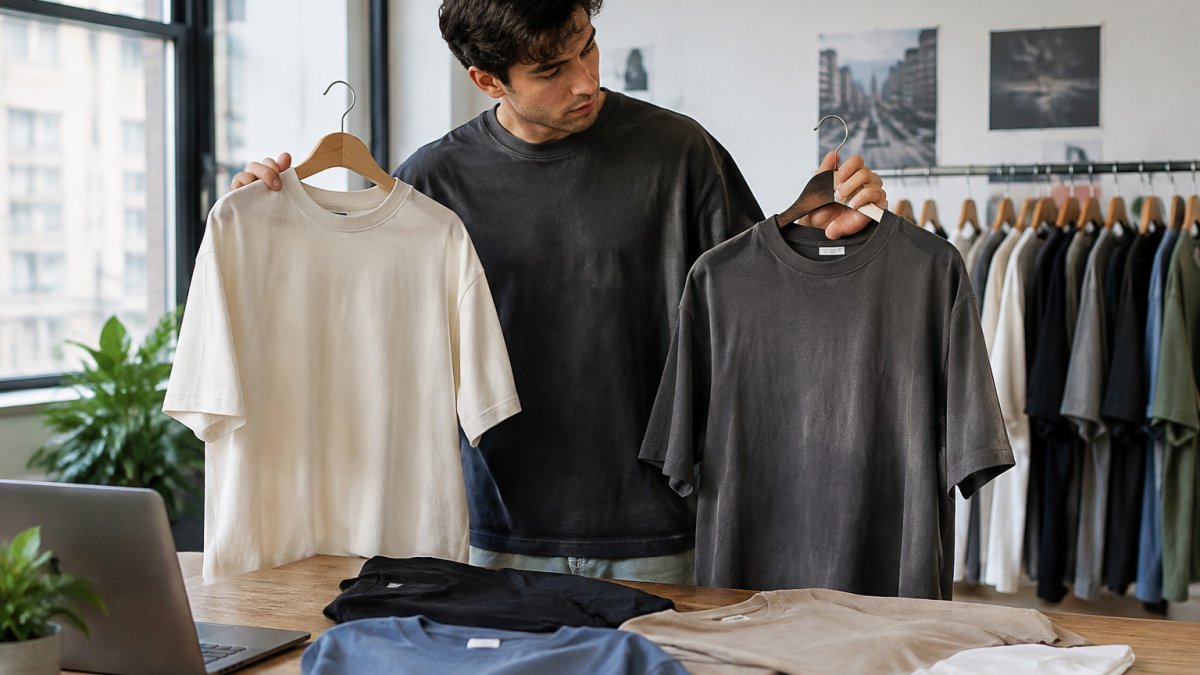
If you want the deeper breakdown, read what makes a t-shirt feel heavyweight before you judge any blank on the rack.
Examples of Sustainable Practices in Streetwear Manufacturing That Factories Actually Run
Sustainability in manufacturing often comes down to small, repeatable habits. Common examples include nesting pattern pieces tightly, sorting fabric scraps for recycling, batching similar colors to reduce dye changes, and tracking energy use per production line.
How Sustainable Clothing Manufacturing Handles Fabric, Water, and Chemicals
Sustainable clothing manufacturing is the practice of reducing waste, water use, and chemical load across every step from fiber to finished garment. It is not one decision. It is a chain of them, and in streetwear that chain has specific pressure points: heavyweight cotton knits, dense graphics, garment washes, and small-batch drops.
Fiber choices and their real trade-offs
No fiber is universally "better." Each carries trade-offs in durability, environmental impact, cost, availability, and care:
- Conventional cotton: Widely available, breathable, and predictable in production. It is water- and input-intensive to grow, which is why many brands look at lower-impact alternatives.
- Organic cotton: Grown without synthetic pesticides under certified programs. It typically costs more and supply can be tighter, so verify certification rather than taking a supplier's word.
- Recycled cotton and recycled polyester: Keep existing material in circulation and can reduce reliance on virgin fiber. Recycled cotton often has shorter staple length, which can affect strength and hand-feel; recycled polyester is still plastic-based and sheds microfibers in washing.
- Hemp and other natural fibers: Durable and low-input to grow, but often coarser and less consistent in color, which matters for graphic tees where print contrast is the point.
- Cotton/poly blends: Common in heather and charcoal colorways. Blends can improve shape retention but complicate end-of-life recycling because the fibers are hard to separate.
Matching fiber to the garment's job, rather than defaulting to a single "eco" fiber across a whole line, is one approach to consider.
Water use and wastewater
Dyeing and washing are among the most water-intensive stages in apparel production. Factories can reduce water load through a few repeatable mechanisms:
- Batch dyeing similar colors together to cut the number of dye-bath changes and rinse cycles.
- Reusing dye baths where shade tolerances allow.
- Low-water or waterless dyeing and finishing where the factory has the equipment.
For streetwear specifically, garment washes and finishes (stone, enzyme, acid-style effects) add water and chemical load on top of dyeing. If a supplier offers a washed finish, ask what the wash step involves and whether the wastewater is treated.
Chemical management
Chemical risk in apparel can come from dyes, auxiliaries, and finishes, not just the fiber. Practical controls buyers can ask about include:
- Asking suppliers whether they follow a restricted substances list (RSL) and can show test reports for the fabrics and trims you buy.
- Preferring lower-impact dye classes and avoiding finishes you cannot get documentation for.
- Keeping trims (zippers, drawcords, labels) in scope, since hardware and coatings carry their own chemical profiles.
Watch out: vague claims like "eco-friendly dyes" or "non-toxic finish" with no test report or RSL reference usually mean the supplier cannot back the claim. Ask for the document or treat the claim as unverified.
Want to judge a blank for yourself? Our guide on how to spot high quality streetwear blanks walks through the checks.
Fashion Manufacturing Waste Reduction: Cutting Room to Finished Drop
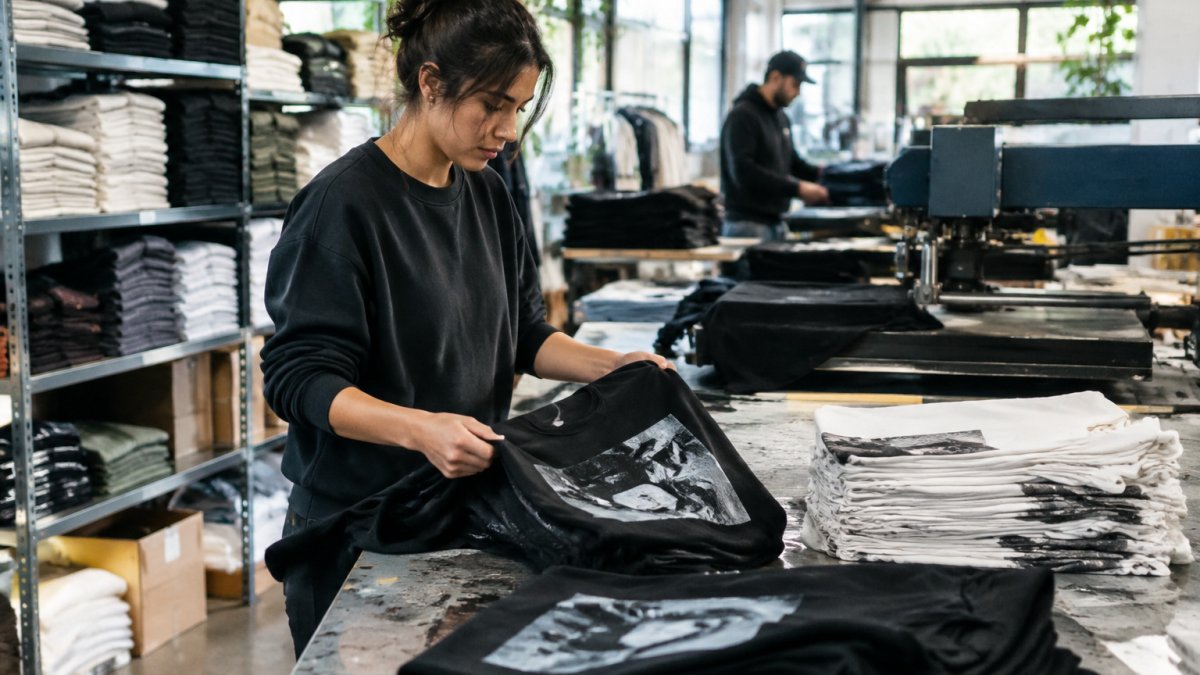
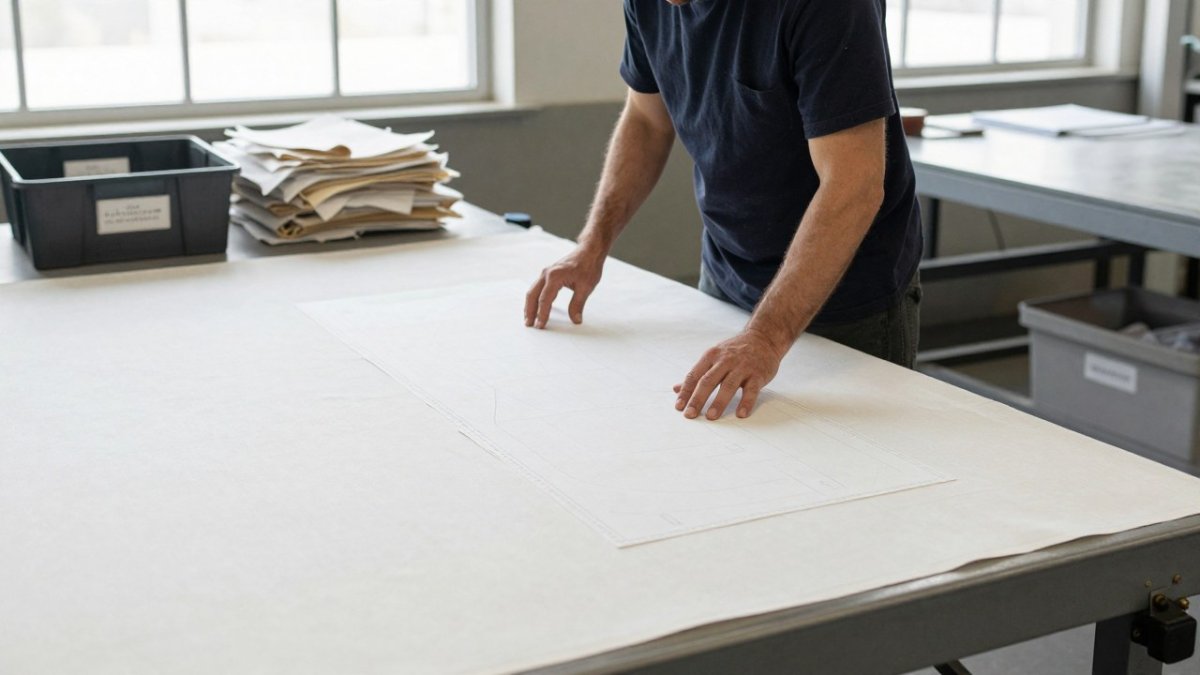
Fashion manufacturing waste reduction can start in the cutting room, where much fabric waste originates. Pattern layout, marker efficiency, and cutter skill decide how much cloth becomes a shirt and how much becomes scrap. In streetwear, the stakes are higher than in basic apparel because heavyweight knits cost more per yard and graphic placement leaves less room for error.
Where waste actually comes from in a streetwear run
-
Marker efficiency: The percentage of fabric in a marker that becomes garment pieces. Gaps between pattern pieces, grain-line constraints, and print-placement zones all reduce it.
-
Cutting errors: Misaligned layers, wrong grain, or a slipped knife can scrap whole plies, expensive on a 7.5 oz knit.
-
Overproduction: Producing to a warehouse instead of to demand is the single largest source of deadstock in small streetwear labels.
-
Sample and strike-off waste: Every sampling round consumes fabric; unmanaged sampling quietly adds up.
Measurable indicators to track
Rather than relying on feel, track a small set of numbers per run and compare them over time:
- Material yield: Garments produced per yard (or per kilogram) of fabric consumed.
- Waste rate: Weight of off-cuts and rejects divided by weight of fabric issued to the cut.
- Marker efficiency: Percentage of marker area that becomes usable pieces.
- Sample-to-production ratio: Number of samples and strike-offs per approved style.
- Deadstock rate: Units unsold after a defined selling window divided by units produced.
You do not need software to start. A simple spreadsheet per production run, filled in by the factory and checked against your own records, is enough to spot trends.
Practical levers that work on a streetwear floor
- Tighter markers and nesting: Fewer gaps between pattern pieces means less leftover fabric. Ask the factory for the marker efficiency figure before cutting.
- Scrap recovery: Off-cuts can become patches, pocket bags, hangtags, or recycled fiber. Sort scraps by fiber content so they can actually be recycled rather than landfilled.
- Right-size runs: Producing to demand beats producing to a warehouse. Small drops with restocks reduce deadstock risk.
- Sampling discipline: Approve prints and fits on the fewest samples that give you confidence, and reuse sample fabric where possible.
- Print-method fit: Match the print method to the run size and design.
A factory implementation checklist
Use this sequence when setting up or auditing a production partner:
- Audit the supplier: Ask for fabric specs, fiber content, and any RSL or test documentation before quoting.
- Set requirements in writing: Put waste, water, and chemical expectations in the purchase order, not just an email.
- Sample and measure: Run a small sample order and record material yield and waste rate against the factory's stated figures.
- Monitor production: Request marker efficiency and waste figures per run.
- Review and adjust: Compare runs over time and drop suppliers who cannot or will not report.
Durability ties directly into this. A garment that lasts years spreads its environmental cost over far more wears. Our article on how long durable streetwear clothes last connects the dots between build quality and real longevity.
What Sustainable Practices in the Apparel Industry Look Like for Small Streetwear Brands
Small brands may have smaller sustainability budgets than large labels, but can still make practical choices. Examples of sustainable practices in the apparel industry that fit a small operation include:
- Choosing suppliers who publish fabric specs and fiber content.
- Ordering in realistic quantities instead of overstocking.
- Using print methods that fit the run size.
- Asking factories direct questions about waste and water handling.
- Keeping designs original rather than chasing mass-produced trends.
| Practice | Effort | Impact |
|---|---|---|
| Publish real fabric specs | Low | High trust |
| Right-size production runs | Medium | Less deadstock |
| Ask suppliers about waste | Low | Better sourcing |
| Choose small-run print methods | Medium | Less overproduction |
Prints, Embellishments, and Streetwear Finishing: The Trade-offs Nobody Lists
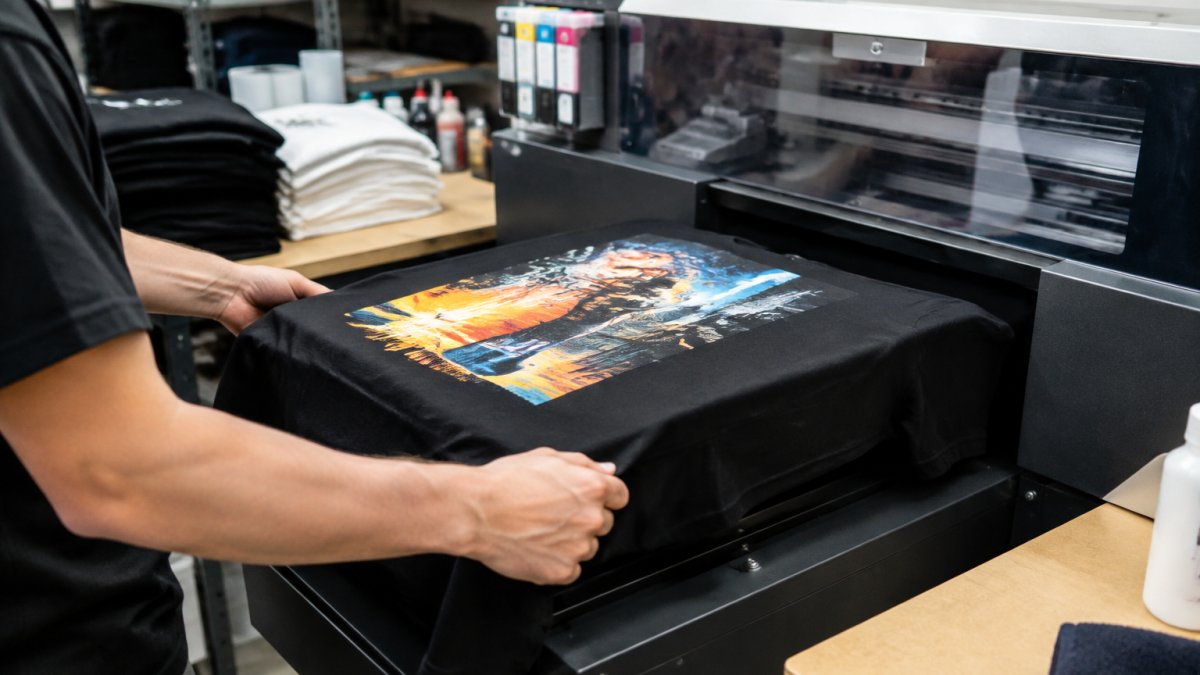
Every print method involves trade-offs. Direct-to-garment (DTG) is the method used for AW3SOME graphics. Neither method is inherently "greener"; the right pick depends on run size and design.
Finishing matters too. Collar tape, double-needle hems, and reinforced seams can extend a garment's useful life.
If you want to judge print quality on a finished tee, our guide on how to identify high quality screen printing on t-shirts covers the visual checks, even though AW3SOME graphics use DTG.
How to Verify Supplier Claims Before You Place a Production Order
Supplier claims are easy to make and hard to check. Verify before you pay. Use this checklist:
- Ask for fabric weight in GSM and ounces, in writing.
- Request fiber content for every colorway, including blends.
- Ask which print method is used and why.
- Request a sample and wash it before committing.
- Ask how the factory handles fabric scraps and wastewater.
- Confirm the minimum order quantity and lead time.
- Get the specs in the purchase order, not just an email.
Watch out: vague answers like "eco-friendly materials" with no numbers usually mean the supplier cannot back the claim. Push for specifics or walk away.
Choosing Your Next Heavyweight Tee With Sustainability in Mind
A better tee starts with better questions. Check the fabric weight, the fiber content, the construction details, and how the print is applied. Then decide if the garment will actually last.
Our pick for original graphics is the Floral Tech Graphic T-Shirt.

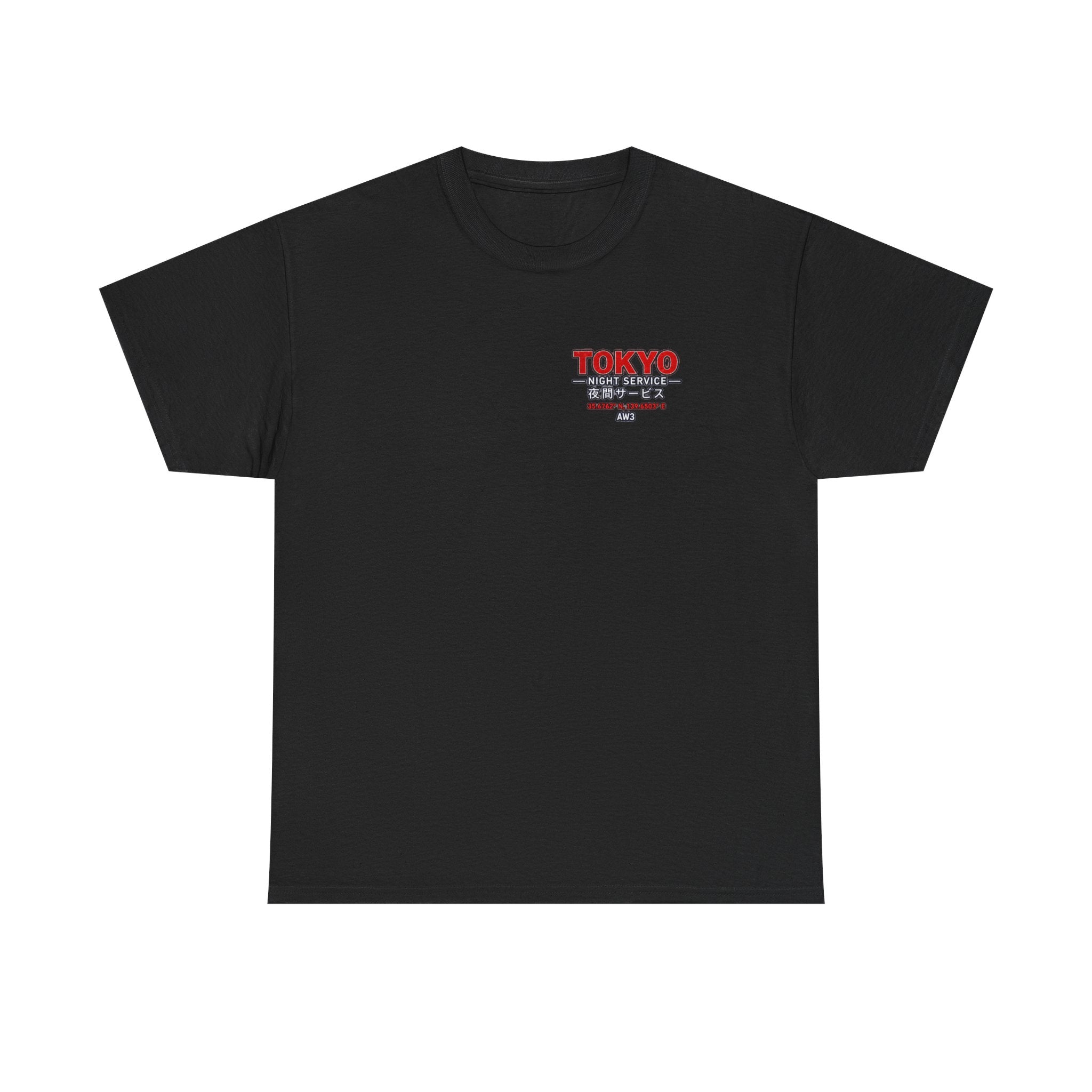
For a lower-cost entry point, the Tokyo Street Racing T-Shirt uses a medium-weight 180 g/m² cotton with a tubular knit with no side seams. Different weight, different job.
Want a full walkthrough before you buy? Read how to choose premium heavyweight t-shirts for men.
The hardest part of sustainable streetwear is not finding claims. It is finding proof.
Frequently Asked Questions
What are examples of sustainable practices in streetwear manufacturing?
Common examples include choosing lower-impact fibers such as organic cotton or recycled cotton blends, using low-impact dyes and closed-loop wastewater treatment, cutting fabric more efficiently to reduce textile waste, and running made-to-order or small-batch production so unsold stock does not become waste. Brands also ask suppliers about energy sources, chemical handling, and worker welfare. The key is that each practice is verifiable with documentation, not just a label on a hangtag.
How can streetwear brands reduce waste during manufacturing?
Start with pattern efficiency: nesting pieces tightly on the cut table and reusing offcuts for pocket bags, labels, or test prints. Produce in smaller batches tied to real demand rather than forecast volume. Choose print methods that do not require excess inventory of pre-printed blanks, and set a sampling process that limits the number of rejected samples. Ask your factory what happens to cut scraps and rejected garments, and get the answer in writing before the order starts.
Which materials are commonly used in more sustainable streetwear?
Organic cotton, recycled cotton, hemp, and recycled polyester are the most common lower-impact options. Each has trade-offs: organic cotton uses fewer synthetic inputs but still needs water; recycled fibers divert waste but can vary in strength and color consistency. Fabric weight also matters for longevity. A heavyweight cotton tee in the 245-255 GSM range, like the Shaka Wear SHMHSS used in AW3SOME tees, is a heavyweight blank with a stretch-proof collar and reinforced neck and hems.
How can consumers evaluate sustainability claims from clothing brands?
Look for specifics rather than vague words. A credible brand names the fiber, the certification (such as OEKO-TEX or GOTS), the factory, and the print method. Ask whether claims are third-party verified or self-declared. Check if the brand publishes care instructions that support longevity, like cold washing and low-heat drying. If a brand cannot answer basic questions about where and how a garment is made, treat broad sustainability language as marketing rather than a verified practice.