 How-to
How to Spot High Quality Streetwear Blanks
Quick Summary
To spot high quality streetwear blanks, judge four things: fabric, weight, fit and construction. Check fabric by feel for a smooth, dense, even knit, and compare listed weight in GSM or ounces per square yard. Then inspect the neck, shoulders and hems for straight, reinforced stitching.
- Check fabric for a smooth, dense surface with no loose fibers and even color.
- Compare weight in GSM or ounces, but remember heavier is not always better.
- Look for a stretch-proof collar, double-needle stitching and shoulder-to-shoulder neck tape.
- Match the blank to your decoration method, since DTG favors a smooth, densely knit surface.
- Wash and test a sample before committing to a bulk order.
Table of Contents
- What Makes a Streetwear Blank High Quality
- Blank T-Shirt Quality Checklist for Fabric and Weight
- Heavyweight Blanks for Streetwear: When Weight Helps and When It Doesn't
- Inspecting Streetwear Blank Fit and Construction
- Testing Print-Ready Blank Apparel Before You Commit
- Judging Total Cost and Consistency Across Bulk Orders
- Requesting Your Own Samples Before Your Next Blank Order
- Frequently Asked Questions
How to Spot High Quality Streetwear Blanks
Last Updated: November 6, 2026
What Makes a Streetwear Blank High Quality
Streetwear blanks are the plain tees, hoodies and sweatshirts that brands decorate with graphics. For a plain explanation of what makes a tee feel heavyweight, see what makes a t-shirt feel heavyweight.
Those four points work as a simple test. You can check most of them with your hands and your eyes before you buy.
- Fabric: Soft, dense and even knit, with no thin spots
- Weight: Heavy enough to feel solid, not stiff
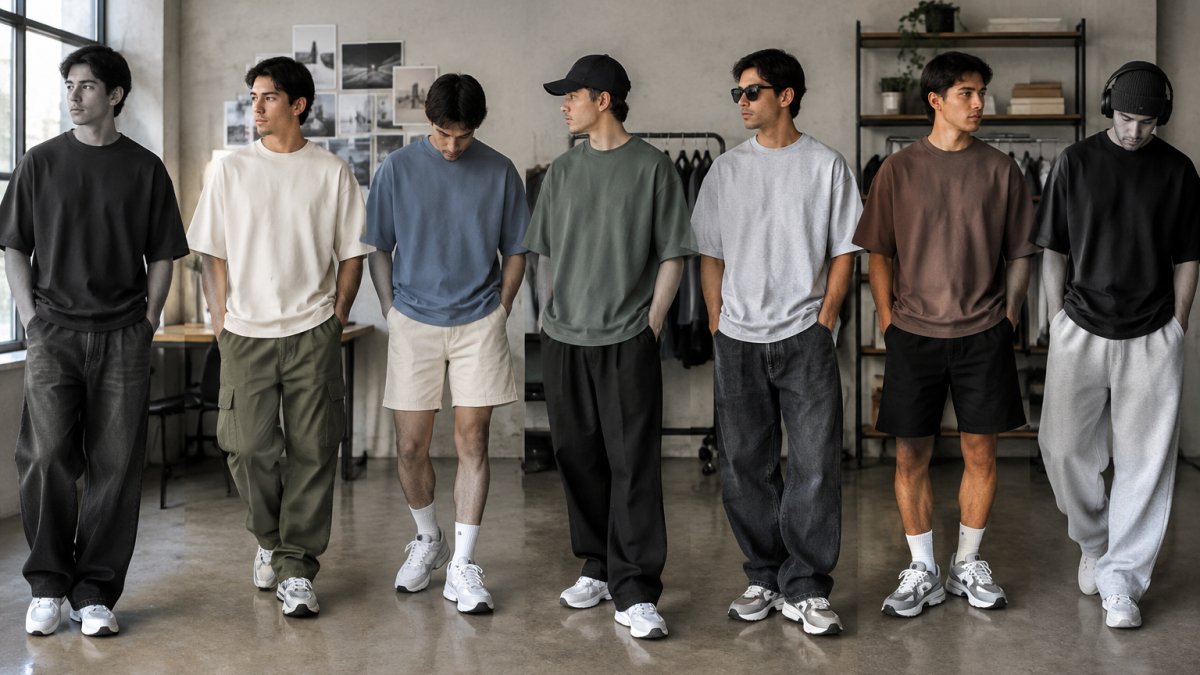
- Fit: A shape that suits your style, with proper shoulder placement
Keep these four in mind as you read the sections below. Each one builds on the others.
Blank T-Shirt Quality Checklist for Fabric and Weight
Fabric and weight tell you the most about how a tee will feel and wear. Start here before you look at anything else.
Reading Fabric Weight and What GSM Does and Doesn't Tell You
Fabric weight is often listed in GSM (grams per square meter) or in ounces per square yard. Many US brands list ounces instead, such as 7.5 oz.
Weight is useful, but it is not the whole story. Two tees with the same weight can feel very different because of knit tightness and yarn quality.
- A heavier tee usually feels more structured and hangs differently.
- Weight alone does not guarantee quality.
- Heavier is not always better. Some people want a lighter, drapier feel.
Use weight to set expectations, then check the feel in person.
Checking Fabric Composition and Hand Feel
Fabric composition tells you what the shirt is made of. A tee labeled 100% cotton will breathe well and wear differently than a cotton blend.
Hand feel is how the fabric feels when you touch it. Run your fingers across the chest and sleeves. Look for these signs:
- A smooth, dense surface with no loose fibers
- Even color without thin or see-through patches
- Firm recovery when you stretch the fabric gently
Blends can add texture and reduce shrinkage, while pure cotton has a classic softness. Choose the composition that matches how you plan to wear the piece.
The article's main checks for fabric and weight come down to a few measurable points you can compare across blanks.
| Check | What to look for | Why it matters |
|---|---|---|
| Fabric weight | GSM or oz per square yard; higher means heavier | Sets expectations for feel |
| Fabric composition | Label such as 100% cotton or a blend | Affects breathability and shrinkage |
| Hand feel | Smooth, dense surface with no loose fibers | Shows overall fabric quality |
| Color evenness | No thin or patchy areas | Keeps the look consistent |
| Recovery | Firm return after gentle stretch | Shows the knit holds its shape |
Heavyweight Blanks for Streetwear: When Weight Helps and When It Doesn't
Heavyweight blanks are popular in streetwear because they hold a boxy silhouette and give a graphic a solid backdrop. But "heavyweight" is a range, not a single standard, and the right weight depends on how the garment will be worn, layered, and decorated.
What Actually Makes a Blank Feel Heavy
Weight comes from two things working together: the yarn size and the knit tightness. A tee knit from larger yarns on a tighter gauge feels denser and more structured than a tee of the same listed weight knit from finer yarns on a looser gauge. That is why two shirts labeled 7.5 oz can feel noticeably different in the hand.
A few practical reference points help you calibrate:
- Lightweight (roughly under 5 oz): drapier, cooler, often used for undershirts or warm-weather layering. Graphics can show through if the knit is thin.
- Midweight (roughly 5-6.5 oz): the everyday range for retail tees. Balances drape and structure.
- Heavyweight (roughly 7 oz and up): more body, more structure, and a stronger canvas for large graphics. Also warmer and slower to dry.
These ranges are conventions, not rules. A well-knit midweight can outperform a loosely knit heavyweight on perceived quality.
When Heavyweight Helps
Heavyweight earns its place when you want:
- A structured, boxy silhouette that stands away from the body
- A solid feel that reads as premium in the hand
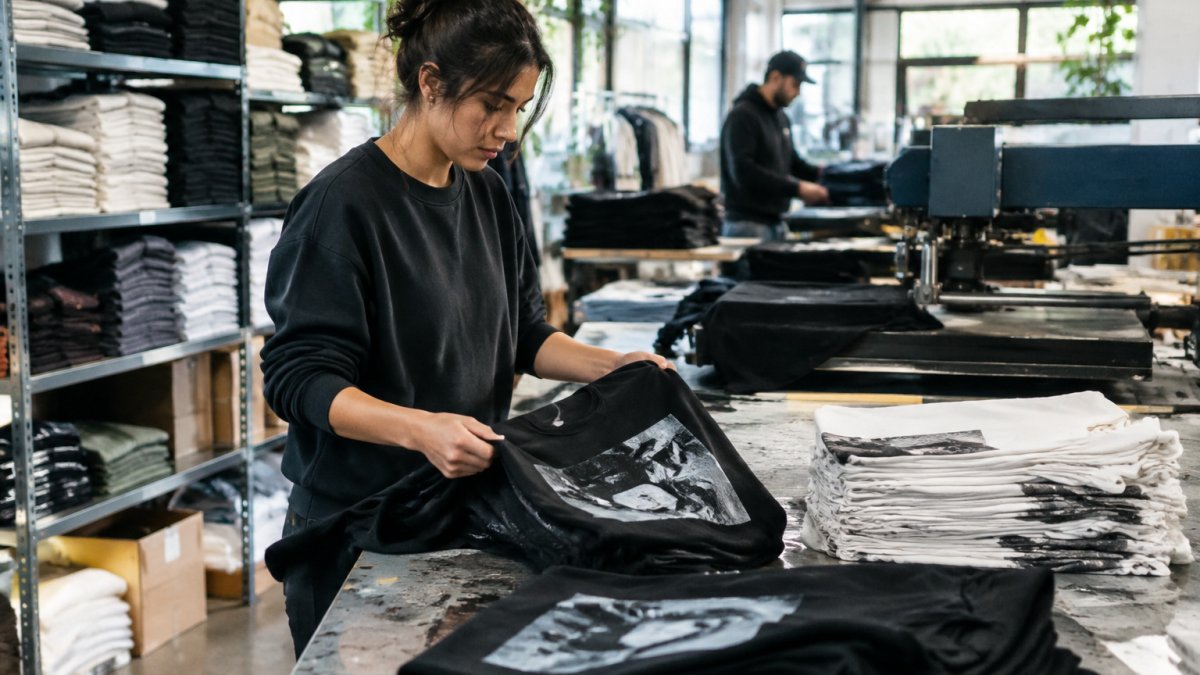
- A stable surface for large front or back graphics
Our tees use a 7.5 oz / 245-255 GSM heavyweight cotton in an oversized, relaxed fit with a slight drop shoulder, which suits that structured streetwear look. For a guide to heavyweight tee quality, fit, and durability, see heavyweight tees explained.
When Heavyweight Works Against You
Heavyweight is the wrong call when you want:
- A very light layer for hot weather, heavier cotton traps more heat and dries more slowly
- A soft, fluid drape that moves with the body
- A tee worn under other layers, where bulk becomes uncomfortable
Watch out: Do not assume a higher GSM number means a better blank. Weight is one variable; yarn quality, knit evenness, and construction decide how the fabric actually feels and wears.
Matching Weight to Climate, Use, and Decoration
Many buyers stock more than one weight rather than standardizing on the heaviest option:
- Warm-climate or summer drops: midweight or lightweight blanks keep the garment wearable.
- Cool-weather or layering drops: heavyweight tees and sweatshirts carry the look.
- Large, dense graphics: a heavier, tightly knit surface tends to hold ink with less show-through.
Before you commit to a weight, request a sample in the size and color you plan to sell, wear it once, and compare it against a blank you already know. The feel on your own body tells you more than any spec sheet.
Inspecting Streetwear Blank Fit and Construction
Fit and construction decide how a tee looks and lasts.
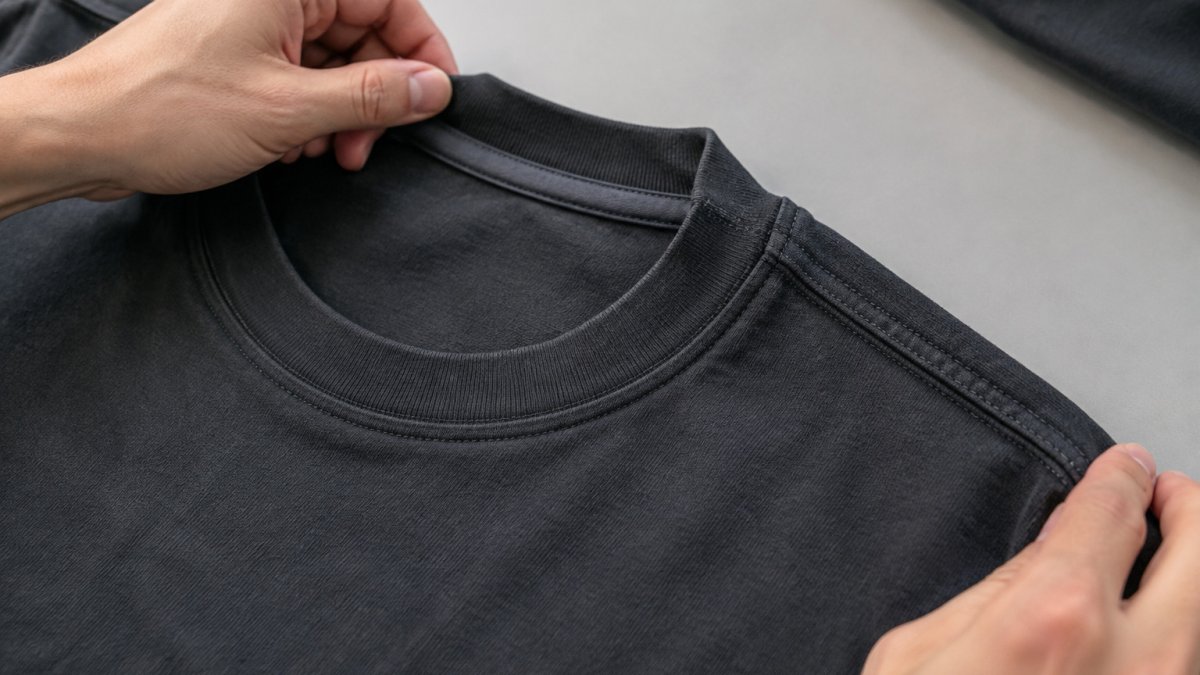
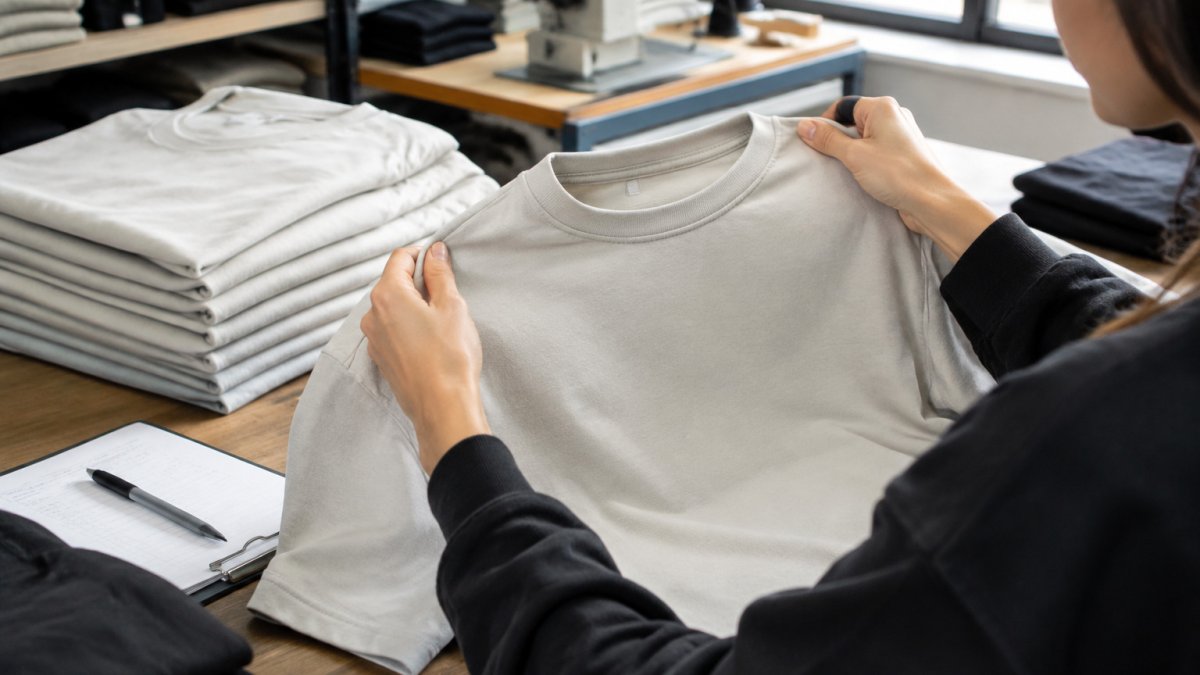
Start with the neckline. Look for a stretch-proof collar and double-needle stitching. These stitches hold the neck shape and resist stretching out.
Next, check the shoulders and sleeves:
- Shoulder-to-shoulder neck tape keeps the collar from sagging.
- A slight drop shoulder gives an oversized look.
- Double-needle sleeve and bottom hems stay flat and straight.
Finally, look at the body. A quarter-turned construction helps prevent a center crease, so the front looks cleaner.
Lay the tee flat and check that seams are straight and even. For more on judging apparel craftsmanship, see how to identify superior apparel craftsmanship.
Watch out: Do not judge fit from a product photo alone.
Testing Print-Ready Blank Apparel Before You Commit
A good blank should take a print cleanly, but "print-ready" means different things depending on how the garment will be decorated. Testing the print surface before you commit can help you avoid costly reprints.
Match the Blank to the Decoration Method
Different decoration methods interact with fabric differently:
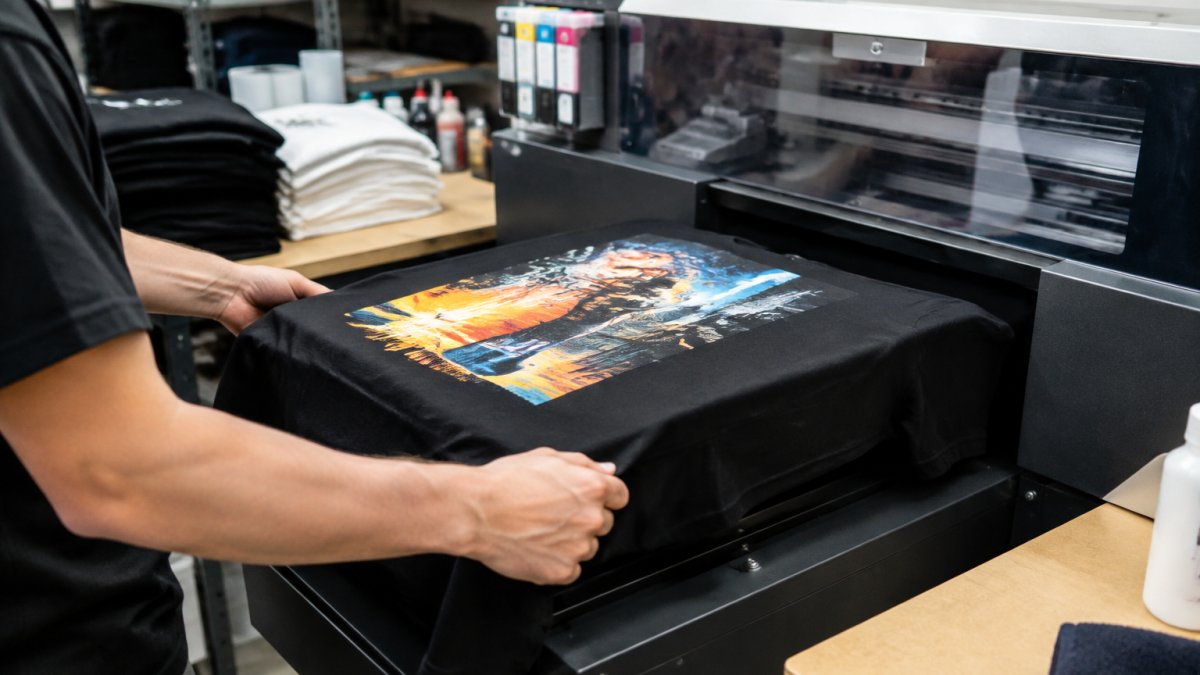
- DTG (direct-to-garment): works best on smooth, densely knit cotton with an even surface. Loose fibers, slubs, or a fuzzy face can make fine detail look soft.
- Screen printing: relies on a flat, stable surface so the squeegee lays down an even ink layer. A tightly knit face helps.
- Embroidery: needs fabric stable enough to support stitching without puckering, which is why heavier, denser knits are often chosen for chest logos.
Ask the seller how the blank will be decorated, then judge the blank with that method in mind. Graphics on AW3SOME tees use DTG (direct-to-garment) printing, so fabric smoothness and knit evenness matter for the final result. To learn how to judge print quality on t-shirts, see how to identify high quality screen printing on t-shirts.
A Hands-On Print Surface Check
Before you commit to a blank, run this simple inspection:
- Lay the tee flat under good light. Look across the chest for bumps, loose fibers, or uneven knit.
- Stretch the fabric gently across the print area. A surface that goes thin or see-through under mild stretch will likely show through a print.
- Check color evenness. Mottled or patchy dye can make a print look inconsistent, especially on light grounds.
- Feel for slubs and thick spots. Raised yarn irregularities can interrupt fine linework.
- Confirm the chest area is flat and free of creases from packing, since most graphics sit there.
Test the Print, Not Just the Blank
A blank that feels good in the hand can still print poorly. The most reliable test is a physical print sample:
- Request a decorated sample using your actual artwork, not a generic test print.
- Wash the printed sample once and check for cracking, fading, or loss of detail.
- Compare the print on your sample against the same artwork printed on a blank you already trust.
Watch out: Do not judge printability from a product photo or a blank swatch alone. Fabric finish, color, and knit evenness only reveal themselves on a decorated, washed sample.
Color and Fabric Finish Considerations
If your design depends on crisp detail or bright color, test on the exact colorway you plan to sell rather than assuming a solid-color result carries over.
Judging Total Cost and Consistency Across Bulk Orders
Unit price is only one part of the cost. If you order in bulk, consistency matters just as much as price.
Consider these questions:
- Does every tee in the batch match the same weight and color?
- Do sizes run the same across the order?
- Will the blanks hold up after several washes?
Ask for a sample from the same production run you plan to order from. Compare a few pieces side by side before you commit.
Moonlit Wanderer is an example of a heavyweight tee built with these construction details. You can see the full specs on the product page at https://aw3someclothes.store/products/moonlit-wanderer-graphic-tee-mystical-cloaked-figure-t-shirt.

Requesting Your Own Samples Before Your Next Blank Order
The best way to judge a blank is to hold one. Requesting samples lets you test fabric, fit and print surface on your own terms.
Use this short process before you order:
- Ask for a sample in your usual size.
- Check the weight, hand feel and color against your notes.
- Measure the chest, length and sleeve.
- Wash the sample once and check for shrinkage or changes in shape.
- Compare it with your other blanks.
Keep notes as you test. A simple list of pros and cons makes it easier to choose the right blank for your brand.
The practical path is simple: know what to look for, test the fabric and fit yourself, and order only blanks that meet your standards.
Frequently Asked Questions
Does a higher GSM mean a better streetwear blank?
Not automatically. GSM measures fabric weight, meaning how many grams a square meter of fabric weighs. A heavier fabric can feel more substantial and hold its shape well, but weight alone does not tell you about knit quality, fiber content, fit, or construction. Use GSM as one data point alongside hand feel, stitching, collar stability, and how the garment fits your design and intended use. A heavy blank with poor seams or a collar that stretches out is still a weak choice.
How should a high-quality blank T-shirt fit?
It depends on the silhouette you want, but a well-made blank holds its intended shape on the body rather than collapsing or twisting. Check the shoulder seam position, the body length, and the sleeve width against a shirt you already know fits. For oversized or relaxed streetwear fits, look for a slight drop shoulder and enough body width without the garment looking shapeless. Compare measurements on a sample rather than relying on the size chart alone, because sizing can vary between suppliers.
What stitching details should you look for in a blank T-shirt?
Start with the neck and hems. Double-needle stitching on the neck and sleeve or bottom hems typically holds up better than single-needle stitching under repeated washing. Check that the collar lies flat and keeps its shape after you stretch it gently. Look for shoulder-to-shoulder neck tape, which helps the collar resist stretching. Run your fingers along the seams to check for loose threads or uneven stitch spacing, since these details show how carefully the garment was assembled.
How can you tell whether a blank T-shirt is suitable for printing?
Look at the surface first. A smooth, evenly knit fabric gives graphics a cleaner base, while loose or uneven knits can distort fine lines. Check whether the body is cut square, since a quarter-turned body helps avoid a center crease that can show through a print. If you plan to use direct-to-garment printing, test a sample with your own artwork and wash it several times to see how the graphic and the fabric hold up before ordering in bulk.