 How-to
How to Choose an Oversized T-Shirt Size for Streetwear
Last Updated: November 14, 2026
Quick Summary
An oversized t-shirt size is usually your normal size, since oversized cuts already include extra room. To choose well, measure a tee you like and compare its chest width and body length to the size chart. Size up only if you want a heavier, boxier silhouette.
- Most oversized tees are built with extra room, so your usual size often gives the intended look.
- Measure chest width flat, underarm seam to seam, about 1 inch below the armhole.
- Measure body length from the highest shoulder point next to the collar down to the hem.
- Check whether the chart lists chest width flat or doubled before comparing measurements.
- Fabric weight changes how volume holds, so a heavier tee keeps a boxier shape than a lighter one.
Table of Contents
- What an Oversized T-Shirt Fit Actually Means
- Oversized T-Shirt Size vs. Regular Size: Should You Size Up?
- How to Measure a T-Shirt for the Right Fit
- Reading an Oversized T-Shirt Size Chart
- Fabric Weight, Drape and How They Change the Fit
- What Size Oversized T-Shirt Should You Get?
- Choosing Your Oversized Size and Picking Your First Streetwear Tee
- Frequently Asked Questions
What an Oversized T-Shirt Fit Actually Means
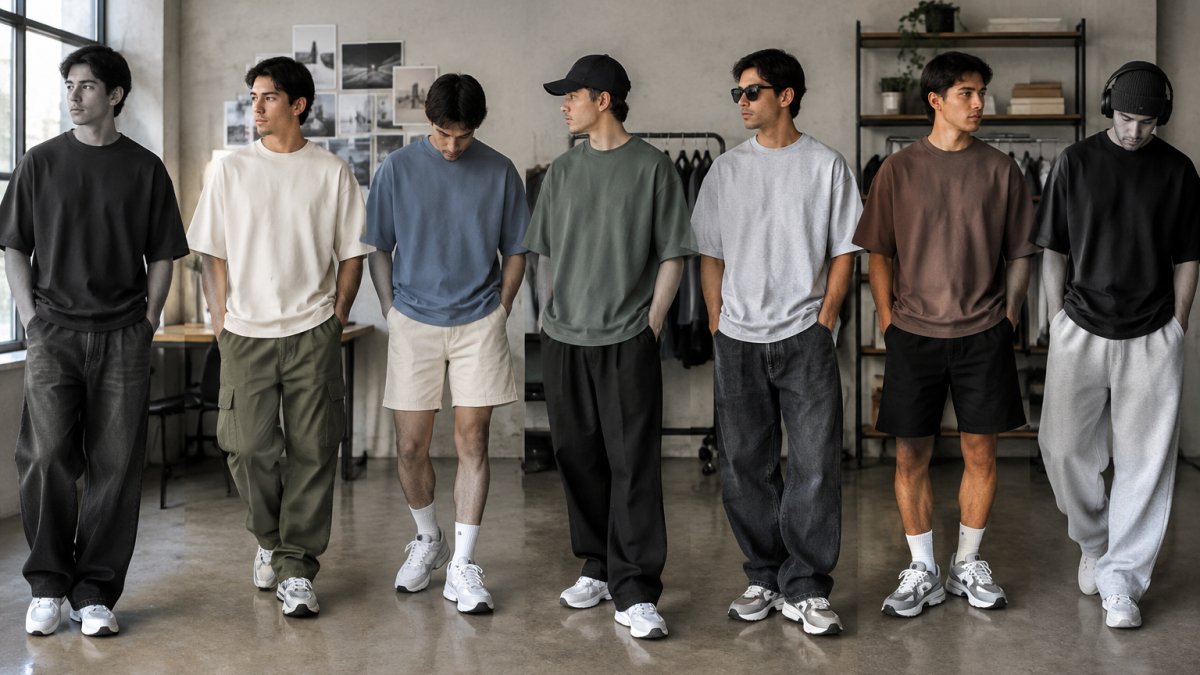
An oversized t-shirt is cut wider and longer than a regular tee, with a relaxed body and a slightly dropped shoulder seam. The result is a boxy silhouette that hangs loose on the torso rather than clinging to it.
Many shoppers mix up oversized, relaxed and regular fits, but the differences are real. Oversized fits sit well past the body, relaxed fits sit close to it with some room, and regular fits follow the natural shape of the chest and shoulders. Knowing which one you want is the first step toward choosing a size that works.
Streetwear tends to lean on the oversized look for its volume and proportion. The shirt's width and drape do most of the styling work, so the fit matters as much as the graphic.
Oversized T-Shirt Size vs. Regular Size: Should You Size Up?
For most oversized tees, sizing up is not the default. Many shoppers buy their usual size and still get the intended look, because the cut is already built with extra room. Sizing up can make the shirt look sloppy or swallow the frame.
A better question is how much volume you want. If you want a moderate drop, stay close to your usual size. If you want a full, heavy silhouette, consider one size up, then check the garment measurements before you order.
Our general advice: compare the shirt's chest width and body length to a tee you already like. That comparison tells you more than the size label alone.
How to Measure a T-Shirt for the Right Fit
Most sizing advice stops at "measure a shirt you own." The useful part is knowing exactly which measurements to take, how to take them the same way a brand does, and what to do with the numbers once you have them.
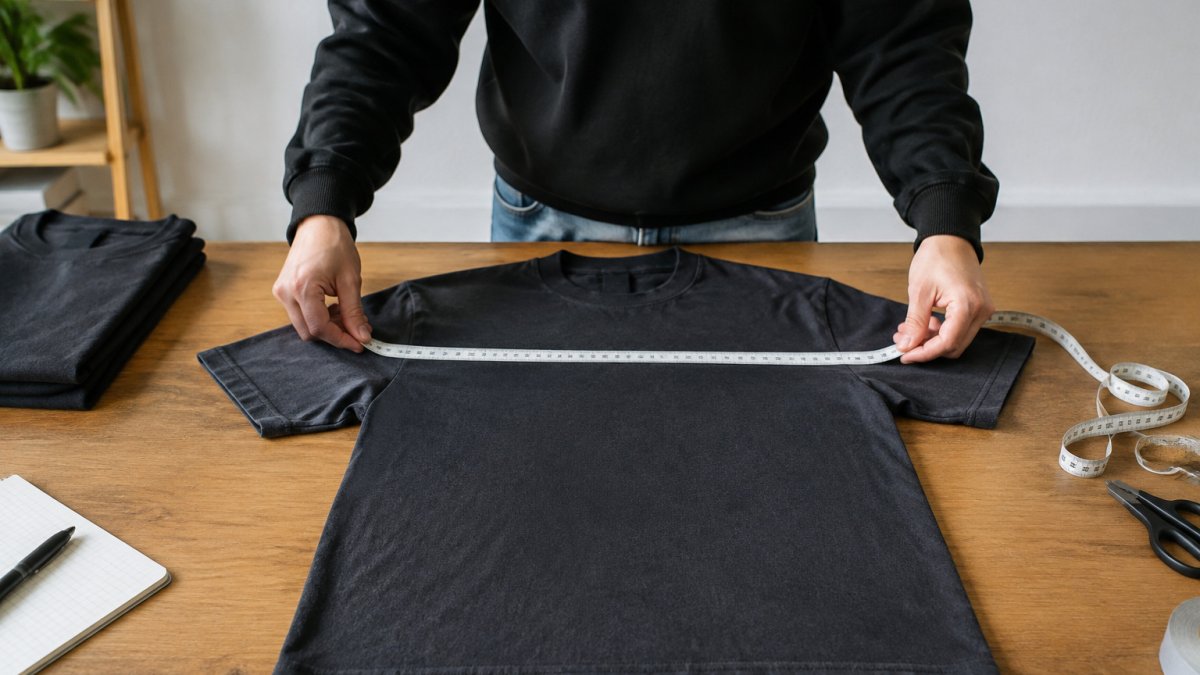
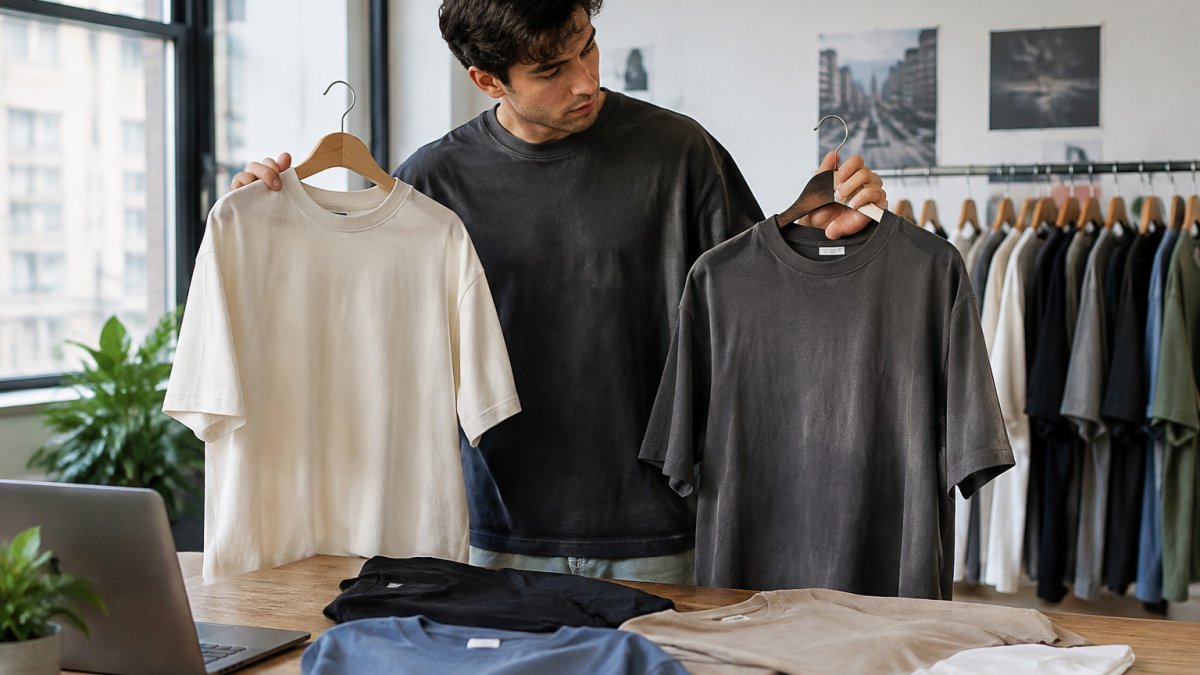
Step 1: Pick a reference tee. Choose a shirt whose fit you actually like, not the one you wish fit better. If you want a moderate oversized look, use a tee that already feels slightly roomy. If you want full streetwear volume, use your roomiest tee. The reference shirt sets your target.
Step 2: Lay it flat and smooth it out. Button or fold nothing. Smooth the chest, sleeves, and hem so the fabric lies flat without stretching. Measure on a hard surface, not a bed.
Step 3: Measure chest width. Place the tape straight across the shirt from one underarm seam to the other, about 1 inch below the armhole. Record the flat number.
Step 4: Measure body length. Start at the highest point of the shoulder, right next to the collar, and measure straight down to the bottom hem. Do not follow the curve of the shirt. This is the number that decides whether the tee hits at your hip, mid-thigh, or lower.
Step 5: Measure shoulder width. Go seam to seam across the top of the back, from one shoulder seam to the other. On an oversized tee with a drop shoulder, this number will be wider than your actual shoulder, that is the point. Compare it to the drop you want, not to your body measurement alone.
Step 6: Measure sleeve length (optional but useful). From the shoulder seam to the sleeve opening, measured flat. On a drop-shoulder tee, the sleeve starts farther out, so a longer sleeve number often signals a more dramatic oversized look.
Step 7: Compare like with like. Put your reference numbers next to the product chart and match the columns. If the chart lists chest width flat and you measured flat, you are comparing correctly. If the chart doubles the chest, double yours before comparing.
A worked example: if your favorite roomy tee measures 22 inches flat across the chest and 29 inches long, and a chart lists a size with a 22.5-inch flat chest and 29.5-inch length, that size should land close to the fit you already like.
Watch out: measuring a shirt that has been stretched on a hanger or shrunk in a hot dryer gives you a false target. Use a tee that has been washed and dried the way you normally care for clothes.
Here is the measurement method in brief, with the reference numbers from the worked example.
| Step | What to do | Note |
|---|---|---|
| 1. Pick a reference tee | Choose a shirt whose fit you already like | Use your roomiest tee for full volume |
| 2. Lay it flat | Smooth chest, sleeves and hem without stretching | Measure on a hard surface |
| 3. Chest width | Measure underarm seam to seam, about 1 inch below the armhole | Flat measurement; check if the chart doubles it |
| 4. Body length | Measure from highest shoulder point next to collar down to hem | Follow a straight line, not the curve |
| 5. Shoulder width | Measure seam to seam across the top of the back | Drop shoulder makes this wider than your body |
| 6. Sleeve length | Measure from shoulder seam to sleeve opening, flat | Optional; longer suggests a bigger look |
Reading an Oversized T-Shirt Size Chart
An oversized t-shirt size chart lists garment measurements, not body measurements. The most useful columns are chest width, body length, and shoulder width.
When you read the chart, look for:
- Chest width: The flat measurement across the chest, usually doubled in the chart. Compare it to your own chest measurement.
- Body length: Where the hem sits relative to your shoulders. Longer tees give a more dramatic streetwear look.
- Shoulder width: The dropped shoulder is a key part of the oversized look. Check that it sits where you want it.
Unisex charts and men's or women's charts can differ, so check which chart applies to the shirt you are buying.
Fabric Weight, Drape and How They Change the Fit
Fabric weight is the single biggest reason two tees with the same labeled size can look completely different on the body. Weight affects how the fabric behaves at the shoulder, how it falls from the chest, and whether the hem stays where you put it.
Here is the mechanism. A heavier cotton knit has more mass per square yard, so gravity pulls it down rather than letting it cling. That is why a heavyweight tee tends to stand slightly away from the torso and hold a boxy line, while a lighter tee collapses into the body's contours and reads as slimmer even when the cut is identical. Weight is not a quality score, a lighter tee can be well made and a heavier tee can be poorly made, but for an oversized streetwear silhouette, weight is what keeps the volume visible instead of letting it disappear.
Our standard tees use a 7.5 oz (roughly 245 to 255 GSM) heavyweight cotton. In practice, that weight gives the oversized cut enough structure to hold its shape through the day rather than draping flat against the chest. It is a deliberate match between fabric and silhouette, not a claim that heavier is universally better.
Cotton content matters too. Standard colors are 100% cotton, which tends to drape softly and break in over time. Heather Grey is a 90/10 cotton/poly blend and Charcoal Grey is 50/50; the poly content can make those colorways feel slightly smoother and hold shape a little differently than the all-cotton versions. If you are comparing two colors of the same tee, expect a small difference in hand-feel and drape.
Care changes fit more than most shoppers expect. Cotton can move slightly after the first wash, and high heat in the dryer is the usual culprit behind a tee that suddenly fits shorter or tighter. Wash cold, tumble low or hang dry, and the measurements you bought should stay close to the measurements you received. Skip the high-heat dryer cycle if you want to preserve body length.
A practical way to use this: if you are between sizes and want the boxy look to hold, lean toward the size that matches your reference tee and let the fabric weight do the work. If you want a softer, closer drape, a lighter tee in the same cut will read smaller even at the same labeled size.
Watch out: judging an oversized tee by the size label alone hides the fabric variable. Two size-medium tees in different weights can fit like different sizes.
What Size Oversized T-Shirt Should You Get?
Your ideal size depends on the look you want and your measurements. Start by choosing a target: relaxed, oversized, or full streetwear volume.
Then match your measurements to the chart:
- If your chest falls between two sizes, pick the larger size for more drape.
- If you want a shorter, boxier cut, stay with your usual size.
- If you want a longer, roomier look, size up one step.
Shoppers who are between heights may find a longer tee looks better, while shorter frames often prefer a shorter body length to avoid the shirt overwhelming their frame.
Choosing Your Oversized Size and Picking Your First Streetwear Tee
Choosing an oversized size is easier when you work from measurements rather than guesswork. Measure yourself, compare the numbers to the size chart, then decide how much volume you want.
If you are picking a first streetwear tee, the Created Different Graphic T-Shirt is a good place to start. It is a roomy, heavyweight cotton tee with a relaxed, slightly dropped shoulder, sized from S to 7XL. The cut is built for the oversized look, so compare its measurements with a tee you already own before you choose your size.
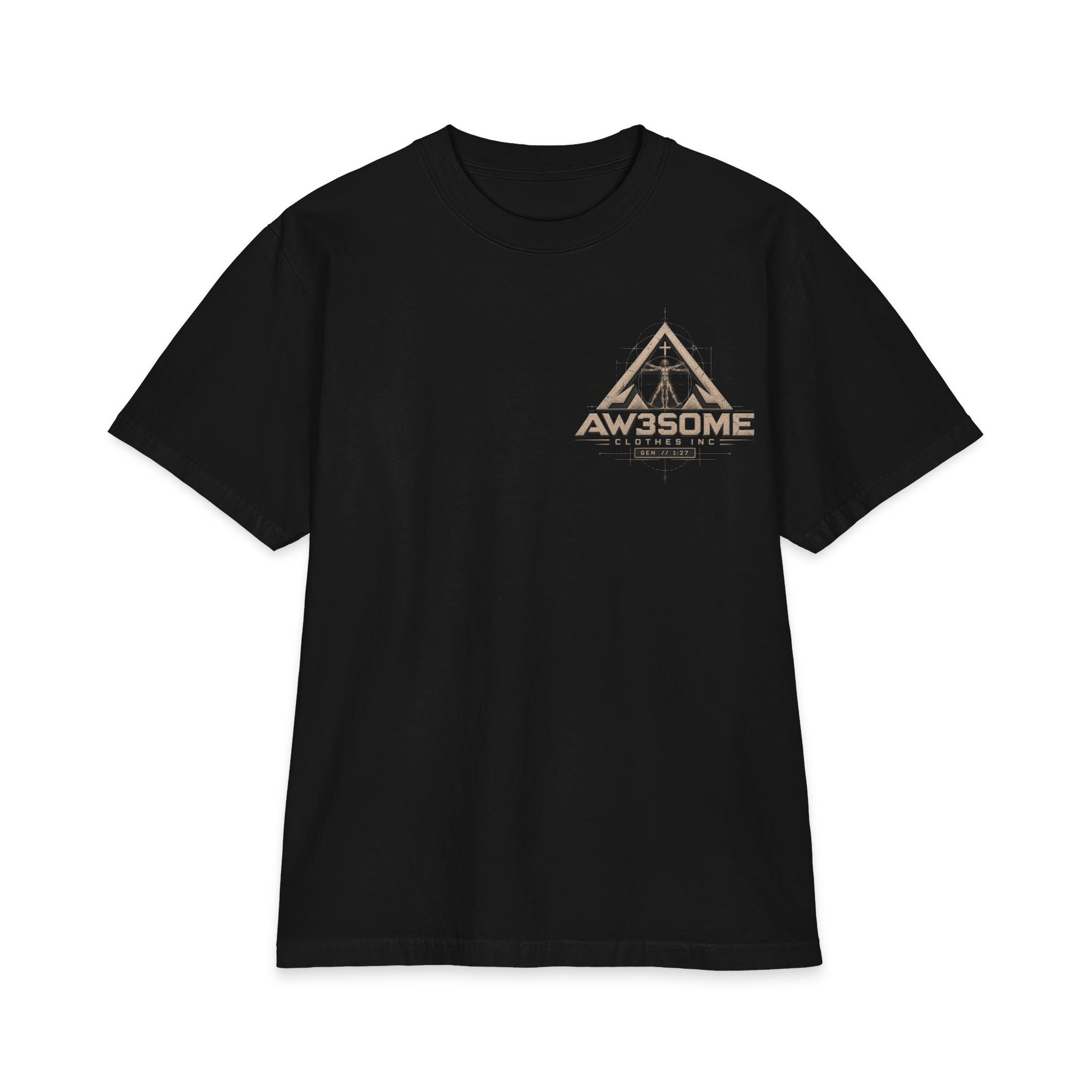
Our pick for shoppers who want a clean, structured fit is to start with your measured size and adjust from there. Shopping with measurements in hand makes it easier to get the look you want on the first order.
Frequently Asked Questions
What size should I get for an oversized t-shirt?
Most people wearing an oversized tee choose one or two sizes above their usual size, but the right choice depends on the garment's chest width and body length rather than the label alone. Compare the chest measurement of the shirt laid flat with your own chest measurement, and check the body length against where you want the hem to fall. If you prefer a strong drop shoulder and a boxy silhouette, sizing up is usually the better starting point. Use the product's size chart as the final reference, since sizing differs between brands.
Should I size down in oversized t-shirts?
Sizing down is rarely the right move for an oversized look. A smaller size reduces the chest and shoulder width, which removes the relaxed drape that defines the style. Sizing down can make sense only if a particular oversized cut runs unusually large for your frame and you want a slightly less extreme silhouette. In most cases, keep your usual size or move up, then compare the shoulder seam position and hem length before ordering.
How does heavyweight fabric affect the fit of an oversized tee?
Heavier fabric, such as the 7.5 oz (245-255 GSM) cotton used in AW3SOME's oversized tees, holds its shape better than lighter jersey and gives a fuller, more structured drape. Because the fabric is stiffer, it stands away from the body rather than clinging, so the oversized silhouette looks intentional. GSM is a measure of fabric weight, not a universal sign of quality, so use it alongside the garment measurements when comparing options. The Created Different Graphic T-Shirt is one example of a heavyweight oversized fit.
What if I want an oversized fit but my shoulders are narrow?
Check the shoulder width and shoulder seam placement on the size chart before buying. Oversized tees often have a slight drop shoulder, which places the seam below your natural shoulder line. If your shoulders are narrow, the extra width can look like a dropped shoulder rather than a fitted one, which many people find more comfortable. If the shoulder seam sits far past your shoulder point, consider a smaller size in the same cut to balance the proportions.