 How-to
The Best Way to Fold Graphic T-Shirts for Storage
Last Updated: November 5, 2026
Quick Summary
To fold graphic t-shirts for storage, lay the shirt face-down and fold around the print, not through it, so ink never presses against ink. Smooth out wrinkles first, fold the sleeves and sides into a narrow bundle, then lock the hem and flip it print-side up.
- Fold large back prints face-down so the print never creases against itself.
- Smooth the fabric with your palms before folding, since any wrinkle you fold in becomes a crease.
- Stand folded bundles upright in drawers so every design stays visible and handling stays minimal.
- For long-term storage, use a breathable cotton or canvas bin and skip sealed vacuum bags.
- Roll graphic tees print-side-in for travel, keeping rolls loose enough to absorb bag movement.
Table of Contents
- Why Graphic T-Shirts Need a Different Folding Approach
- The Graphic-Safe Fold: A Step-by-Step Method
- How to Fold T-Shirts for Drawers So Every Design Stays Visible
- How to Store Graphic T-Shirts for the Long Term
- Fold or Hang T-Shirts: Which Protects Prints Better
- How to Fold T-Shirts for Packing Cubes and Travel
- Common Folding Mistakes That Crease Prints
- Choosing the Right Fold for Your AW3SOME Tees
- Frequently Asked Questions
Why Graphic T-Shirts Need a Different Folding Approach
Most folding advice treats every shirt the same. That advice was written for blank cotton.
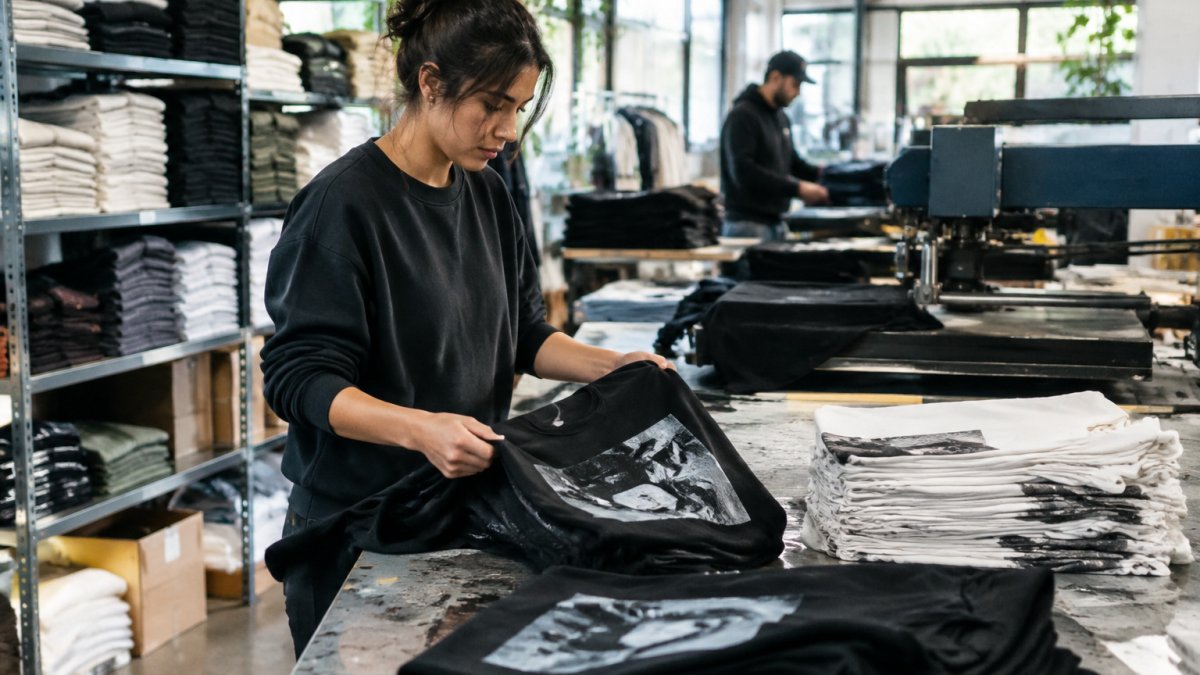
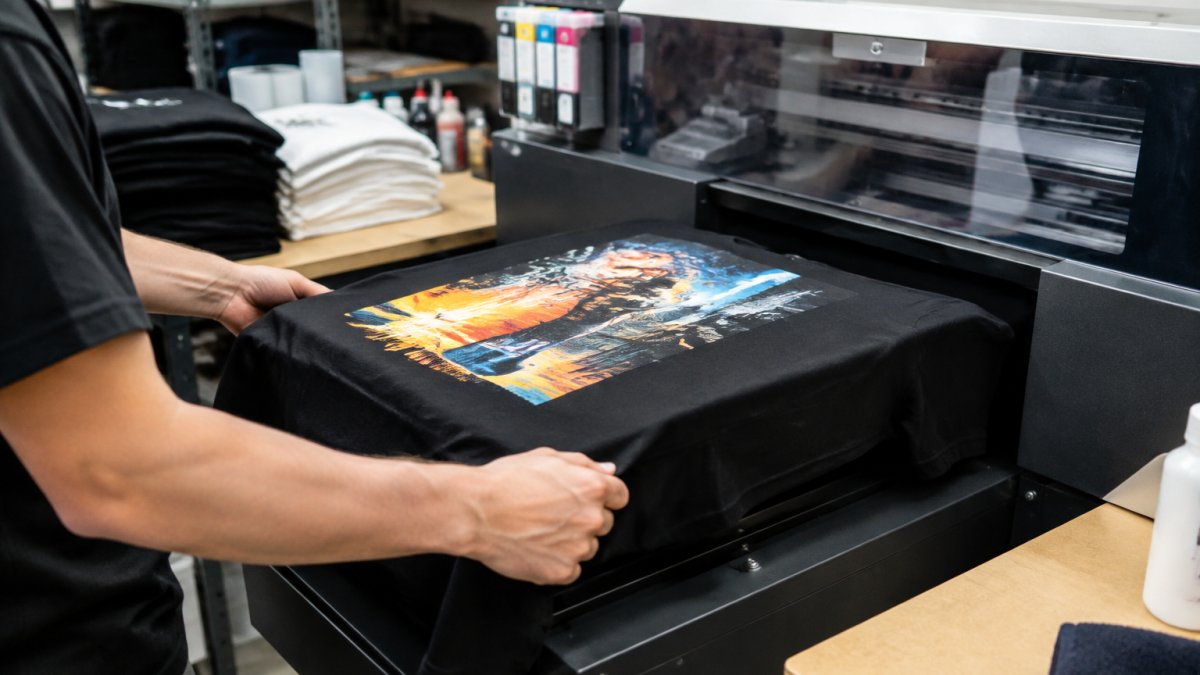
At AW3SOME CLOTHES INC, our graphics use DTG (direct-to-garment) printing on heavyweight cotton, and the print sits on the fabric surface.
Here is the core rule: fold around the print, not through it.
American Cleaning Institute fabric care guidance notes that heat and abrasion are the main enemies of printed textiles.
How Print Placement Changes the Fold
Print placement decides your method. A small chest logo needs almost no special handling. A full back print changes everything.
- Small chest print: fold normally, print facing up
- Large back print: fold face-down so the print never creases against itself
- Full front print: fold face-down, then flip at the end
- Sleeve or neck prints: keep those areas flat and unstacked
- Two-sided prints: face-down fold, loose stack, no heavy weight on top
The logic is simple. Ink should never press against ink. When a print folds onto itself, the two printed surfaces rub together every time the shirt moves in the drawer.
The Graphic-Safe Fold: A Step-by-Step Method
This is our standard method. It works for back prints, front prints and two-sided designs. Total time is about 20 seconds per shirt once you have done it a few times.
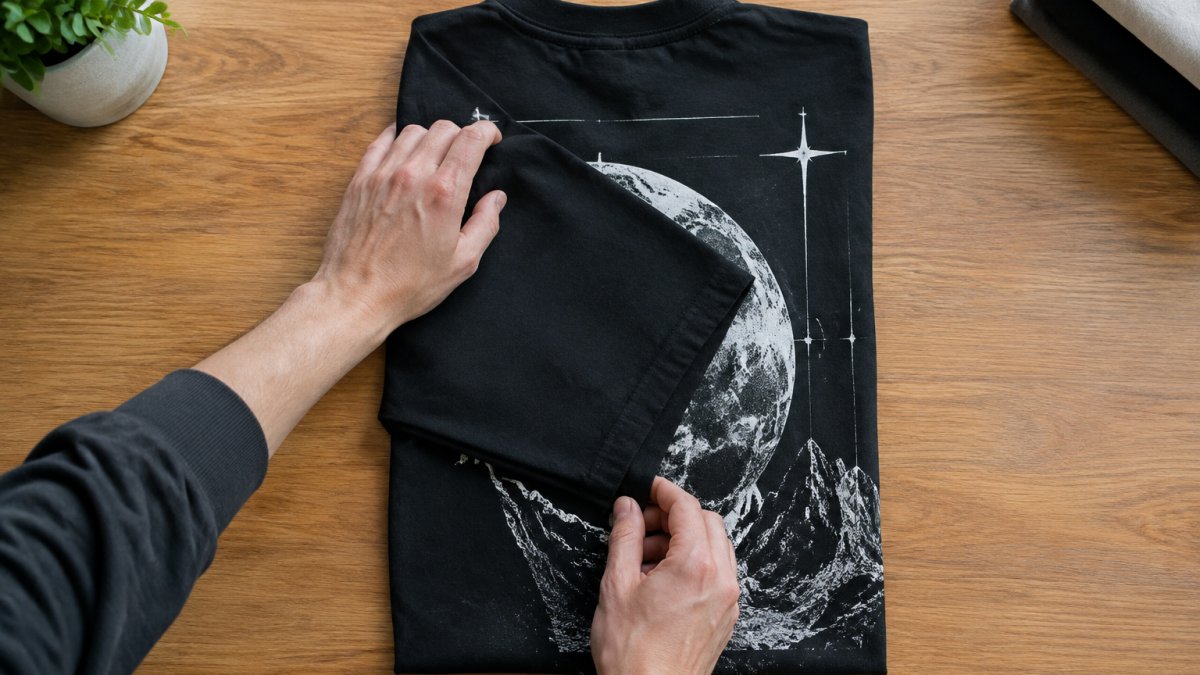
Preparing the Shirt on a Flat Surface
Start with a clean, flat surface. A table beats a bed, because a soft surface lets the shirt shift while you work.
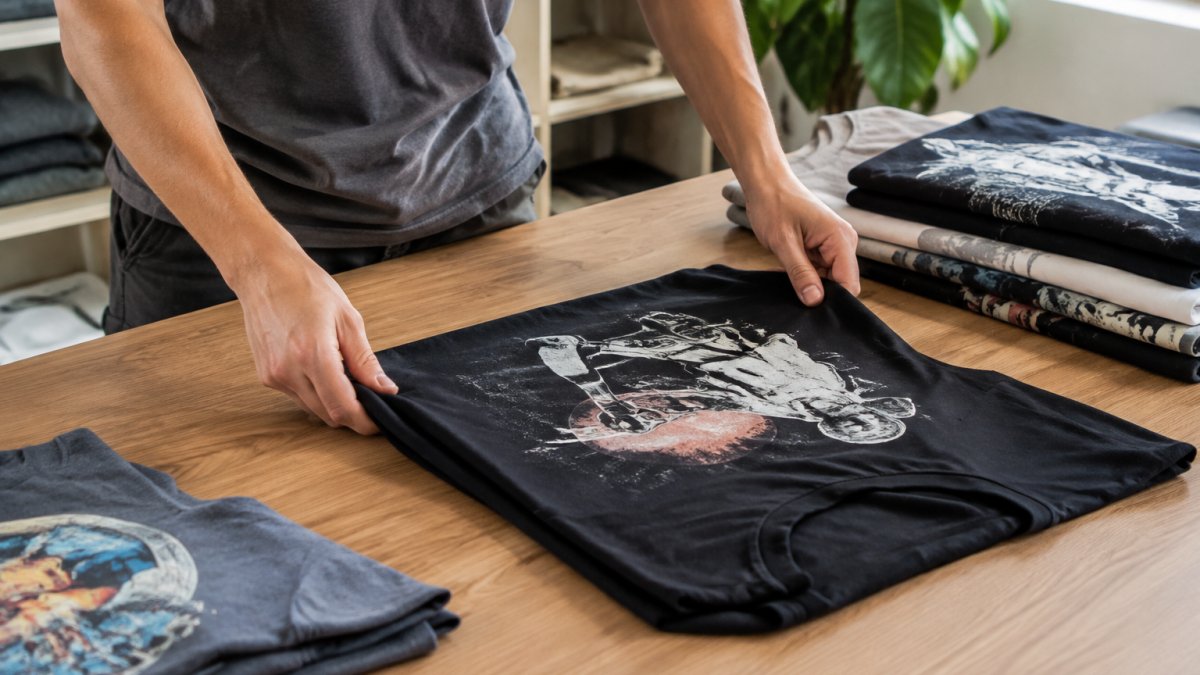
- Lay the shirt face-down. The print faces the table, the back faces you.
- Smooth the fabric with your palms, working from the center outward. Do not pull at the print.
- Check for wrinkles before you fold. Any wrinkle you fold in becomes a crease.
- Straighten everything. Line up the shoulders and side seams.
Smoothing is the step people skip and the step that matters most. A wrinkle pressed into a print for months can leave a mark that does not come out.
Locking the Bottom Fold and Finishing the Stack
Now build the fold so it holds without pressure.
- Fold one sleeve across the back, angled slightly down toward the hem.
- Repeat with the other sleeve. The two should sit parallel, not overlapping heavily.
- Fold the shirt in thirds from the side, keeping the width narrow enough for your drawer.
- Lock the bottom fold. Fold the hem up about a third of the way, tuck it under, and press lightly with a flat palm.
- Flip the bundle over. The print now faces up, smooth and uncreased.
The locked hem keeps the bundle from unrolling, so you are not re-folding the same shirt every week, and every re-fold is another chance to crease the print.
Stack shirts loosely. Weight on top of a print is pressure, and pressure over time is what you are trying to avoid.
How to Fold T-Shirts for Drawers So Every Design Stays Visible
Filing beats stacking when you own more than a few graphic tees.
This upright filing approach is a popular way to organize folded shirts, and it solves a real problem. In a stack, you only see the top shirt.
- Measure your drawer depth first. Fold to that width, not to a guess.
- Stand bundles upright, side by side. Like files in a cabinet.
- Keep the print facing up or inward, never pressed against the next shirt.
- Leave a finger of space between bundles. Tight packing creates friction.
- Group by how often you wear them, not by color.
Drawer space goes further this way, and easy access means less digging, less handling, and less wear on the print.
University of Illinois Extension home storage guidance recommends keeping stored textiles clean, dry and out of direct sun.
How to Store Graphic T-Shirts for the Long Term
Long-term storage is a different job from daily drawer storage. Here the goal is to remove pressure and light entirely.
Seasonal rotation is the practical trigger. When you swap warm-weather tees for cold-weather ones, the ones going away need better protection than a drawer.
- Wash and dry fully before storing. Never store a worn shirt.
- Fold loose, not tight. A relaxed fold has fewer sharp creases.
- Use a breathable cotton or canvas bin, not a sealed plastic vacuum bag.
- Keep the bin out of sunlight and away from damp walls or floors.
- Skip heavy stacking. Two layers maximum in a storage bin.
- Refresh every few months. Unfold, air out, refold on a new line.
Watch out: vacuum bags can press a print against itself under pressure, so they are best avoided for graphic tees.
For a deeper look at keeping artwork in good shape over time, our guide on how to maintain streetwear graphic prints covers washing and print care in detail.
Fold or Hang T-Shirts: Which Protects Prints Better
For most graphic tees, folding protects the print better than hanging, for mechanical rather than aesthetic reasons.
The trade-off is that folding puts the print in contact with fabric and other shirts, which is why the fold method matters more than the fold-versus-hang decision.
Here is how the methods compare for printed shirts specifically:
| Method | What happens to the print | Space used | Best for |
|---|---|---|---|
| Flat fold in drawer | Print rests against fabric, not other prints | Medium | Daily wear, most front and back prints |
| Upright filing | Print faces up or inward, minimal rubbing | Low | Large collections, two-sided prints |
| Rolled | No sharp fold lines, but compression in a bag | Low | Travel, soft or lightweight shirts |
| Hanging on a hanger | Shoulder load stretches neckline; print hangs free | High | Lightweight shirts, short-term |
| Hanging on a clamp | Clamp marks on shoulders; print hangs free | High | Display, not long-term storage |
A few specifics on hanging:
- Never hang a heavyweight tee by the collar. The fabric weight pulls the neck out of shape, and a stretched collar is not reversible.
- Use a wide, padded hanger so the shoulder seam bears the load instead of a thin wire.
- Clamp hangers keep the print free of creases but leave clamp marks on the shoulders, so reserve them for display.
- Rotate hung shirts so the same fold or clamp line does not sit for months.
Watch out: hanging a wet or damp shirt is the worst of both worlds.
For print placement, the decision splits.
Our take: fold heavyweight tees, hang lightweight ones short term, and never hang anything you care about for a full season.
How to Fold T-Shirts for Packing Cubes and Travel
Travel is where graphic tees take the most abuse per day. A shirt in a drawer sits still.
The goal in a bag is to keep the print from pressing against another print and to avoid sharp fold lines that become creases under compression.
- Lay the shirt face-down and smooth it flat. The print faces the surface, the back faces you.
- Fold both sleeves in toward the center, angled slightly down so they do not bunch at the shoulders.
- Fold the shirt in half lengthwise, keeping the print safely inside the fold.
- Roll from the hem upward, snug but not tight. A tight roll compresses the print against itself.
- Place the roll print-side-in in the packing cube so the printed surface faces the center of the roll, not the cube wall.
A rolled shirt has no sharp fold lines, which is why it travels well.
- Pack prints inward, never against the cube wall or another shirt's print.
- Keep rolls loose enough to breathe, so they can absorb bag movement.
- Put graphic tees on top or in their own cube so they are not crushed under heavier items.
- Unpack and refold once you arrive; a rolled shirt left compressed for weeks takes a set.
Watch out: vacuum bags and compression sacks are the one travel shortcut to skip for printed shirts.
Common Folding Mistakes That Crease Prints
Most print damage from folding comes down to five habits. Each one is easy to fix.
- Folding print against print. Ink rubs on ink. Always fold face-down.
- Folding in a wrinkle. Smooth first, every time.
- Over-compressing the stack. Weight equals pressure equals creases.
- Storing in a hot, sunny spot. Heat softens ink and light fades it.
- Re-folding the same shirt constantly. Each re-fold is a new crease line.
Watch out: ironing directly over a print can damage it. Our product care labels say do not iron. If a shirt needs smoothing, a low tumble with no heat is the safer route.
If you are dealing with a creased printed shirt right now, our step-by-step guide on ironing screen-printed shirts safely explains what is and is not safe around printed artwork.
Choosing the Right Fold for Your AW3SOME Tees
Our tees use the Shaka Wear SHMHSS heavyweight blank: 7.5 oz, 245-255 GSM, oversized with a slight drop shoulder. That weight and cut change how a shirt folds.
Heavier cotton can hold a crease, so fold loose rather than tight.
A quick guide by design type:
| Design type | Example | Recommended fold |
|---|---|---|
| Large back print | Moonlit Wanderer | Face-down thirds, loose stack |
| Two-sided print | Fallen Angel Graphic Tee | Face-down, upright filing |
| Full back graphic | Death Lost Graphic T-Shirt | Face-down thirds, two-layer max |
| Chest logo only | Lucky Star Social Club T-Shirt | Standard fold, print up |
| Midweight everyday | Tokyo Street Racing T-Shirt | Roll for travel, fold for drawer |
A note on fabric blends. Standard colors are 100% USA cotton, but Heather Grey is 90/10 cotton-poly and Charcoal Grey is 50/50.
If you want a dedicated walkthrough for heavier tees, our guide on folding heavyweight streetwear t-shirts properly goes deeper. And when you are ready to sort which shirts get which fold, you can browse the current AW3SOME collection to see the designs side by side.
Frequently Asked Questions
How do you fold a graphic T-shirt without creasing the print?
Lay the shirt face-down on a flat surface and smooth it before folding. Fold the body into thirds so the printed panel avoids sharp fold lines where possible.
Is rolling T-shirts a good way to store them?
Rolling works well for travel and for deep drawers, because it uses space efficiently and keeps the shirt compact. For long-term storage of graphic tees, though, a flat fold is gentler: rolling puts continuous pressure on one section of the print. If you roll, roll loosely from the bottom hem up, keep the graphic on the outside, and avoid stacking heavy items on top.
Should I hang or fold my graphic T-shirts?
Folding is a sensible choice for everyday storage of heavyweight tees. Hanging a heavyweight shirt on a thin wire hanger can stretch the shoulders over time. If you hang, use a wide contoured hanger and button the shirt or drape it so the print faces inward. Reserve hanging for short-term wear rotation, not seasonal storage.
How do you pack graphic T-shirts without wrinkling them?
Use the fold-then-roll method inside a packing cube: fold the shirt into thirds, then roll it tightly with the graphic facing out. Pack cubes so shirts stand upright rather than lying flat under pressure, and put heavier items at the bottom of the bag. On arrival, unpack and lay shirts flat for an hour before wearing to let the fabric relax.
Folding a graphic tee well takes about 20 seconds and protects a design you cannot buy again. Start with the face-down fold, file your drawer upright, and store seasonal shirts loose and out of the light. AW3SOME CLOTHES INC builds every tee on a 7.5 oz, 245-255 GSM heavyweight blank with DTG-printed original artwork, so a little care at the drawer keeps the print looking the way it did on day one. Shop the latest drop and give your best designs the storage they deserve.