 How-to
7 Steps to Fold Heavyweight Streetwear T-Shirts Properly
Quick Summary
To fold a heavyweight streetwear t-shirt properly, lay it flat front side up, fold each sleeve inward along its seam, then fold the bottom hem up and the collar down. Square the edges into a neat rectangle, press with flat palms, and avoid folding directly across the print.
- Lay the shirt flat front side up and smooth out any packing wrinkles first.
- Fold both sleeves inward so they sit parallel along the body.
- Fold the bottom hem up about one-third of the way toward the collar.
- Square the edges into a rectangle and tuck excess body fabric inward.
- Fold so the print rests flat and avoid folding directly across the print.
Table of Contents
- Why Heavyweight Streetwear T-Shirts Need a Different Fold
- What You Need Before You Start Folding
- Step-by-Step: How to Fold a Heavyweight Tee in Seven Steps
- How to Fold T-Shirts for Drawers Without Bulk
- How to Fold a Shirt the Army Way and the Japanese Method
- How to Fold a Shirt for Travel Wrinkle Free
- Fold, Hang or Roll: Choosing the Right Storage for Your Tees
- Pick Your Next Tee Fit and Fold It Right
- Frequently Asked Questions
7 Steps to Fold Heavyweight Streetwear T-Shirts Properly
Last Updated: November 2, 2026
Why Heavyweight Streetwear T-Shirts Need a Different Fold
At AW3SOME CLOTHES INC, we make heavyweight tees with bold original graphics, and the way you fold them matters more than most people expect. A careless fold can leave creases, stretch the collar, or press a bump into the print.
Heavyweight fabric can be stiffer to fold than a lightweight tee, and forcing it often leads to bulky stacks.
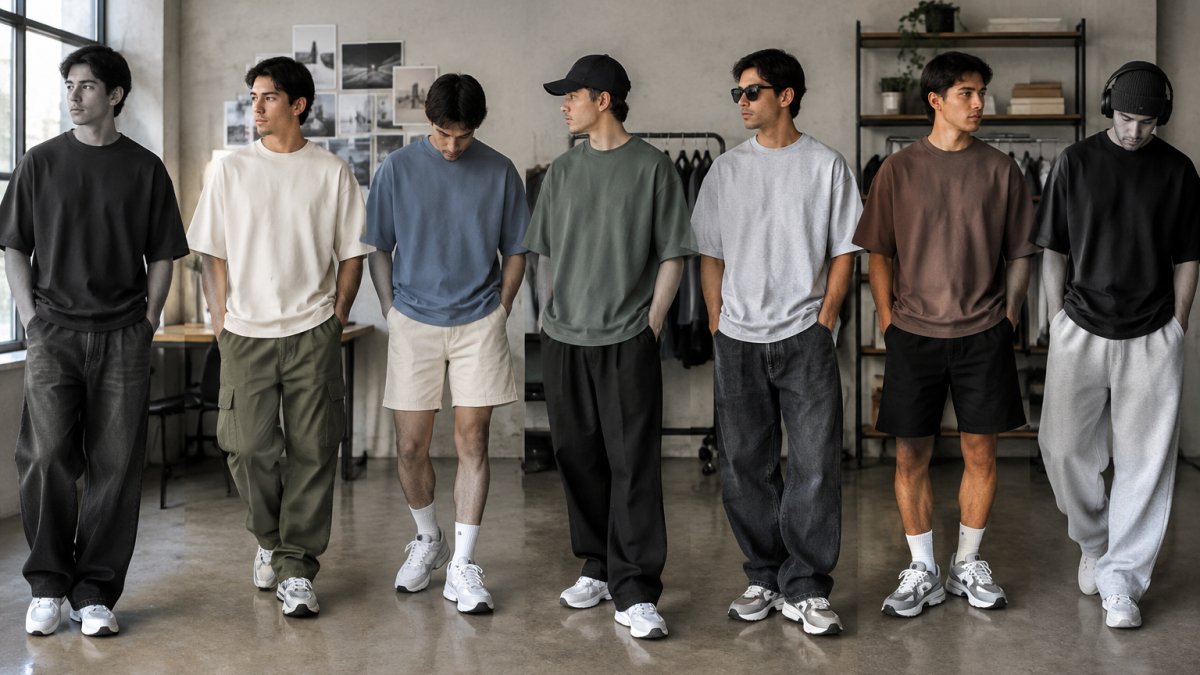
Our tees use a relaxed, oversized fit with a slight drop shoulder. That extra fabric through the body and sleeves is part of the look, so the fold should keep the silhouette intact rather than squash it. For a closer look at what heavyweight quality means, read our heavyweight tees guide.
- Tight, sharp creases are worth avoiding
- Oversized cuts need room, so fold with a neat, flat rectangle
- Good folds protect the collar and print surface
What You Need Before You Start Folding
You do not need special tools. A clean, flat, open surface is the most important thing. A bed, a table, or a clear floor space all work well.
Smooth out the shirt before you fold. Take a few seconds to lay it flat and pat it down with your hands.
Make sure the shirt is fully dry and that you are not folding a damp garment.
- A clean, flat surface like a bed or table
- Your hands, for smoothing the fabric
- A dry shirt, free of any folds from packing
Step-by-Step: How to Fold a Heavyweight Tee in Seven Steps
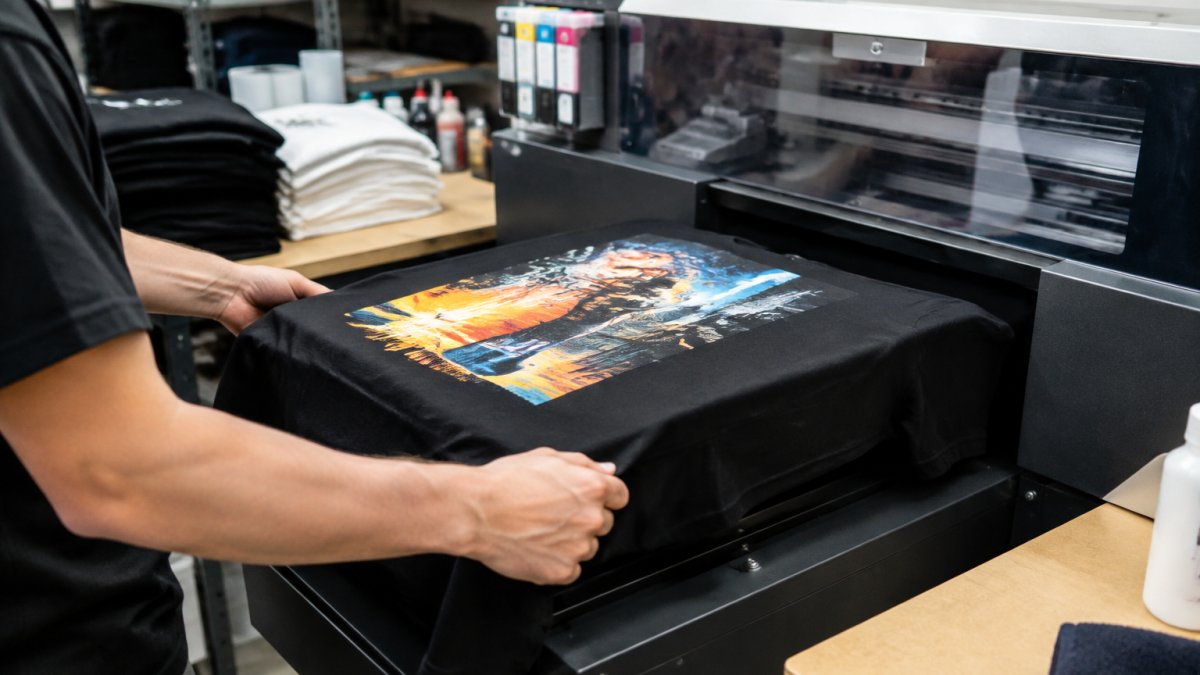
Most folding tutorials are written for thin cotton. A 7.5 oz / 245-255 GSM tee with a slight drop shoulder, 1" double-needle hems, and a DTG print behaves differently: the fabric resists tight folds, the hems are bulky, and the print surface can be damaged by sharp creases.
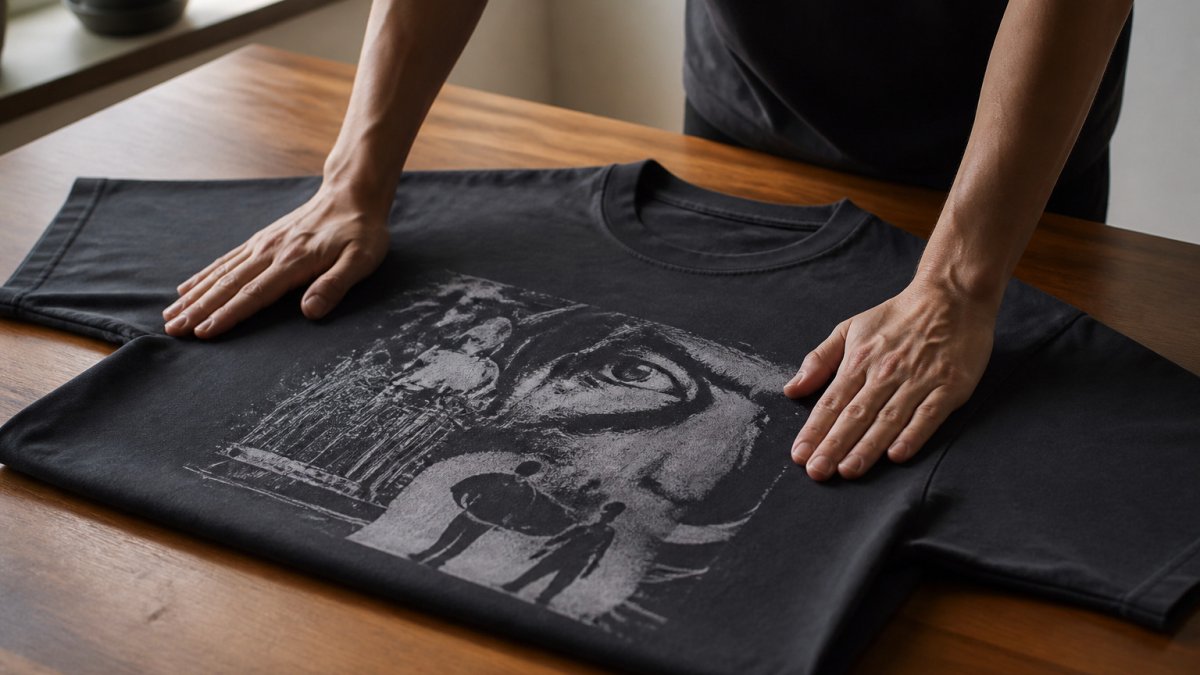
- Lay the shirt flat, front side up, on a clean surface. Smooth the body from the bottom hem up to the collar with your palms, then smooth each sleeve from the shoulder seam to the cuff. Take a few extra seconds here to smooth out any wrinkles from packing. If the shirt has a DTG print, keep the printed panel flat and avoid pressing hard on the ink.
- Fold one sleeve inward along the shoulder seam. Bring the sleeve toward the center of the body so the sleeve seam lines up with the side seam. Because a drop shoulder shifts the seam slightly down the arm, follow the actual seam rather than an imaginary shoulder line. Keep the sleeve flat; do not bunch it.
- Fold the other sleeve inward to match. The two sleeves should sit parallel along the body. If one side looks thicker than the other, the fold will lean in the stack later.
- Fold the bottom hem up about one-third of the way toward the collar. Our tees have a 1" double-needle bottom hem. Fold along the hem rather than crushing it, and keep the fold line straight across the body.
- Fold the top section down over the folded hem. Bring the collar down so the neck sits neatly on top. Do not pull the collar tight; our tees feature a double-needle stitched neck and shoulder-to-shoulder neck tape.
- Square the edges into a clean rectangle. Press the sides with your palms so the folded shirt forms a straight-edged rectangle. This is where oversized cuts need attention: the extra body fabric can bulge at the sides, so tuck the excess inward rather than folding it over itself.
- Press and hold briefly to release air. Use flat palms, not fingertips, to flatten the fold and push out trapped air.
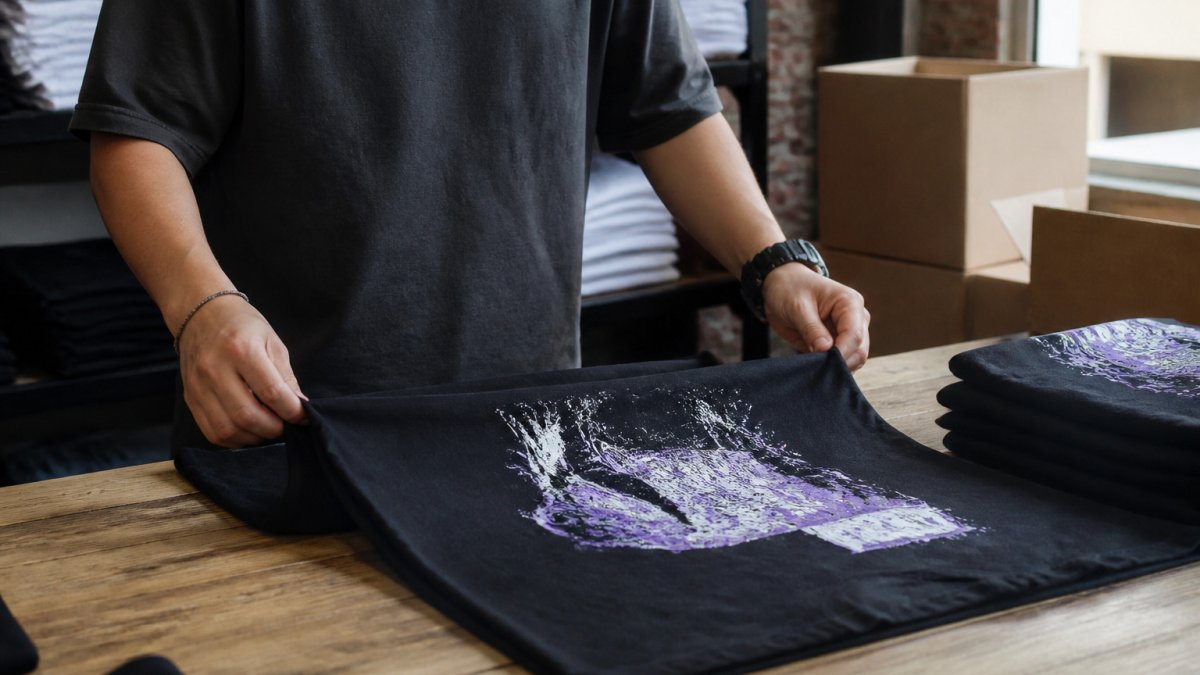
Watch out: Do not fold directly across a DTG print if you can avoid it. Fold so the printed panel rests flat, or fold the shirt with the print facing inward only when the fold line falls on unprinted fabric.
Why this order matters for heavyweight fabric: Thick cotton does not compress the way thin jersey does. Folding sleeves first, then the hem, then the collar keeps the thickest parts (hems and seams) from stacking on top of each other.
Here is a quick reference for the seven folding steps, with the key action and the watch-out for each.
| Step | What to do | Watch out for |
|---|---|---|
| 1. Lay flat | Smooth body and sleeves front side up | Avoid pressing hard on DTG print |
| 2. Fold first sleeve | Bring sleeve in along the seam | Follow the actual seam, not an imagined shoulder line |
| 3. Fold second sleeve | Match the first sleeve, parallel to body | Uneven sides make the stack lean |
| 4. Fold bottom hem | Fold up about one-third toward collar | Fold along the 1" double-needle hem, not over it |
| 5. Fold top down | Bring collar down over the hem | Do not pull the collar tight |
| 6. Square edges | Form a straight-edged rectangle | Tuck excess body fabric inward |
| 7. Press and hold | Flatten with palms to release air | Use palms, not fingertips |
How to Fold T-Shirts for Drawers Without Bulk
Drawer storage is where heavyweight tees often become a problem. Thick folds pile up fast and make drawers hard to close.
Use a tighter file-style fold when space is limited. Fold the shirt in half lengthwise, then fold it into thirds so it stands upright. This keeps each shirt visible and easy to pick out.
Stack only a few shirts together.
- Fold in half, then in thirds for a vertical file
- Store no more than a handful per stack
- Keep graphics facing up so the print stays visible
How to Fold a Shirt the Army Way and the Japanese Method
Two popular methods are worth knowing. The Army-style fold produces a compact rectangle that stands upright. Start with the shirt flat, fold the sides to the center, then roll or fold it into a tight, square shape.
The Japanese method focuses on a neat, minimal rectangle. It uses fewer folds and keeps the body smooth. Many people find it works well for heavyweight tees because it avoids forcing thick layers together.
Try both on a single shirt before deciding. Heavier fabric may suit one method better depending on how you store your collection.
- Army-style folds are compact and stand upright
- Japanese-style folds are minimal and keep the body smooth
- Test both on one shirt to see which fits your drawer
How to Fold a Shirt for Travel Wrinkle Free
Travel is tough on any tee. Heavy cotton can crease in a suitcase, so folding with care matters. Our guide on why heavyweight graphic tees shrink explains how storage and folding affect fit over time, see why heavyweight graphic tees shrink.
Roll or fold the shirt loosely rather than tightly. Tight packing presses hard creases into the fabric. Place folded tees on top of heavier items so they are not crushed.
When you unpack, hang the shirt briefly or lay it flat to let it relax. This helps the fabric recover its shape before you wear it.
- Fold loosely, not tightly, to limit creases
- Pack shirts on top rather than underneath heavy items
- Lay the shirt flat after unpacking to let it relax
Fold, Hang or Roll: Choosing the Right Storage for Your Tees
Folding is not automatically the right choice. For a heavyweight streetwear tee, the best method depends on how often you wear it, how much drawer or closet space you have, and whether the shirt has a print you want to protect. Here is how the three options compare for thick, boxy tees.
Fold
- Best for: drawers, shelf storage, and long-term storage of shirts you rotate seasonally.
- Strength: keeps a stack tidy and protects the print from hanger stress.
- Trade-off: heavyweight fabric is bulky, so tall stacks compress the bottom layers and can leave creases along fold lines. Keep stacks to a few shirts and rotate the bottom shirt to the top occasionally.
- Fit note: oversized and drop-shoulder cuts need a slightly larger folded rectangle than a standard tee, or the sides bulge and the stack leans.
Hang
- Best for: tees you wear often and want to grab without refolding.
- Strength: avoids repeated fold creases and keeps the shirt visible.
- Trade-off: Use a wide-shoulder hanger and hang from the body, not the collar, so the weight of the fabric is supported by the shoulders rather than the neck opening.
- Fit note: hanging preserves the boxy silhouette better than a tight fold because the body hangs free.
Roll
- Best for: travel, gym bags, and tight spaces where a drawer is not available.
- Strength: packs into gaps and reduces hard creases compared with tight folding.
- Trade-off: rolling a heavyweight tee makes a thick cylinder that takes up more room than a folded rectangle, and a tight roll can press creases into the fabric. Roll loosely and place the roll on top of heavier items in a bag.
- Print note: roll with the print facing outward so the ink is not compressed against itself.
How to choose: Fold what you store in drawers, hang what you wear weekly, and roll what you travel with. If a tee has a DTG print you care about, favor folding or hanging over tight rolling, and avoid stacking heavy shirts directly on top of a printed panel for long periods. There is no single best method; the right one is the one that matches your storage space and how often the shirt moves.
Pick Your Next Tee Fit and Fold It Right
Fit affects how a shirt folds. Our tees have a relaxed, oversized fit with a slight drop shoulder.
Before you buy, think about how you will store the shirt. If you are looking for bold original graphics on premium heavyweight cotton,
Our heavyweight streetwear guide covers how to wear oversized pieces, and our streetwear beginner's guide is a good starting point if you are building a wardrobe of graphic tees.
Frequently Asked Questions
How do you fold a heavyweight T-shirt without making it bulky?
Fold the shirt flat first, then fold the sleeves inward so they sit along the body rather than sticking out. Next, fold the body in half and then into thirds or a compact rectangle. A smooth, even fold helps keep the stack tidy. Avoid stacking too many shirts at once, since thick tees add height quickly. Store folded pieces vertically in a drawer where possible to reduce pressure on the shoulder seams.
Should heavyweight T-shirts be folded or hung?
Folding is a practical option for storing heavyweight streetwear tees. Hanging can work for short-term display, but use a wide, padded hanger if you do. For long-term storage, folded and stored in a drawer or on a shelf is generally the better choice.
How do you fold T-shirts for travel without wrinkles?
Fold each shirt using a compact rectangle method, then stack them with the largest shirts on the bottom. Placing tees in a packing cube or a soft folder keeps the folds from shifting. Lay the packed shirts flat rather than crushing them into a bag corner. Unpack them as soon as you arrive and lay them flat or hang them briefly so any remaining creases can relax.
Shop the latest AW3SOME CLOTHES INC drops and find your next heavyweight tee.