 ultimate-guide
Why Heavyweight Graphic Tees Shrink: A Complete Guide
Table of Contents
- Why Heavyweight Graphic Tees Shrink
- Pre-Shrunk vs. Non-Pre-Shrunk Manufacturing
- How to Wash Heavyweight Cotton Shirts Without Shrinkage
- DTG Graphic Care Instructions for Print Integrity
- How to Style Oversized Heavyweight Shirts After Wash
- Fabric Density, Weight, and Shrinkage Risk
- Frequently Asked Questions
Last Updated: September 27, 2026
Why Heavyweight Graphic Tees Shrink
Heavyweight graphic tees shrink because cotton fibers naturally relax and contract when exposed to moisture and heat during washing and drying. Understanding why this happens, and how to prevent it, is essential for keeping your premium pieces looking sharp for years.

Cotton absorbs water readily, causing fibers to swell and relax. Heat amplifies this effect. The combination of moisture, mechanical agitation, and temperature creates significant shrinkage, especially in the first few washes, a natural property of the fiber, not a construction flaw.
Heavyweight tees (7.5 oz and above) have a tighter weave that holds more manufacturing tension, creating greater potential to relax and shrink when exposed to water and heat.
Cotton Fibers and Heat Sensitivity
Cotton shrinks because cellulose fibers absorb water, causing them to relax and shorten. Heat accelerates this by increasing molecular movement and weakening fiber bonds.
The first wash typically causes the most shrinkage (3-5% in length and width), with subsequent washes causing less because fiber relaxation has already occurred. Pre-shrunk fabrics undergo controlled shrinkage at the mill, reducing unexpected size changes.
Standard colors use 100% USA cotton; heather (90/10 cotton/poly) and charcoal (50/50 cotton/poly) blends shrink less because polyester fibers resist water absorption.
Mechanical Agitation in Washers and Dryers
Mechanical agitation compounds shrinkage by physically working fibers and breaking down manufacturing tension. Standard wash cycles agitate repeatedly, loosening fibers and encouraging relaxation.
Tumble drying is particularly aggressive; a 30-minute medium-heat cycle can shrink a tee more than the entire wash cycle. Air drying eliminates this primary driver of post-wash shrinkage.
Delicate cycles reduce mechanical stress through gentler agitation and shorter spin times, slowing shrinkage but not eliminating it.
Manufacturing Tension and Fabric Relaxation
Heavyweight tees are constructed under tension during manufacturing. Water and heat release this tension, causing the fabric to contract toward its relaxed state.
Quarter-turned construction distributes tension evenly, resulting in uniform shrinkage across the garment rather than excessive shrinkage in high-tension areas.
Pre-shrunk fabrics undergo controlled mill relaxation before cutting and sewing, removing much tension. However, residual tension always remains, and some shrinkage will still occur.
Pre-Shrunk vs. Non-Pre-Shrunk Manufacturing
The difference between pre-shrunk and non-pre-shrunk tees comes down to when fiber relaxation happens: at the mill or in your washing machine. Understanding this distinction helps you predict shrinkage risk before you buy.
How Pre-Shrinking Works at the Mill
Pre-shrunk fabrics undergo controlled heat and moisture treatment at the mill, mimicking home washing under controlled conditions. This releases manufacturing tension, so home washing causes minimal additional shrinkage: typically 1-2% in the first wash and less than 1% in subsequent washes.
Cellulose chains have already shifted toward their relaxed state, so water and heat have less dramatic effect. This delivers predictable fit because the manufacturer has already absorbed shrinkage variability.
Why Non-Pre-Shrunk Fabrics Shrink More
Non-pre-shrunk fabrics retain full manufacturing tension. A non-pre-shrunk tee can shrink 5-8% in the first wash alone, with additional 2-3% shrinkage in subsequent washes.
Non-pre-shrunk fabrics cost less to produce but transfer unpredictable fit changes to the wearer. For graphic tees where print placement and fit are intentional design choices, this unpredictability is problematic.
How to Identify Pre-Shrunk Tees Before You Buy
Check the product tag or description for explicit language: "pre-shrunk," "sanforized," or "pre-washed." These terms indicate the fabric has undergone mill treatment. If the tag says nothing about shrinkage, assume the tee is non-pre-shrunk and plan accordingly, either size up or accept that the first wash will change the fit.
The 7.5 oz / 245-255 GSM fabric used for AW3SOME tees is pre-shrunk, ensuring minimal size change after washing.
Fiber composition also matters. Standard colors use 100% USA cotton; blended fabrics like heather (90/10) and charcoal (50/50) shrink less because polyester doesn't absorb water like cotton, acting as a stabilizer.
| Characteristic | Pre-Shrunk | Non-Pre-Shrunk |
|---|---|---|
| Shrinkage in first wash | 1-2% | 5-8% |
| Shrinkage in subsequent washes | Less than 1% | 2-3% |
| Predictability | High | Low |
| Manufacturing cost | Higher | Lower |
| Retail price | Higher | Lower |
| Best for | Premium wear, graphic tees | Budget basics |
| Typical label language | "Pre-shrunk" or "Sanforized" | No shrinkage claim |
Pre-shrunk costs more upfront but delivers predictable results and protects fit and graphic placement. For graphic tees, pre-shrunk is the only sensible choice.
How to Wash Heavyweight Cotton Shirts Without Shrinkage
The goal is to minimize water temperature, mechanical agitation, and heat exposure. Each of these factors contributes to shrinkage, and controlling them dramatically reduces the risk.
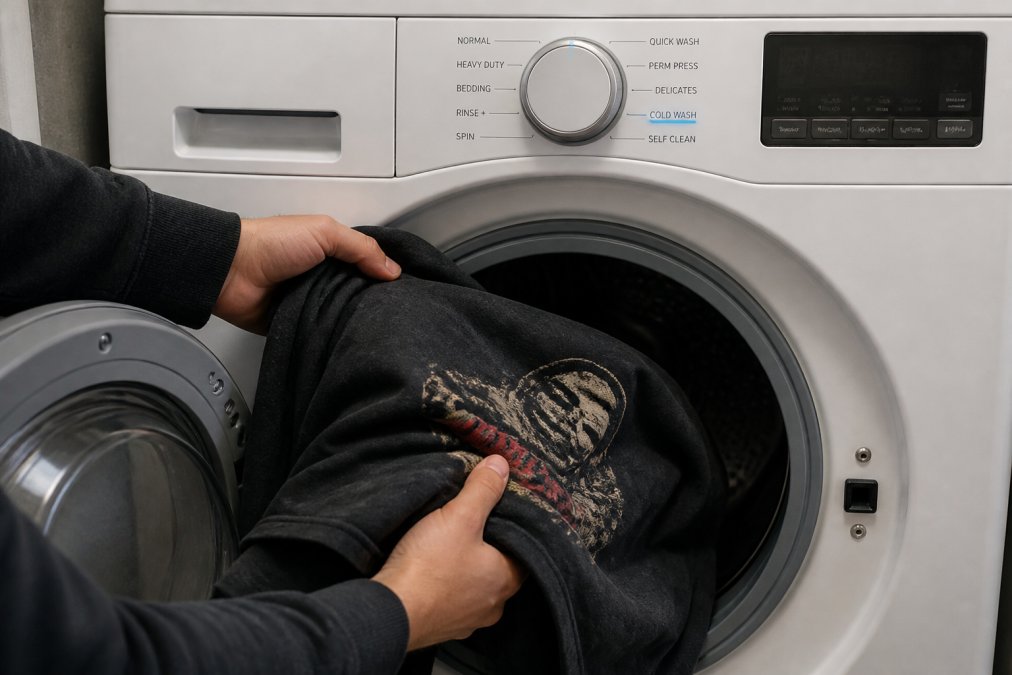
Turn your tee inside out to protect the graphic. Use cold water on a delicate cycle with less agitation and shorter spin times. Avoid overloading the machine.
Use mild detergent and skip fabric softener. Remove the tee immediately after the cycle to prevent mildew.
Cold Water Washing and Delicate Cycles
Cold water (below 60°F) is essential; warm or hot water accelerates fiber relaxation dramatically, while cold water slows it enough for minimal additional shrinkage.
A delicate cycle (25-30 minutes) uses reduced agitation and spin speed, protecting fabric and graphics. Standard cycles are harsher and designed for durable everyday wear, not graphic tees.
Air Drying vs. Tumble Drying
Air drying is the single most important step for preventing shrinkage. Tumble drying, even on low heat, causes significant additional shrinkage because heat drives fiber relaxation. Air drying eliminates this risk entirely.
Lay your tee flat to dry; hanging can distort shoulders and hem from the weight of wet fabric. Avoid direct sunlight, which fades colors and graphics.
If you must use a dryer, use the lowest heat and remove while slightly damp. Never run a full cycle; heat and tumbling shrink the garment and risk damaging the DTG print.
DTG Graphic Care Instructions for Print Integrity
Direct-to-garment (DTG) printing bonds ink directly to the fiber surface, producing vibrant, detailed graphics. However, DTG prints face a unique challenge: the methods that prevent fabric shrinkage and the methods that protect print integrity sometimes conflict. Understanding this trade-off helps you make informed washing decisions.
Why DTG Prints Are Vulnerable to Heat and Agitation
DTG ink penetrates the fiber surface but doesn't form a plastic layer like screen printing. DTG prints are sensitive to mechanical stress and heat; aggressive washing and tumble drying can cause cracking, fading, or peeling as fibers contract while the ink stays fixed.
When fabric shrinks, fibers contract. If cured ink can't contract with them, stress at the ink-fiber boundary causes cracking, especially visible on large graphics or fine details.
The Shrinkage-Print Integrity Trade-Off
Cold water and air drying minimize fabric shrinkage: cold water slows fiber relaxation, and air drying eliminates heat-driven shrinkage.
To protect DTG print integrity, minimize heat and mechanical stress with cold water, delicate cycles, and air drying, goals that align perfectly.
The practical solution: wash inside out in cold water on a delicate cycle, and air dry flat. This protects both the fabric and the print.
Specific Care Steps for DTG Graphics
First wash: Turn inside out, use cold water and delicate cycle. Skip fabric softener and bleach.
Subsequent washes: Cold water, delicate cycle, inside out. Focus on preventing fabric shrinkage to keep underlying fibers stable.
Drying: Air dry flat or hang loosely. Never tumble dry; heat causes shrinkage and ink degradation.
Storage: Fold loosely or hang on a padded hanger. Tight folding creases the print and can cause cracking.
Ironing: Avoid ironing the graphic area entirely.
Why DTG Requires Different Care Than Screen Printing
Screen-printed graphics use thick layers of plastisol or water-based ink that cure into a plastic film on top of the fabric. This film is durable and flexible enough to move with the fabric as it shrinks. DTG ink is thinner and more directly bonded to the fiber surface, making it sensitive to the fiber's movement.
How to Style Oversized Heavyweight Shirts After Wash
Oversized heavyweight tees are designed to drape, and controlled shrinkage can actually improve fit if you account for it. AW3SOME tees use an oversized, relaxed fit with a slight drop shoulder, so a small amount of shrinkage often brings them closer to a true oversized silhouette rather than making them unwearable.
Fabric Density, Weight, and Shrinkage Risk
Fabric weight (measured in ounces per yard or GSM, grams per square meter) indicates how much yarn is packed into the fabric. Heavyweight tees typically weigh 7.5 oz or more. AW3SOME tees use 7.5 oz / 245-255 GSM fabric, which is genuinely heavyweight.
SHOP THE LATEST DROP →
Frequently Asked Questions
Do heavyweight cotton t-shirts shrink?
Yes, heavyweight cotton t-shirts can shrink, but the amount depends on how you care for them. Cotton fibers naturally relax and contract when exposed to heat and moisture. However, proper washing techniques, cold water, delicate cycles, and air drying, can minimize shrinkage to 1-3%. Pre-shrunk fabrics undergo special processing to reduce this risk further, making them a reliable choice for graphic tees you want to last.
How can I prevent my heavyweight graphic tees from shrinking?
Prevent shrinkage by washing in cold water (below 90°F), using a delicate or gentle cycle, and avoiding the dryer entirely. Air dry your tees flat or on a hanger instead. High heat is the primary culprit, it causes cotton fibers to contract permanently. For DTG-printed graphics, cold water also protects print adhesion and color vibrancy. Always check the care tag on your specific tee for manufacturer recommendations.
Will a 2XL heavyweight tee shrink to an XL?
Unlikely with proper care. Well-made heavyweight tees typically shrink 2-5% when washed incorrectly (hot water, high heat drying). A 2XL would shrink closer to a large 2XL or small 2XL, not down to XL size. If you use cold water and air dry, shrinkage drops to 1-3%, keeping the garment nearly true to size. Pre-shrunk fabrics shrink even less. Proper care preserves the fit you paid for.
Does heat affect the longevity of DTG graphic prints?
Yes, heat is damaging to DTG prints. Direct-to-garment graphics are cured during printing, but repeated exposure to high temperatures, especially in hot water and tumble dryers, can fade colors, crack the print, and reduce adhesion over time. Cold water washing and air drying protect both the fabric and the graphic. This is why DTG care instructions always recommend tumble dry on low or no heat; following these steps keeps your graphic sharp for years.