 How-to
What Makes a Graphic Tee Print Last Longer
Last Updated: November 11, 2026
Quick Summary
A graphic tee print lasts longer when the ink bonds fully to the fabric, the shirt is washed inside out in cold water on a gentle cycle, and heat stays out of washing and drying. Air-drying and skipping bleach and fabric softener prevent most fading and cracking.
- Turn the shirt inside out before washing to put friction on the fabric, not the design.
- Wash printed tees in small loads and keep them away from zippers, towels, and jeans.
- Air-dry graphic tees in the shade, or tumble on no heat if you must use a dryer.
- Fabric softener coats fibers and can weaken how well ink stays bonded.
- A shirt that fits too tight stretches the print with every move, which cracks ink.
Table of Contents
- Why Graphic Tee Prints Crack, Fade, and Peel
- How to Wash Graphic Tees Without Fading
- How to Keep Print on Shirts From Cracking
- The Best Way to Dry Graphic Tees
- T-Shirt Printing Methods and Durability
- Fabric Quality, Fit, and Print Longevity
- Repairing or Preserving a Damaged Print
- Build a Care Routine That Protects Your Prints
- Frequently Asked Questions
Why Graphic Tee Prints Crack, Fade, and Peel
Print life comes down to ink, fabric, and how you treat both. A graphic tee print lasts longer when the ink bonds fully to the fabric, the garment is washed gently, and heat stays out of the equation. Most damage is cumulative, not sudden.
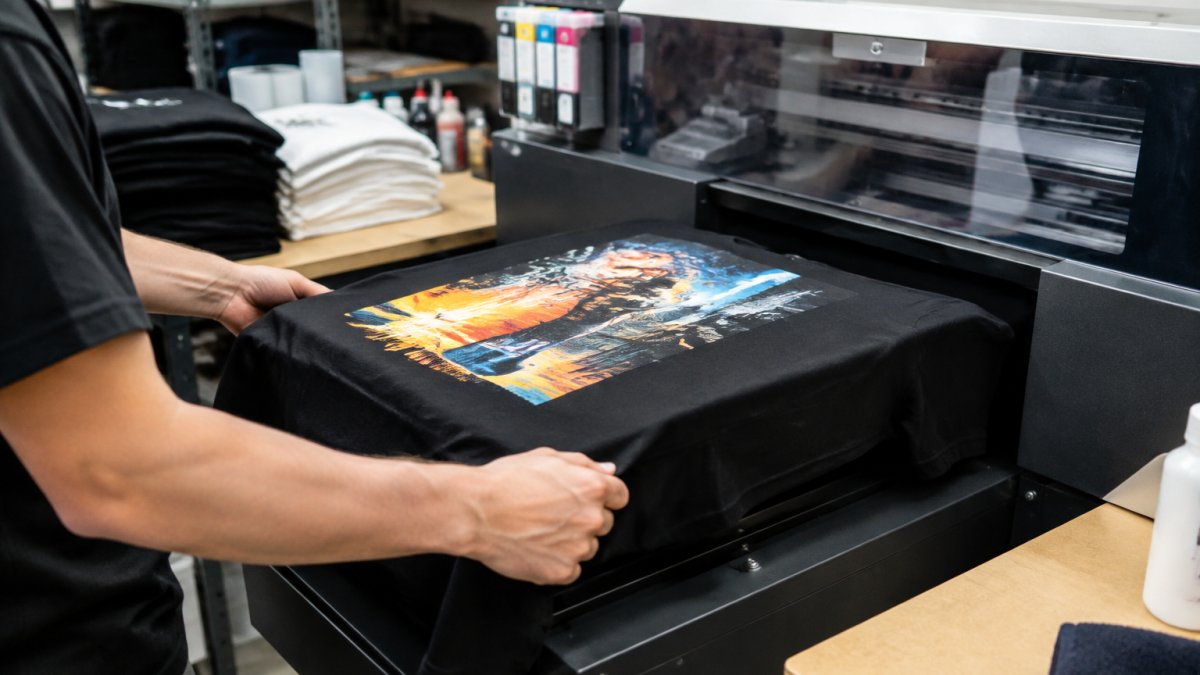
Direct-to-garment (DTG) ink sprays into the fabric rather than sitting a thick layer on top, and like any print method it has care rules.
The Four Forces That Break Down a Print
Four things wear a print down over time:
- Heat shrinks and cracks the ink layer
- Friction rubs ink off in the wash drum
- Chemicals break down the ink bond
- UV light fades pigment slowly
Watch out: the biggest mistake is treating a printed tee like a plain white undershirt. Hot water and a hot dryer will wreck a print in a few cycles.
How to Wash Graphic Tees Without Fading
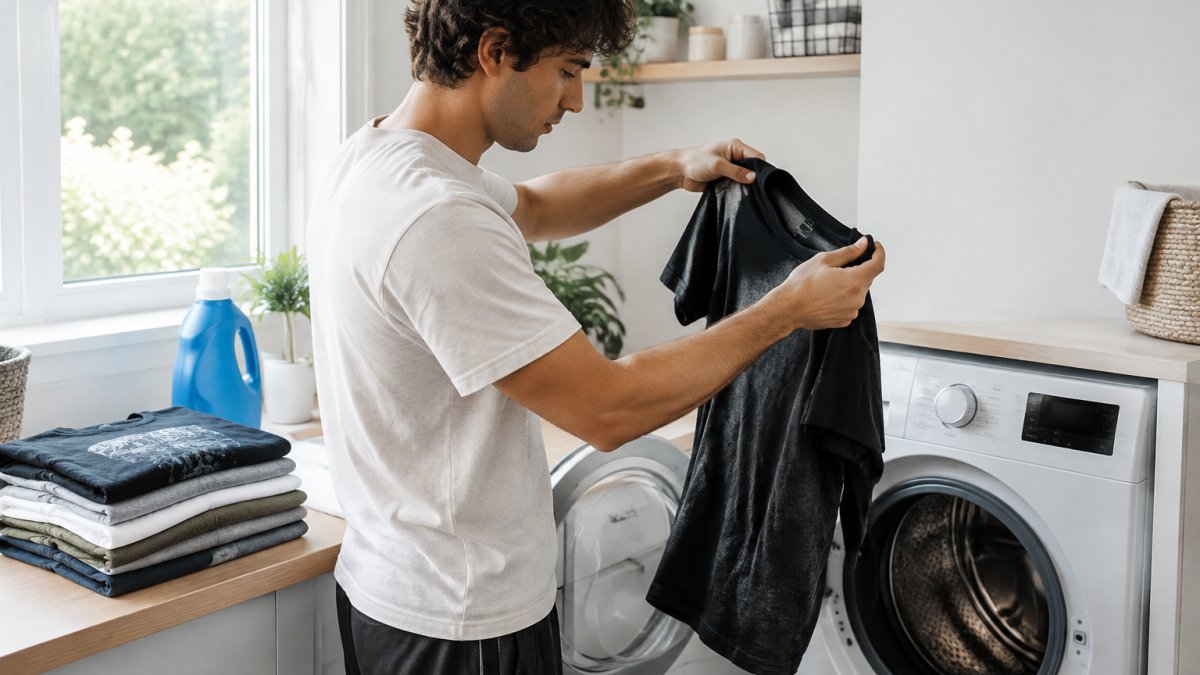
Wash graphic tees inside out in cold water on a gentle cycle. That single habit prevents most fading and cracking. Cold water keeps ink from softening, and the inside-out flip puts friction on the fabric, not the design.
Inside Out, Cold Water, Gentle Cycle
The steps are simple:
- Turn the shirt inside out before it hits the machine
- Use cold water, never warm or hot
- Pick the gentlest cycle your machine offers
- Skip the spin cycle on high if you can
Detergent, Bleach, and Fabric Softener Rules
Use a mild detergent and skip bleach and fabric softener entirely. Fabric softener coats fibers and can weaken how well ink stays bonded. Bleach attacks dye and print alike.
A common mistake is adding softener "for softness." On a printed shirt, it does more harm than good. If you want a deeper explanation, read our breakdown on why fabric softener ruins graphic tees.
How to Keep Print on Shirts From Cracking
Cracking starts at the fold lines, and friction is the cause. Every time a printed shirt tumbles against a zipper or heavy denim, the ink layer flexes and eventually splits. Reduce the rubbing and you extend print life.
Reduce Friction in the Drum
Fill the machine loosely rather than packing it. A crowded drum means more contact between garments. Fewer items means less abrasion.
- Wash printed tees in small loads
- Use a mesh laundry bag for extra protection
- Close all zippers before starting
Separate Rough Fabrics, Zippers, and Heavy Items
Keep graphic tees away from towels, jeans, and anything with hardware. Those fabrics act like sandpaper on a print. Wash tees together, and wash the rough stuff separately.
For a full walkthrough on avoiding cracks, see our guide on how to prevent graphic tee cracking.
The Best Way to Dry Graphic Tees
Air-dry graphic tees whenever possible. If you must use a machine, tumble on no heat or the lowest setting. High heat is the fastest way to crack a print and shrink a shirt.
Hang the tee inside out on a plastic hanger or lay it flat. Direct sun fades ink, so dry it in the shade. A drying rack in a spare room works well.
If you use a dryer, pull the shirt out while it is still slightly damp. That cuts the heat exposure and keeps the fabric from over-drying.
T-Shirt Printing Methods and Durability
Print durability depends heavily on the printing method. Each method bonds ink to fabric differently, so each has its own failure mode and its own care rules. Knowing what you bought, or what you are about to buy, lets you wash it correctly instead of applying generic advice that may not fit.
Here is how the common methods compare:
| Method | How Ink Bonds | Typical Failure Mode | Care Sensitivity | Best For |
|---|---|---|---|---|
| DTG | Ink sprayed into fibers, then cured | Fading and softening with heat; cracking at high-stretch points | Moderate heat sensitivity | Detailed, full-color art |
| Screen printing | Thick ink layer cured on top of fabric | Cracking along fold lines; flaking at edges | Cracking at folds | Bold, simple designs |
| DTF | Film transferred with heat and pressure | Peeling at edges; stiff hand-feel that cracks | High heat sensitivity | Complex art on blends |
| Heat-transfer vinyl | Vinyl pressed onto fabric | Lifting and peeling at edges | Peels with heat and wear | Small logos, names |
Direct-to-garment ink sits in the fabric, so it moves with the shirt. That flexibility helps, but heat still softens it. Screen printing lays a heavier ink layer that can crack along fold lines over many washes. DTF and vinyl depend on a heat-set bond, so heat is the enemy twice over, once during application and again every time the shirt hits a hot dryer.
Method-Specific Care Rules
Generic "wash cold, air-dry" advice is a good baseline, but each print type has a specific weak point worth protecting:
- DTG: Keep heat low and avoid pressing directly on the print. Because the ink is in the fibers, abrasion and repeated hot drying are the main threats. Wash inside out and air-dry.
- Screen printing: The thick ink layer cracks at folds, so reduce flexing. Avoid folding the shirt along the same line every time, and do not iron directly on the print.
- DTF: The transfer bond is heat-sensitive. Skip the dryer or use no heat, and never iron directly on the film edge, which is where lifting starts.
- Heat-transfer vinyl: Edge lift is the first sign of failure. Wash inside out, avoid high heat, and do not tumble with heavy items that catch the vinyl edges.
Watch out: applying screen-print care to a DTF or vinyl shirt, especially high dryer heat, accelerates the exact failure those methods are prone to.
How to Identify Print Type Before You Buy
You can predict durability before purchase by reading a few observable clues:
- Feel: A DTG print feels soft and slightly textured, almost part of the fabric. A screen print feels thicker, like a raised layer. Vinyl feels plasticky with sharp edges.
- Edge quality: Clean, sharp edges suggest a well-cured screen print or a properly applied transfer. Fuzzy or uneven edges can signal a weak bond.
- Fabric compatibility: A print applied to a fabric it bonds well with, cotton for DTG and screen print, blends for DTF, tends to last longer than the same method on an incompatible garment.
- Seller transparency: Ask what method is used and whether the seller provides curing or wash-test information. A brand that knows its process will tell you.
If you want to spot quality work in person, our guide on identifying high-quality screen printing covers what to look for.
Our graphics use DTG. That method has care rules, and the washing and drying sections above are written with DTG in mind.
Fabric Quality, Fit, and Print Longevity
Fabric quality and fit both affect how long a print lasts, but the real mechanism is compatibility: how the ink or transfer interacts with the specific fabric it sits on. The same print method can perform very differently on cotton, polyester, and blends.
How Fabric and Print Interact
- Cotton: Porous and absorbent, so DTG ink and screen-print ink bond well. Cotton is the most forgiving surface for water-based and plastisol inks alike.
- Polyester: Smooth and less absorbent. DTG ink can sit differently and may fade faster; DTF is often chosen for polyester because the transfer bonds to the surface rather than soaking in.
- Blends: Performance depends on the ratio. A cotton-heavy blend behaves closer to cotton; a poly-heavy blend behaves closer to polyester. DTF and vinyl tend to be more predictable on blends than DTG.
A tightly woven cotton gives ink a stable surface. A loose, thin knit stretches more, and stretching is what cracks ink. That is why weave density matters as much as fiber content.
Heavier fabric is not automatically better. GSM measures fabric weight, not quality. A stable weave and a fit that does not pull across the chest both matter.
Our tees use 7.5 oz (245-255 GSM) cotton with a relaxed, oversized fit and a slight drop shoulder. Standard colors are 100% USA cotton; Heather Grey is 90/10 cotton/poly and Charcoal Grey is 50/50. For help choosing durable everyday pieces, read our guide on choosing durable graphic tees.
Repairing or Preserving a Damaged Print
You can slow further damage even after a print starts to crack. You cannot fully reverse cracking, but you can stop it from spreading.
- Stop using the dryer immediately
- Wash inside out in cold water only
- Iron on the reverse side, never directly on the print
- Store folded, not on a wire hanger that stretches shoulders
For small lifts at the edge of a vinyl print, a careful press with a cloth barrier can help. Never press directly on DTG ink; heat makes it worse.
Build a Care Routine That Protects Your Prints
A simple routine beats a complicated one. The habits below cover 90% of print care, and they take almost no extra effort once they become automatic.
| Step | What to Do | How Often |
|---|---|---|
| Sort | Keep tees away from zippers and towels | Every load |
| Wash | Inside out, cold water, gentle cycle | Each wear |
| Detergent | Mild only, no bleach, no softener | Each wash |
| Dry | Air-dry in shade or no-heat tumble | Each wash |
| Store | Fold flat, avoid wire hangers | Always |
Wash less often when you can. Spot-clean small marks and air the shirt out between wears. That alone cuts wash cycles and extends print life.
For the complete long-term playbook, see our guide on maintaining streetwear graphic prints.
Print care is not complicated, but it is unforgiving of shortcuts. Heat, friction, and harsh chemicals do the damage, and cold water, gentle cycles, and air-drying prevent it. AW3SOME CLOTHES INC prints original graphics on 7.5 oz heavyweight cotton with DTG, built with shoulder-to-shoulder neck tape and double-needle stitched hems. Our designs are never reprinted. Treat it right and it stays sharp.
Frequently Asked Questions
How to stop t-shirt graphics from fading?
Wash the shirt inside out in cold water on a gentle cycle, use a mild detergent with no bleach, and skip fabric softener. Heat and friction are the main causes of fading, so air-dry the shirt or tumble it on low heat. Turning it inside out keeps the graphic away from the drum and other garments during the wash.
Why is my t-shirt print peeling off?
Peeling usually comes from heat and abrasion. High dryer temperatures and direct ironing can soften the ink layer until it lifts from the fabric. Washing the shirt inside out, drying on low or air-drying, and never ironing directly on the print all reduce the chance of peeling. If a corner has lifted, a press cloth and low iron can sometimes reattach it.
Is it better to air-dry graphic tees?
Air-drying is the gentlest option for a graphic tee print. Hang or lay the shirt flat in the shade, which avoids the heat and tumbling that can crack ink over time. If you use a dryer, choose the lowest heat setting and remove the shirt while it is still slightly damp. Avoid hanging a wet shirt by the shoulders for long periods, as the weight can stretch the fabric.
What t-shirt printing lasts the longest?
Durability depends on the print method, the ink, and how the shirt is cared for. Screen printing and direct-to-garment (DTG) are common methods, and each has different strengths. Screen printing tends to hold up well on high-contrast designs, while DTG works well for detailed, full-color artwork. Proper washing and drying extend the life of any print method.