 ultimate-guide
Benefits of Layering Streetwear: Style, Comfort, Range
Table of Contents
- Why Layering Streetwear Beats Single-Layer Fits
- How Layering Changes the Silhouette and Proportions of a Fit
- How to Style Oversized T-Shirts in a Layered Outfit
- Building Texture, Color, and Visual Depth With Layers
- Urban Streetwear Trends That Reward Layering
- Technical Layering: Moisture-Wicking Base Layers vs. Heat Retention
- Layering for Transitional Weather and Climate Adaptability
- Common Layering Mistakes That Add Bulk Without Style
- Frequently Asked Questions
Last Updated: September 11, 2026
Why Layering Streetwear Beats Single-Layer Fits
Layering streetwear means wearing two or more garments in a deliberate stack so each piece adds function, proportion, or visual interest. It beats a single-layer fit because one outfit adapts to temperature swings, changes character with one piece removed, and creates depth a flat tee-and-jeans combination cannot match.
Comfort comes first. A base layer manages sweat, a mid-layer traps warmth, and outerwear blocks wind or rain, so you regulate temperature without changing clothes. Versatility follows: the same three pieces produce several distinct outfits.
This guide breaks down how layering changes proportions, how to style oversized t-shirts inside a stack, and which mistakes add bulk without style, covering both the technical side (moisture-wicking versus heat retention) and the artistic side (texture, color, silhouette).
Comfort Across Changing Temperatures
The core benefit of layering is thermal regulation by subtraction: dress for the day's range, not its warmest hour, and remove a layer when needed.
A three-part layering system handles most conditions:
- Base layer: thin, moisture-wicking, sits against skin
- Mid-layer: adds insulation and texture
- Outerwear: blocks wind, rain, or cold
A 45°F morning commute and a 65°F afternoon then require no wardrobe change, just a jacket tied around the waist. Breathability matters as much as warmth: a base layer that traps sweat leaves you cold the moment you slow down.
More Outfits From the Same Closet
Layering multiplies outfit count without buying more clothes: five pieces layered in combination produce far more looks than five pieces worn solo.
If a graphic tee, an overshirt, a hoodie, and a jacket each work alone or stacked, you get single-layer looks plus combinations from four garments. Fewer, better pieces go further, you buy less because each item earns its place in multiple configurations.

How Layering Changes the Silhouette and Proportions of a Fit
Layering changes the silhouette by controlling where volume sits and where the eye stops. A single oversized tee can read shapeless; the same tee under an open, structured jacket reads deliberate.
The rule that matters most: balance volume against volume. An oversized top needs a grounded bottom, and a cropped or fitted outer layer over a relaxed tee creates a tapered line. Visual interest comes from contrast, not stacked baggy pieces.
- Long over short: a longer outer layer over a shorter inner hem lengthens the torso
- Short over long: a cropped jacket over a longer tee raises the waistline
- Tapered bottom: straight or slightly tapered pants offset an oversized top
What most guides miss is that the hem line of your outermost layer sets your proportions more than any single garment's fit.
How to Style Oversized T-Shirts in a Layered Outfit
Styling an oversized t-shirt in a layered outfit comes down to three moves: keep the base thin, add structure on top, and control the hem. An oversized tee works as a base because it has room to sit over a long-sleeve without pulling.
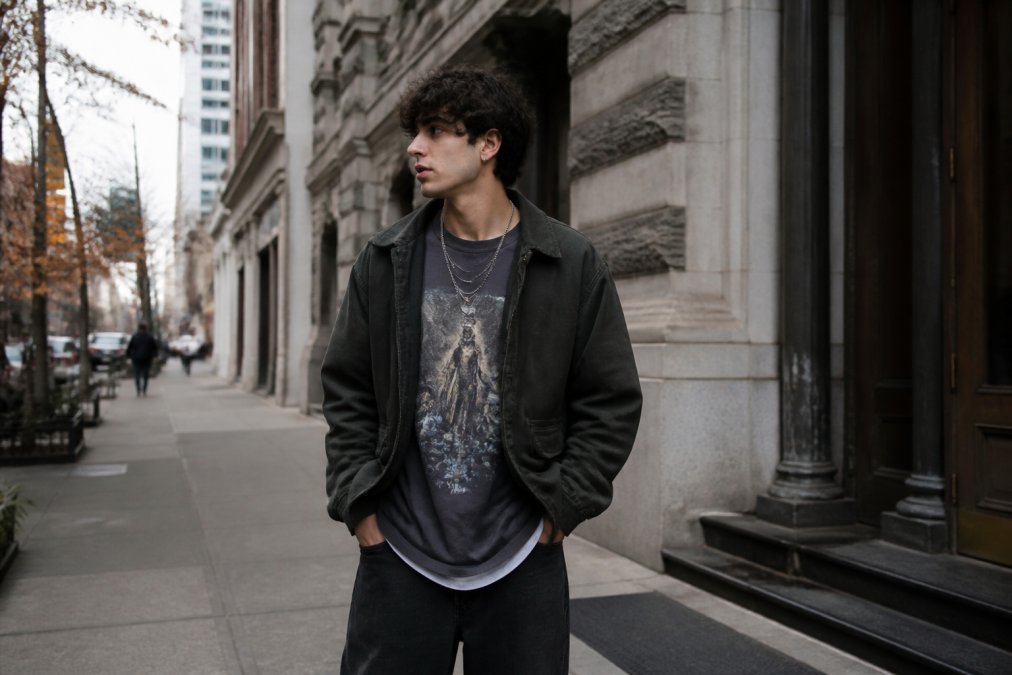
Start with a heavyweight tee that holds its shape. AW3SOME CLOTHES INC tees use a 7.5 oz (245-255 GSM) cotton build with an oversized, relaxed fit and a slight drop shoulder, giving the graphic a flat, stable surface and keeping the collar from stretching out under a jacket. The Graphic Tee with the geometric emblem back print is an easy base: a minimal front logo keeps the chest clean for an open overshirt, while the back print does the talking when you take the outer layer off.
Layer in this order:
- Base: heavyweight oversized tee, tucked or left loose depending on the outer hem
- Mid: long-sleeve tee, flannel, or hoodie, sleeves pushed or left full
- Outer: open jacket, overshirt, or vest for structure
Where the Graphic Sits in the Stack
Placement decides whether your graphic reads or disappears. A back print works when the outer layer is worn open or removed; a front graphic competes with an open jacket's lapels. Layering over a printed tee? Keep the outer layer plain so the artwork stays the focal point.
For a full back print like the Dark Samurai tee, wear the outer layer open or carry it. The dense cotton lays flat under the print so the artwork stays crisp, and the boxy fit gives the graphic room without distortion. Closed, the graphic becomes a hidden detail you reveal indoors.

Building Texture, Color, and Visual Depth With Layers
Texture and color create visual depth a single fabric weight cannot. Two pieces in the same color but different textures (smooth cotton against ribbed knit, or matte against washed denim) read as more considered than a monochrome flat fit.
Build a color palette with one anchor and one accent: keep the base neutral or tonal, then let one layer carry the color. A retro-urban print like the Tokyo Street Racing tee brings neon reds and deep indigo into a neutral stack, giving the outfit a focal point without shouting.

- Tonal: same color family, different textures for quiet depth
- Contrast: one bold layer against neutrals for a statement piece
- Cohesion: repeat one accent color across two layers to tie the fit together
Cohesion is what separates a styled outfit from a pile of clothes.
Urban Streetwear Trends That Reward Layering
Most trend roundups stop at "oversized is in." The useful version is mechanical: current streetwear rewards layering because the dominant silhouettes are built on controlled volume, and layering is the only way to control volume without tailoring. Three structural shifts explain why.
1. Volume moved from one piece to the whole fit. The single giant hoodie still exists, but the more common pattern is distributed volume: a relaxed base, a structured mid, a tapered bottom. Each piece is only moderately oversized, and the stack reads intentional because no single garment does all the work. That is why a 7.5 oz (245-255 GSM) heavyweight tee with an oversized, relaxed fit and a slight drop shoulder works as a base, enough body to hold shape under a jacket without swallowing the mid-layer.
2. The reveal became part of the outfit. Streetwear styling now assumes pieces come off during the day, indoors, on transit, at a show, which favors a base layer with a graphic worth revealing. A back print does the work: hidden when the outer layer is closed, full focal point when it comes off. A front graphic competes with an open jacket's lapels and reads as noise.
3. Smart-casual crossover raised the bar on proportion. Blending streetwear with cleaner tailoring only works when hems and volumes are deliberate. An unstructured blazer over a heavyweight tee reads considered; the same blazer over a thin, clingy tee reads like a mistake.
What this means in practice:
- Pick one hero piece per fit. One oversized or graphic-forward layer, everything else supporting it.
- Keep the base structurally sound. A collar that stretches out under a jacket ruins the top of the silhouette regardless of what is layered above it.
- Plan the reveal. Decide what the outfit looks like with the outer layer on and off before you leave the house.
The trend that actually matters for layering is that the audience now reads proportion, and proportion is a technique, not a purchase.
Technical Layering: Moisture-Wicking Base Layers vs. Heat Retention
Technical layering separates moisture-wicking base layers from heat-retention mid-layers, and confusing the two is why some layered fits feel clammy while others feel cold. Each layer has a job, and fabric composition decides which.
A moisture-wicking base layer moves sweat away from skin so it evaporates; synthetic blends and fine merino are common because they dry fast and stay breathable. A heat-retention mid-layer traps warm air instead: fleece, wool, and heavier knits are built for insulation, not moisture movement. Wearing one as your base traps sweat against your skin.
- Wicking base: thin, fast-drying, worn against skin
- Insulating mid: fleece, wool, heavier knits for warmth
- Protective outer: wind and water resistance
A heavyweight cotton tee sits best as a mid or outer-visible layer, not as a performance base. Its job is structure and graphic surface, not sweat management. Layer a wicking base underneath it when you expect real exertion.
Layering for Transitional Weather and Climate Adaptability
Transitional weather is where layering pays off most, because a single day's temperature range makes any fixed outfit wrong by mid-afternoon. Climate adaptability means your outfit changes with conditions instead of fighting them.
Build for the range, not the average. A wicking base, an insulating mid, and a packable outer cover a wide spread of temperatures with two adjustable points. Removing one layer changes the effective temperature rating of the whole outfit.
A practical way to think about it:
- Cool morning, mild afternoon: wicking base + heavyweight tee as the visible mid + packable outer. Shed the outer at midday; the tee still reads as a complete outfit.
- Cold start, warm finish: add an insulating mid (fleece or wool knit) between base and tee, then remove it before the outer. Two adjustment points instead of one.
- Wet and cool: the outer layer does the weather protection; the base and mid stay dry and keep working. This is the case where a cotton tee as the outermost visible layer fails, cotton holds moisture and stops insulating when wet.
Breathability is the variable most people ignore. A stack that traps sweat leaves you cold the moment you slow down, because evaporative cooling continues after you stop moving. That is why the base layer's job is moisture movement, not warmth, layer a wicking base under a heavyweight cotton tee when you expect real exertion.
Fabric weight is a tool, not a ranking. A 7.5 oz (245-255 GSM) cotton tee sits in a useful middle zone: heavy enough to hold shape and block light wind as a visible layer, light enough to wear indoors without overheating. Heavier is not automatically better, the right choice depends on whether the layer is meant to insulate, structure, or display a graphic.
This is the practical argument for a layering system over a single heavy piece: you carry less, adjust faster, and stay comfortable across more of the day.
Common Layering Mistakes That Add Bulk Without Style
The most common layering mistakes add volume without style, and they trace back to two failures: too much bulk and no proportion control. Fix the fit and the outfit follows.
| Mistake | What It Does | The Fix |
|---|---|---|
| Stacking multiple oversized pieces | Creates shapeless bulk | Keep one oversized piece, structure the rest |
| Wrong base fabric | Traps sweat, feels cold | Use a wicking base under insulating layers |
| Ignoring hem lines | Breaks proportions | Set the outer hem deliberately |
| Clashing graphics | Splits visual focus | One statement graphic per fit |
| No color anchor | Reads as random | One anchor tone, one accent |
A common mistake is treating layering as "wear more." It is really "wear with intent." Each layer should add warmth, texture, or proportion, and if a piece adds none of the three, it is bulk.
Layering is the fastest way to get more range from a wardrobe you already own, but it only works when the base layer holds its shape. AW3SOME CLOTHES INC builds heavyweight graphic tees on a 7.5 oz (245-255 GSM) cotton body with an oversized, relaxed fit, a slight drop shoulder, and a stretch-proof collar, so the tee stays flat and structured under an open jacket. Every design is original and never reprinted, which means your base layer stays yours alone. Start with the Graphic Tee with the geometric emblem back print or the Dark Samurai tee, then build your stack around it. Shop the latest drop and layer with intent.
Frequently Asked Questions
How does layering change the silhouette of an outfit?
Layering adds visible horizontal breaks at the hem, collar, and cuffs, which changes how the eye reads your proportions. A longer base layer under a shorter jacket stretches the torso visually, while a cropped outer layer over a longer tee keeps the leg line dominant. The trick is controlling where each layer ends: keep hems within a few inches of each other so the stack reads as intentional rather than accidental bulk.
Can layering help transition streetwear between seasons?
Yes, and it is the main reason layering streetwear works in transitional weather. A heavyweight cotton tee plus an open overshirt handles a 60-degree afternoon, and adding a hoodie underneath covers a 45-degree evening without changing the outfit's overall look. You adjust warmth by adding or removing one piece instead of swapping your entire wardrobe when the forecast shifts.
What are the best base layers for heavyweight graphic tees?
A heavyweight cotton tee works well as a base layer when the graphic is the point of the outfit. Wear it under an open jacket, unbuttoned flannel, or zip hoodie so the print stays visible. For colder conditions, swap in a moisture-wicking long-sleeve underneath and keep the graphic tee as the mid-layer. Just avoid stacking two heavy cottons directly on top of each other, since that traps sweat and adds bulk without extra warmth.
How do you layer without looking bulky?
Keep each layer thin and fitted close to the body, then let only the outermost piece run loose. Match hems so no layer extends more than a few inches past the one above it, and avoid piling three heavy fabrics together. Fabric weight matters here: a 245-255 GSM tee layered under a light overshirt reads cleaner than two mid-weight fleeces stacked. If you feel stiff or restricted when you move your arms, remove a layer.