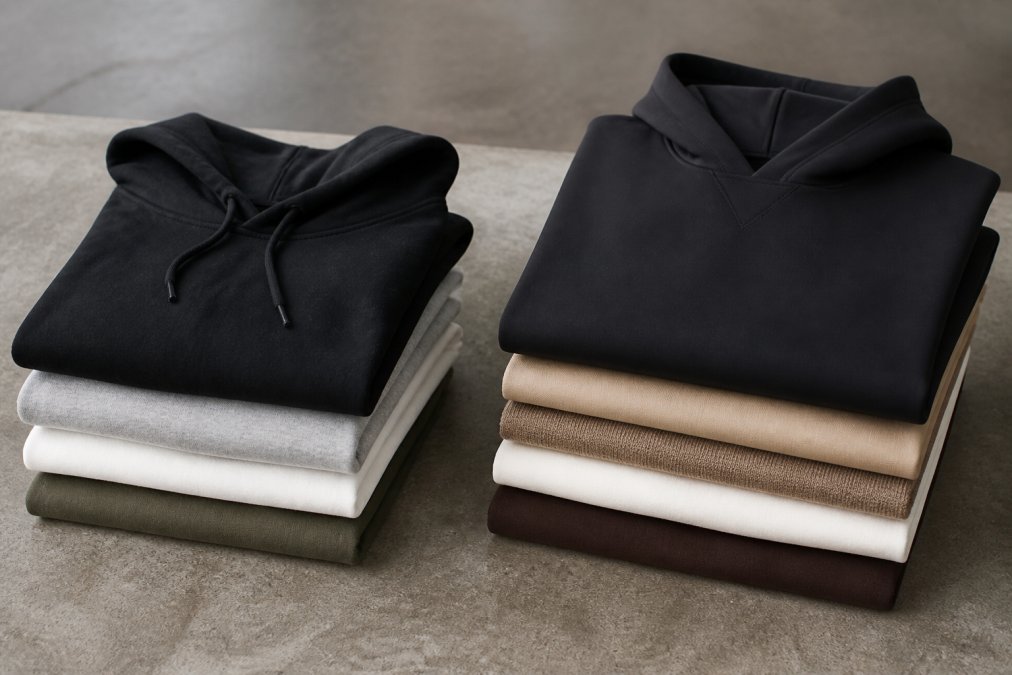
 comparison
Casual Streetwear vs Luxury Streetwear Styles: 2026 Guide
Table of Contents
- Casual Streetwear vs Luxury Streetwear: The Core Differences
- Side-by-Side Comparison: Casual vs Luxury Streetwear
- Fabric Weight and Construction: What Actually Changes the Look
- How to Style Heavyweight Tees for a Luxury Look
- Urban Streetwear Trends Shaping 2026
- Investment Value, Resale, and Sustainability
- Conclusion
- Frequently Asked Questions
Last Updated: September 16, 2026
Casual Streetwear vs Luxury Streetwear: The Core Differences
Casual streetwear vs luxury streetwear styles comes down to one thing: how much of the price you're paying for the garment versus the name attached to it. This guide from AW3SOME CLOTHES INC breaks down where the two lanes actually diverge, and where the gap is mostly marketing.
Price, Access, and Hype Culture
Price is the most visible divider, but access is the real one. Luxury streetwear typically sells through limited-edition drops, invite-only releases, or boutique distribution, which is what sustains hype culture and resale premiums. Casual streetwear sells continuously, in more sizes, at prices that don't require planning.
Fit and Silhouette: Relaxed vs Tailored
Luxury streetwear leans toward tailored structure: defined shoulder lines, controlled drape, and a boxy silhouette that's cut deliberately rather than generously. Casual streetwear favors a relaxed fit with a slight drop shoulder, which reads easier and layers better.
Side-by-Side Comparison: Casual vs Luxury Streetwear
Here's the breakdown that matters when you're deciding what to actually buy.
| Factor | Casual Streetwear | Luxury Streetwear |
|---|---|---|
| Typical price | Accessible, volume pricing | Premium, scarcity-driven |
| Fit | Relaxed, slight drop shoulder | Tailored, structured |
| Fabric weight | Midweight to heavyweight cotton | Often heavy, sometimes blended |
| Distribution | Continuous restocks | Limited-edition drops |
| Design focus | Original graphics, broad appeal | Designer identity, subculture ties |
| Best for | Daily wear, layering, value | Collecting, statement pieces |
Fabric Weight and Construction: What Actually Changes the Look
Fabric weight changes how a garment hangs, and that's the whole visual story. A heavier cotton holds its shape, sits away from the body, and gives a boxy silhouette without stiffness. Lighter fabric drapes closer and reads more casual.
- Shoulder-to-shoulder neck tape keeps the collar from stretching out
- Double-needle stitched neck and hems resist seam failure at stress points
- A stretch-proof collar is the single clearest sign of a tee built to last
- Quarter-turned construction removes the center crease for a cleaner print surface
How to Style Heavyweight Tees for a Luxury Look
Styling is where a casual piece crosses into luxury territory without the price tag. The trick is proportion and restraint: one oversized element, everything else fitted and clean. Most stylists describe this as the "one-volume rule", a single piece carries the silhouette, and everything else supports it.
The proportion math that actually matters
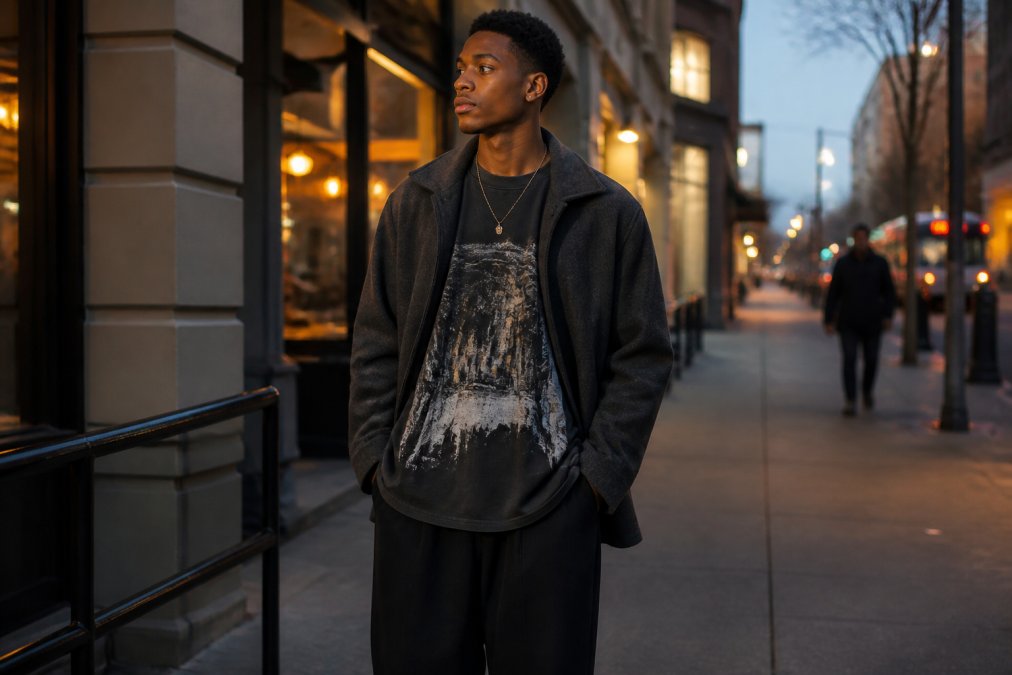
The reason a heavyweight tee reads as luxury under a jacket comes down to how fabric weight interacts with structure. A 245-255 GSM cotton tee holds its own shape, so it doesn't collapse under a jacket's shoulder line. A lighter tee (roughly 140-180 GSM, the typical range for standard retail tees) drapes closer to the body and disappears under outerwear, which is why the same outfit can look flat on a thinner shirt.
A working formula
- Start with a heavyweight tee in a solid or muted base. Charcoal, black, or off-white reads more expensive than bright prints. This is a color-theory effect, not a rule, muted bases let the outer layer and footwear carry the visual weight.
- Layer under a structured jacket. The contrast between a relaxed tee and a defined shoulder line is what creates the luxury silhouette. A wool overcoat, a cropped bomber, or a leather jacket all work; a soft hoodie does not, because it adds volume instead of structure.
- Keep the bottom half fitted or straight. Baggy on baggy collapses the shape. Straight-leg denim or a tapered chino keeps the top half as the only oversized element.
- Limit visible branding to one piece. A graphic back print plus a clean front logo is enough. Two competing logos split the eye and read as casual, not curated.
- Choose footwear with a defined shape. A chunky sneaker plus an oversized tee reads casual; a low-profile leather shoe or a clean leather sneaker shifts the whole outfit. The footwear is the fastest lever, swapping shoes changes the read more than swapping the tee.
Three outfit formulas you can copy
- Gallery opening: heavyweight tee in bone or off-white, straight black trousers, low-profile leather sneakers, single gold chain. The tee is the base; the trousers and shoes do the luxury signaling.
- Weekend city: washed-black heavyweight tee with a large back print, dark indigo straight denim, structured bomber, clean leather sneakers. The back print is the only graphic element.
- Layered cold-weather: heavyweight tee under a wool overcoat, tapered charcoal trousers, leather boots. The coat's shoulder line does the work; the tee adds weight and a visible collar.
The mistakes that flatten the look
- Sizing up twice. A relaxed fit already accounts for the drop shoulder. Going two sizes up turns a boxy silhouette into a shapeless one, and no amount of styling fixes that.
- Tucking a heavyweight tee into slim trousers. The fabric bulk creates a visible bulge at the waist. A French tuck (front only) works; a full tuck usually doesn't.
- Pairing a graphic tee with patterned bottoms. Two busy elements compete. Solid bottoms let the graphic read as intentional.
- Ignoring the collar. A stretched or floppy collar under a jacket undermines the whole silhouette. A ribbed, seam-taped collar that springs back when you stretch it is the single clearest durability indicator on a tee.
The single biggest mistake is treating a heavyweight tee as the statement and everything else as filler. In practice, the tee is the base layer. The structure around it does the work.
Urban Streetwear Trends Shaping 2026
Urban streetwear trends in 2026 are consolidating around fewer, better pieces. The maximalist logo era is fading; what's replacing it is heavier fabric, larger back prints, and smaller front branding.
Three shifts worth watching:
- Back-print dominance. Large artwork on the back with a minimal chest logo has become the default layout for graphic tees.
- Muted palettes with one accent. Charcoal, washed black, and bone bases with a single color hit in the artwork.
- Fit consistency over novelty. Buyers are rewarding brands that keep the same cut across drops instead of changing the silhouette every season.
Investment Value, Resale, and Sustainability
Resale value is where luxury streetwear and casual streetwear separate most sharply, and it's also where the logic gets weakest. No competitor on this topic explains the mechanics, so here's the honest version.
How resale value actually works
Luxury streetwear holds resale value because supply is deliberately constrained and the brand controls distribution. That's a closed loop: the same scarcity that creates resale demand also means most buyers never get the piece at retail. Treating a garment as an investment only works if you can reliably buy at retail and sell into a market that stays hot. Most people can't do either.
Graphic Tee — Geometric Emblem Back →
Three structural reasons luxury resale premiums exist:
- Constrained supply. Limited drops cap the number of units in circulation, so secondary demand has nowhere else to go.
- Brand-controlled distribution. When a brand limits which retailers can sell its product, it also limits how much inventory reaches the resale market.
- Cultural signaling. A piece tied to a specific subculture or moment carries meaning that outlasts the season, which sustains demand after the drop.
The cost-per-wear math
Casual streetwear doesn't pretend to be an asset. It's priced to be worn, which is a more honest value proposition for the vast majority of buyers. The relevant metric isn't resale potential, it's cost per wear.
Sustainability: the trade-off neither camp admits
On sustainability, the picture is more nuanced than either camp admits. Limited drops reduce overproduction per design but encourage repeat purchasing and shipping. Continuous production risks excess inventory but supports stable, predictable manufacturing. Neither model is automatically the ethical one, and any brand claiming otherwise is overselling.
What you can actually evaluate:
- Fabric content stated clearly. 100% cotton versus a blend is a factual difference, not a marketing one. Blends can be more durable or more comfortable depending on the fiber, but the label should say which.
- Construction details specified rather than implied. Shoulder-to-shoulder neck tape, double-needle stitched neck and hems, and quarter-turned panels are all checkable specs. If a brand won't list them, that's information.
- Care instructions provided. How you wash a garment determines most of its lifespan. A tee washed cold and air-dried can outlast the same tee washed hot and tumble-dried by years.
- Whether the brand describes its own model honestly. A brand that says "limited" and means "we made fewer" is different from one that says "limited" and means "we made fewer and charged more."
What this means for your purchase
If you're buying to wear, judge the piece on cost per wear, fabric content, and construction details. If you're buying to collect, understand that resale is a market, not a guarantee, and that the same scarcity driving the premium also makes it hard to buy at retail in the first place.
Conclusion
The real decision isn't casual versus luxury. It's whether you want a garment built for daily rotation or one built for a shelf.
SHOP THE LATEST DROP →
Frequently Asked Questions
What defines the difference between casual and luxury streetwear?
Casual streetwear focuses on everyday comfort and accessible pricing, often using midweight fabrics like 180 g/m² cotton. Luxury streetwear emphasizes limited-edition drops, premium textiles, and bespoke elements that signal cultural capital. The gap shows up in garment construction, material quality, and how tightly distribution is controlled. A heavyweight tee at 245-255 GSM with reinforced neck tape and double-needle hems sits closer to the luxury end on build quality, even when the price stays approachable.
How do you style heavyweight graphic tees for a luxury look?
Start with fit. An oversized or relaxed fit with a slight drop shoulder reads more intentional than a tight tee. Tuck the front loosely into tailored trousers or high-waist denim to create a boxy silhouette that balances casual and polished. Layer under a structured jacket or over a long-sleeve for depth. Keep accessories minimal and let the graphic be the statement piece. Fabric weight matters here: a 7.5 oz (245-255 GSM) tee holds its shape and drapes cleanly, which elevates the overall look.
Is streetwear considered casual or high fashion?
It occupies both spaces. Casual streetwear draws from skate, hip-hop, and everyday urban fashion, while luxury streetwear sits at the intersection of high fashion and street culture. Designers like Virgil Abloh and Demna Gvasalia pulled streetwear into luxury houses, blurring the line. Today, a graphic tee can be casual apparel or a collectible statement piece depending on the design philosophy, scarcity, and construction behind it. The category is defined more by cultural context than by a single price tier.
Can you mix casual streetwear with luxury pieces?
Yes, and it is one of the most common styling approaches in 2026. Pair a heavyweight graphic tee with tailored wool trousers or a structured coat. The contrast between relaxed fit and tailored structure creates visual tension that reads as deliberate. Keep the color palette tight, usually two or three tones. The key is proportion: if the top is oversized, balance it with a cleaner bottom, and vice versa. Mixing works best when each piece has strong material quality so nothing looks out of place.
How does fabric weight impact the look of streetwear apparel?
Fabric weight affects drape, structure, and how a garment holds its shape over time. A 7.5 oz (245-255 GSM) tee feels substantial and lays flat under printed artwork, which keeps graphics crisp. Lighter fabrics like 180 g/m² drape closer to the body and work well for layering. Weight is not a universal measure of quality, but it does change the silhouette. For an oversized fit, a heavier fabric maintains the boxy shape better than a thin one that collapses at the shoulders.