 How-to
How to Choose the Right Fit for Heavyweight Streetwear Tees
Last Updated: November 7, 2026
Quick Summary
The right fit for heavyweight streetwear t-shirts starts with a reference tee you already wear and like. Lay it flat, measure chest width, shoulder seam and body length in inches, then compare those numbers to the garment chart rather than your body size. Allow about half an inch to one inch of difference per measurement before changing size.
- Pick a reference tee that already fits the way you want.
- Measure chest width armpit to armpit flat, then double it.
- Compare garment chart measurements, not your body measurements, against your reference tee.
- Allow about half an inch to one inch of difference per measurement before changing size.
- Heavy fabric holds its shape, so a heavyweight tee often feels roomier than the same labeled size in lightweight cotton.
Table of Contents
- Start With Your Current Best-Fitting Tee
- How to Measure a T-Shirt at Home
- Relaxed Fit vs Oversized T-Shirt: Which Cut to Choose
- Reading an Oversized T-Shirt Size Chart
- How Heavyweight Fabric Changes the Way a Tee Fits
- How to Style Oversized T-Shirts Without Looking Lost in Them
- Pick Your Size and Try the Moonlit Wanderer or Dark Samurai Tee
- Frequently Asked Questions
Start With Your Current Best-Fitting Tee
Choosing the right fit for heavyweight streetwear t-shirts starts with the tee you already wear most.
Pull out a shirt that sits the way you like. Lay it flat and note where the shoulder seam lands, how wide the chest runs, and how far the hem falls.
- Shoulder seam: does it sit at your shoulder bone or drop past it?
- Chest: does it skim, sit loose, or feel tight when you move?
- Length: does it cover your waistband, or stop above it?
Heavyweight fabric behaves differently from lightweight cotton. A thick tee holds its shape, so it will not drape around you the same way. Keep that in mind as you compare cuts.
How to Measure a T-Shirt at Home
Most fit guides tell you to measure a shirt. Few tell you how to turn those numbers into a size decision. This section gives you a repeatable method you can run in about ten minutes with a flat surface, a tape measure, and one tee you already trust.
Step 1: Pick the right reference shirt
Choose a tee that fits the way you want your heavyweight tee to fit, not the loosest shirt in your drawer and not one you bought in a hurry. For a real heavyweight tee with an oversized cut and drop shoulder to compare against, see Death Lost Graphic T-Shirt. If you want a relaxed look, use a relaxed tee. If you want an oversized look, use the shirt you already consider oversized. The reference shirt sets your target, so pick deliberately.

Step 2: Lay it flat and smooth it out
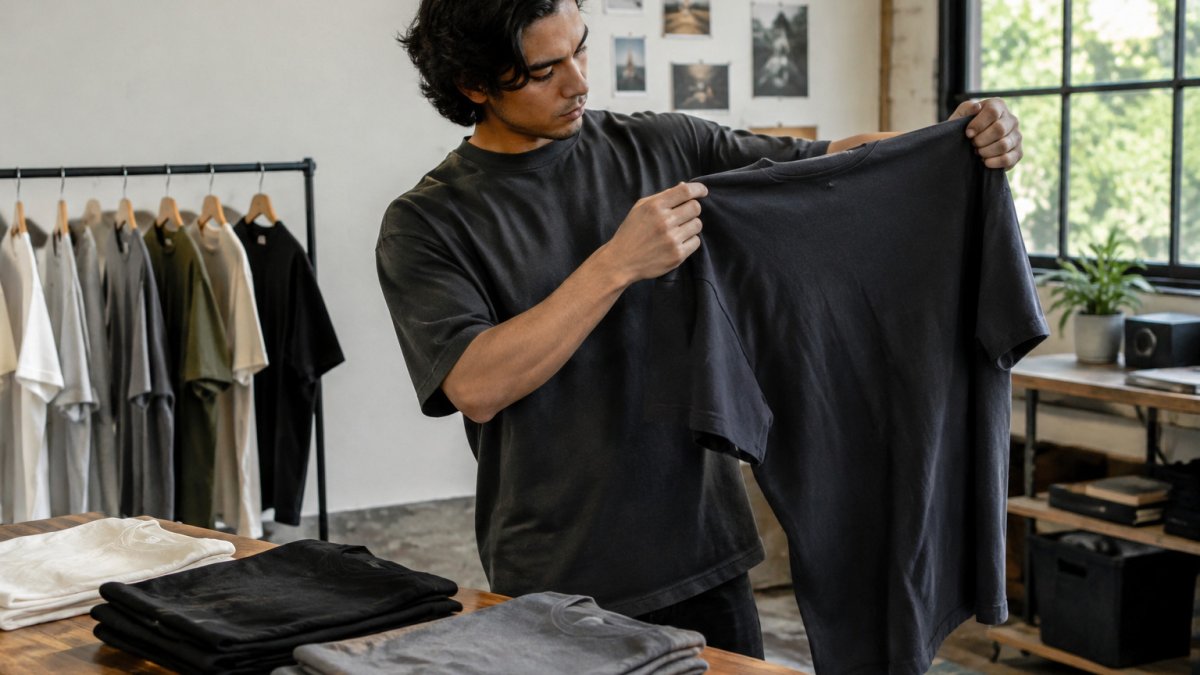
Button or zip nothing, this is a tee. Lay it on a table, smooth out wrinkles by hand, and let the fabric settle for a minute. Take the extra moment to flatten the chest and hem before you measure.
Step 3: Take four measurements in inches
Measure the shirt as-is, not stretched. Write each number down.
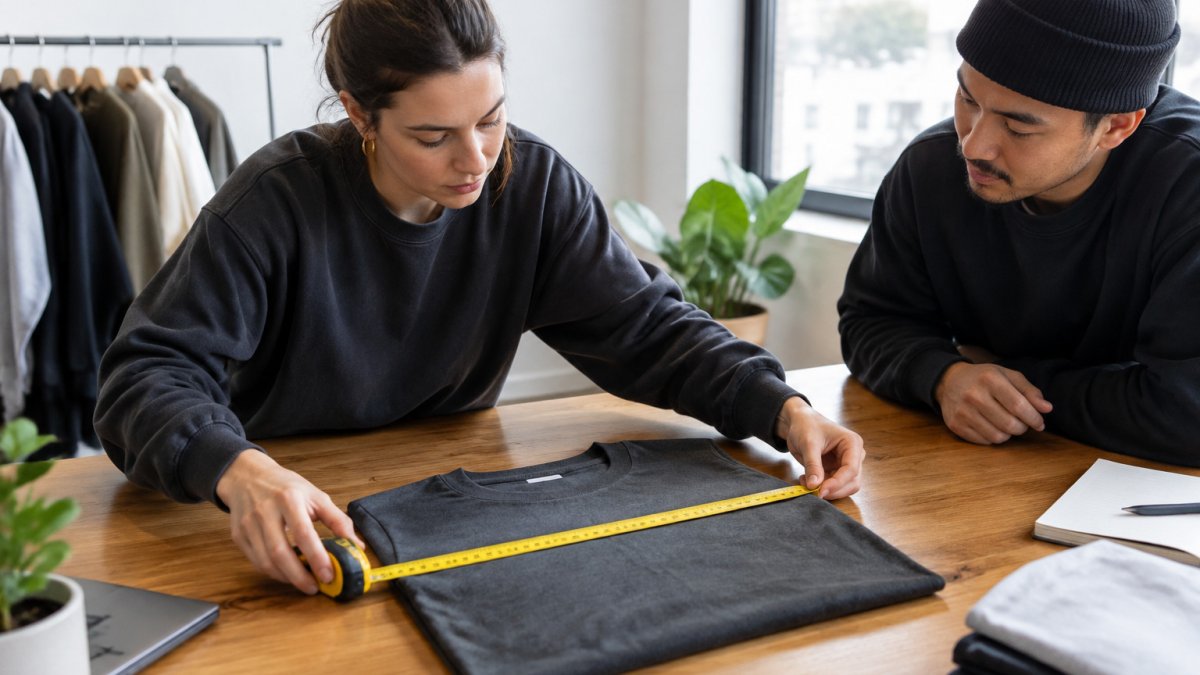
- Chest width: Measure straight across from armpit seam to armpit seam with the shirt flat. This is a half-measurement. Double it to get the full chest circumference the garment is cut to.
- Shoulder width: Measure seam to seam across the top of the back, from one shoulder seam to the other. This tells you how far the shoulder drops.
- Sleeve length: Measure from the shoulder seam to the sleeve hem. On a drop-shoulder tee, start at the seam, not at your body's shoulder point.
- Body length: Measure from the highest point of the shoulder (usually right beside the collar) straight down to the bottom hem.
Step 4: Compare against the garment chart, not your body
A size chart lists garment measurements, not body measurements. That distinction is where most shoppers go wrong. If your reference tee measures 22 inches across the chest and a size chart lists 23 inches for a given size, that size runs about an inch wider than what you already like. Compare each of your four numbers to the chart's four numbers and note the differences.
Step 5: Decide with a tolerance rule
Many shoppers allow roughly half an inch to one inch of difference per measurement before changing size. If the chart is within that range of your reference shirt, stay with your usual size.
Watch out: measuring a stretched shirt skews every number. Measure a shirt that has been worn and laundered normally, laid flat without pulling.
Chest Width and Shoulder Seam Placement
Chest width and shoulder placement do most of the work in defining a tee's silhouette. Measure chest width armpit to armpit, flat, and double it. Then check where the shoulder seam sits on your reference shirt. On a relaxed or oversized tee, the seam often drops below your natural shoulder line.
Watch out: a shoulder seam that sits far past your shoulder bone can make the shirt look swamped, especially in a heavy fabric that stands away from the body.
Sleeve Length and Overall Body Length
Measure sleeve length from the shoulder seam to the sleeve hem. Then measure overall length from the highest point of the shoulder down to the bottom hem. Compare these numbers with your favorite tee. Matching them keeps the proportions you already like. If a chart lists a body length more than an inch longer than your reference, expect the hem to sit lower, which changes how the shirt layers over pants and how tall you look in it.
Relaxed Fit vs Oversized T-Shirt: Which Cut to Choose
Relaxed fit and oversized fit sit close together, but they look different on the body.
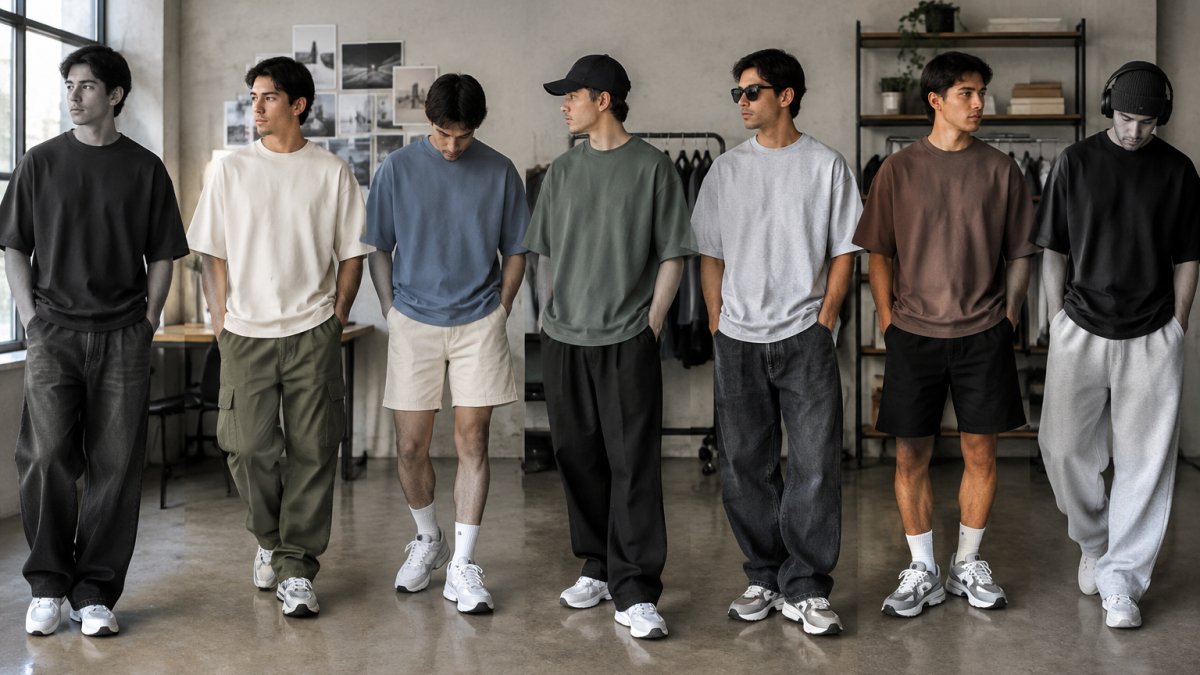
For most people, a relaxed cut works as an everyday choice. It layers easily under jackets and looks sharp with slim pants.
- Choose relaxed if you want comfort with a clean outline
- Choose oversized if you want a bold, boxy shape
- Consider your height: oversized cuts can overwhelm shorter frames
Best for: people who want a streetwear look without the full oversized drape. Skip if: you feel swallowed by loose fabric or prefer a close-to-body fit.
Reading an Oversized T-Shirt Size Chart
An oversized T-shirt size chart lists garment measurements, not body measurements. That difference matters. A chart that shows 26 inches of chest width means the shirt measures 26 inches flat across, which translates to a much larger body size once you account for the design.
| Measurement | Where to Measure | What It Tells You |
|---|---|---|
| Chest width | Armpit to armpit, flat | Overall room through the body |
| Shoulder width | Seam to seam | How far the shirt drops |
| Sleeve length | Shoulder seam to hem | Arm coverage |
| Body length | High point to bottom hem | How low the shirt sits |
Compare your home measurements against these numbers instead of relying on your usual size. If you fall between two sizes, choose the larger one for an oversized look or the smaller one for a relaxed fit.
How Heavyweight Fabric Changes the Way a Tee Fits
Fabric weight is the single biggest reason a heavyweight tee fits differently from a lightweight one at the same labeled size. Understanding why helps you choose a size on purpose instead of guessing.
What fabric weight actually measures
Fabric weight describes how heavy a given area of cloth is, usually expressed in ounces per square yard or in grams per square meter (GSM). A 7.5 oz (245-255 GSM) tee is a heavyweight cotton jersey. That number tells you about mass and hand-feel, it does not tell you whether the fabric is soft, durable, opaque, or well constructed. A heavier cloth is not automatically a better cloth. Treat weight as one spec among several, not a quality score.
How thicker fabric changes drape
Lightweight cotton tends to collapse and follow the body. Heavyweight cotton holds its own shape, so it stands away from the torso and falls in straighter lines. The practical effect: the same chest measurement feels roomier in a heavyweight tee because the fabric does not cling. If you size a heavyweight tee using only how a thin tee fits, it will likely feel larger than expected.
How heavyweight fabric changes proportion
Thicker fabric adds visual bulk at three points:
- Shoulders: a drop shoulder in heavy fabric reads wider because the cloth does not drape down; it holds the line.
- Chest: a boxy chest in heavy fabric looks boxier, since the fabric does not taper inward.
- Hem: a heavy hem sits away from the waistband rather than tucking in, which changes how the shirt layers over pants.
That is why a heavyweight tee in a relaxed cut can read closer to oversized than the label suggests, and why an oversized heavyweight tee can read very oversized on a shorter frame.
The trade-offs to plan for
- Structure vs. comfort: heavyweight fabric gives a cleaner silhouette but feels heavier than lightweight cotton.
- Drape vs. definition: the fabric will not skim your shape, so fit comes from the cut, not the cloth.
- Layering: a structured tee sits differently under a jacket than a soft one; allow room at the shoulder if you plan to layer.
How to use weight in a size decision
If you are moving from a lightweight tee to a 7.5 oz (245-255 GSM) heavyweight tee, compare garment measurements rather than labeled sizes. Match your reference shirt's chest width and body length first, then check shoulder width. If the heavyweight chart is wider at the shoulder by more than an inch, expect a more pronounced drop and decide whether that suits your frame.
Watch out: assuming a higher GSM number means a better shirt. Weight and quality are separate specs.
How to Style Oversized T-Shirts Without Looking Lost in Them
Oversized tees look intentional when you balance the volume. Pair a loose top with a slimmer bottom, such as tapered pants or straight denim, to keep the outline clean. For a deeper step-by-step walkthrough, see How to Style Heavyweight Streetwear: A Complete Guide.
A few styling moves help:
- Wear slim or straight pants with a wide tee
- Add a structured jacket to frame the shoulders
- Keep accessories simple so the graphic stays the focus
- Roll the sleeves once to shorten the visual length
Watch out: stacking too many loose layers can overwhelm your frame. Keep at least one piece fitted. For practical tips on making oversized pieces feel comfortable in daily wear, see How to Wear Oversized Streetwear Comfortably.
Pick Your Size and Try the Moonlit Wanderer or Dark Samurai Tee
Once you know your measurements and preferred cut, choose a design that suits your style. The Moonlit Wanderer is an oversized heavyweight short sleeve with a slight drop shoulder and a cloaked-traveler graphic on the back, priced at $34.99.

Compare the garment measurements in the product listing against your home numbers before you order. If you still feel unsure, start with the size that matches your best-fitting tee.
Shop the latest drop to see the full collection and find the fit that works for your frame.
Frequently Asked Questions
Are heavyweight T-shirts usually oversized?
Not always. Heavyweight tees are a fabric category, and the fit depends on how the pattern is cut. AW3SOME's current tees are cut oversized or relaxed with a slight drop shoulder. Check the garment measurements or fit description on the product page instead of assuming the fit from the fabric weight alone. Fabric weight affects how the shirt drapes and holds its shape, while the cut controls how much room you get through the chest, shoulders, and body.
How should a heavyweight T-shirt fit at the shoulders?
On an oversized or relaxed heavyweight tee, the shoulder seam should sit slightly past your natural shoulder point, creating a drop shoulder. This is intentional and gives the silhouette its boxy look. If the seam lands far down your arm or the shoulders feel loose enough to slide off, the shirt is likely too large. Compare the shoulder-to-shoulder measurement on the size chart with a tee you already own to judge this accurately.
How do I choose the right size in an oversized T-shirt?
Start with your chest measurement and compare it to the garment chest width on the size chart, not your body size. Then check the body length and sleeve length. If you want the full oversized effect, size up only if the chest measurement still falls within your comfort range.
What is the difference between a relaxed fit and an oversized fit?
A relaxed fit has moderate extra room through the body and sleeves, sitting close to the body without clinging. An oversized fit adds considerably more width and length, with a pronounced drop shoulder and a boxier silhouette. Relaxed suits everyday wear and layering, while oversized creates a deliberate streetwear shape. Both can work with heavyweight fabric, but oversized shows the drape more clearly.