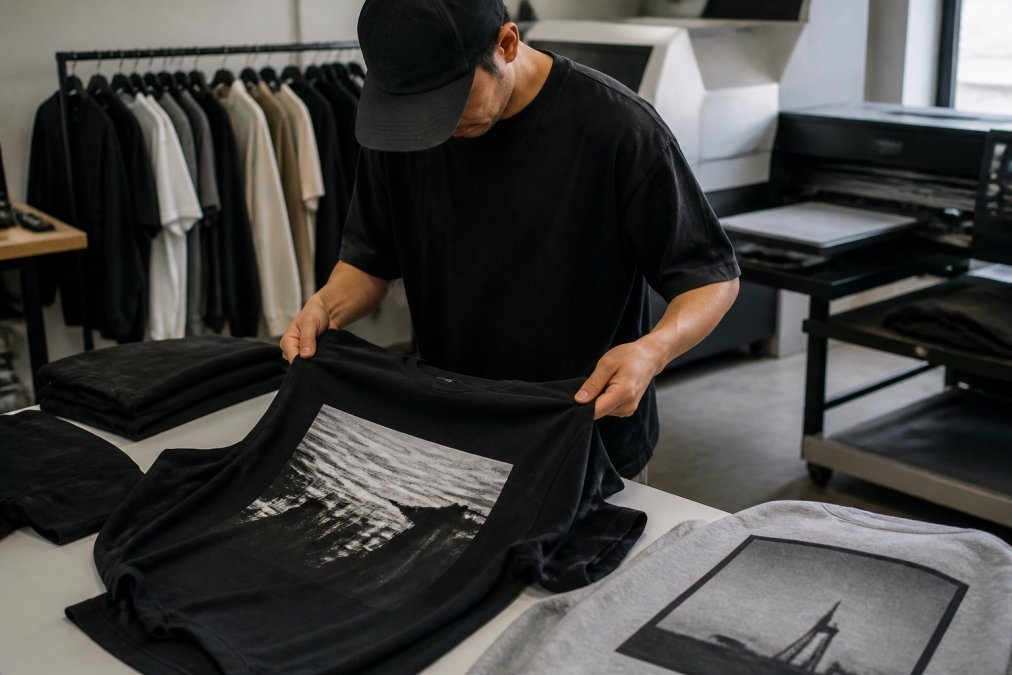
 how-to
How to Identify Authentic Streetwear Brands (2026 Guide)
Table of Contents
- Why Authenticity Matters in Streetwear
- Signs of High-Quality Heavyweight Streetwear T-Shirt Quality
- Check the Print: DTG vs Screen Printing Quality
- Original Designs vs. Mass-Produced Graphics
- How to Spot Fake Streetwear in 3 Steps
- Red Flags to Walk Away From
- Conclusion
- Frequently Asked Questions
Last Updated: September 9, 2026
Why Authenticity Matters in Streetwear
Authentic streetwear is more than a logo on a chest; it is a commitment to construction, original design, and fabric integrity. When you pay a premium for a piece, you are investing in materials that hold their shape and artwork that represents a genuine creative point of view. The market is flooded with knockoffs that cut corners on both, which is why knowing how to identify authentic streetwear brands protects your wallet and your style.

This guide breaks down the physical signs of premium construction, the differences in printing methods, and the red flags that separate real drops from mass-produced fakes. By the end, you will be able to assess any garment with confidence.
Signs of High-Quality Heavyweight Streetwear T-Shirt Quality
Heavyweight streetwear t-shirt quality is defined by a combination of fabric weight, yarn construction, and assembly techniques. While a premium tee often falls in the 7.5 oz range (roughly 245-255 GSM), that number is only the starting point. The real test is how that weight is engineered and how the garment is put together.
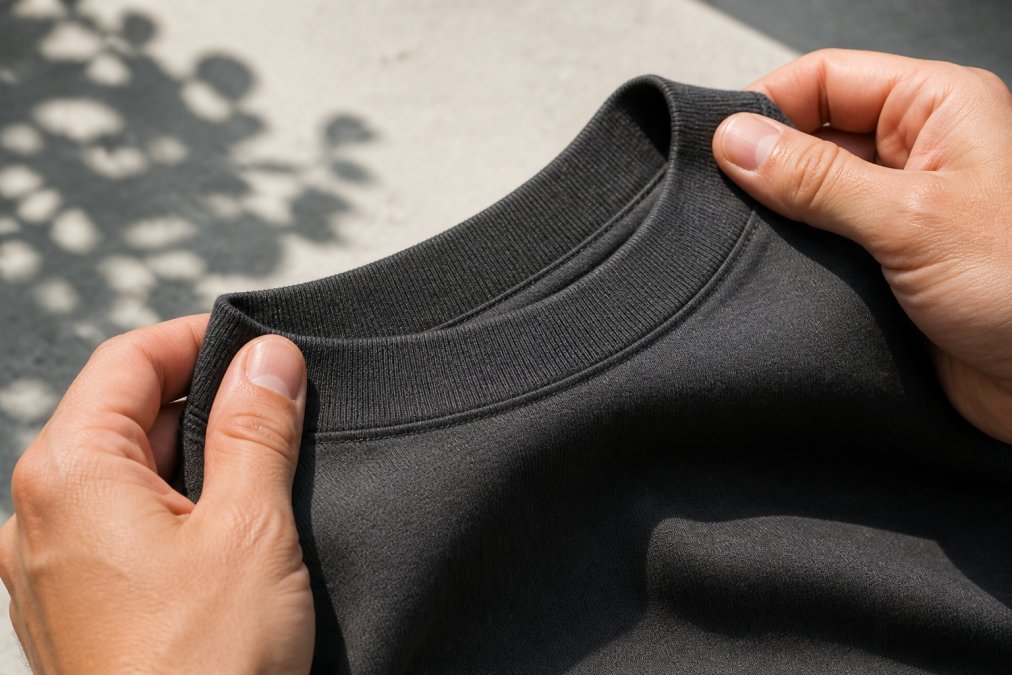
The Mechanics of a Stretch-Proof Collar
The collar is the first area to fail on a low-quality tee. A standard ribbed collar can lose its elasticity after a few washes, leading to the dreaded "potato chip" warp. Premium blanks use a stretch-proof collar, typically a 1x1 ribbed knit that is pre-shrunk and sewn with a specific tension. When you gently pull the collar sideways, it should snap back immediately without visible distortion. This resilience comes from the tightness of the rib knit and the quality of the elastic recovery in the cotton fibers.
Why Shoulder-to-Shoulder Tape Matters
Look inside the back of the neck. You should see a strip of fabric, shoulder-to-shoulder neck tape, covering the seam where the collar meets the body. This tape serves two purposes: it reinforces the highest-stress point of the shirt, preventing the seam from popping, and it stabilizes the shoulder line so the garment doesn't slump forward. On a premium tee, this tape is made of a soft, breathable cotton or a cotton-blend that won't irritate the skin. A lack of tape, or a thin, scratchy synthetic tape, is a sign of cost-cutting.
Decoding Stitch Density and Seam Construction
Turn the shirt inside out and examine the seams. A quality garment uses double-needle stitching on the sleeves and bottom hems, creating two parallel lines of stitches that distribute stress and prevent unraveling. The stitch count, the number of stitches per inch, should be high and consistent. If you see loose loops, skipped stitches, or a wavy hemline, the garment was likely sewn quickly with poor tension control. Also, check for quarter-turned construction. This means the fabric was rolled and cut so the center crease is eliminated, allowing the shirt to hang straight without a permanent fold line down the middle. This is a detail many brands skip, but it directly impacts how the tee drapes on your body.
Fabric Science: Yarn Count and Cotton Sourcing
The feel of a shirt comes down to the yarn. A 16-singles yarn count indicates a specific thickness and twist. A single strand of 16-count yarn is thicker than a 20-count or 30-count yarn, which gives the fabric a denser, more substantial hand-feel. This is different from thread count (which applies to woven fabrics); for knits, yarn count is the primary driver of texture and weight. The twist of the yarn also matters, a tighter twist creates a smoother, more pill-resistant surface.
Cotton sourcing plays a role in the hand-feel. Ringspun cotton, where the fibers are twisted into a fine, strong thread, is a hallmark of premium blanks. It feels softer against the skin than open-end cotton, which is coarser and more prone to pilling. While 100% cotton is standard for most colors, blends exist for specific shades. For example, Heather Grey often uses a 90/10 cotton-polyester blend to achieve its marled look, while Charcoal Grey might use a 50/50 blend for a different texture and color depth. These blends are not inferior; they are chosen for specific aesthetic and performance reasons.
The Weight Test: What 7.5 oz Feels Like
When you hold a 7.5 oz (245-255 GSM) tee, it should feel substantial, like a piece of fabric with structure, not a flimsy undershirt. It should drape cleanly away from the body rather than clinging. However, GSM is not a universal measure of quality. A 7.5 oz tee made with loose, low-quality yarn will feel heavy but rough and will lose its shape. The weight must be paired with a tight, smooth knit. When you stretch the fabric slightly, it should resist and then recover its shape quickly, indicating good fiber elasticity and construction.
Check the Print: DTG vs Screen Printing Quality
The printing method determines how the graphic ages, and DTG vs screen printing quality is a common point of confusion. Direct-to-garment (DTG) printing works like a high-end inkjet printer, injecting ink directly into the fabric fibers. This allows for highly detailed, photo-realistic designs with unlimited colors and no setup fees for small batches.
Screen printing pushes thick layers of plastisol ink through a mesh stencil, sitting on top of the fabric. It is durable for simple, bold graphics but struggles with fine details and gradients. DTG prints feel softer and become part of the garment, while screen prints can crack and peel over time.
A common mistake is assuming DTG is inferior. When executed on a quality blank, DTG offers excellent color vibrancy and breathability. The key is the base fabric: DTG relies on the shirt's fibers to hold the ink, so a heavyweight, high-quality blank produces a better result.
Original Designs vs. Mass-Produced Graphics
Original designs are the soul of authentic streetwear. A brand with a distinct artistic voice invests in exclusive artwork that you cannot find on a dozen other websites. Mass-produced graphics are often generic, licensed, or scraped from trending topics, resulting in a lack of cohesion and a disposable feel.
When evaluating a brand, ask whether the designs have a consistent point of view. Do the graphics look like they belong to a specific creative universe, or do they look like clip art? Authentic streetwear brands treat their drops like art releases, often producing limited runs that are never reprinted. This scarcity is a feature, not a marketing trick; it preserves the value for collectors who purchased the original.
Look for originality in the details. A compact chest logo paired with a bold back print is a classic streetwear layout. The artwork itself should demonstrate technical skill, whether it is a detailed illustration, a clever typographic treatment, or a striking geometric composition. If the design feels safe or familiar, it probably is.

How to Spot Fake Streetwear in 3 Steps
Spotting counterfeit streetwear requires a systematic check of the physical garment and the digital footprint of the seller. Here is a three-step process to help you how to spot fake streetwear before you buy.
Step 1: Inspect the Fabric and Construction
Do not just feel the weight; perform specific tests.
- The Collar Snap Test: Grip the collar between your thumb and forefinger and stretch it horizontally. A premium, stretch-proof collar will resist and snap back to its original shape instantly. A fake will stretch easily and may stay slightly distorted.
- The Seam Check: Turn the shirt inside out. Look for a clean, tight double-needle stitch on the sleeves and hem. The stitching should be uniform with no loose threads or skipped stitches. Check the side seams, are they aligned properly? Misaligned seams indicate poor quality control.
- The Neck Tape Test: Authentic heavyweight tees almost always feature shoulder-to-shoulder neck tape. This tape should be smooth, wide, and securely sewn. If the tape is thin, scratchy, or missing entirely, it is a major red flag.
- The Drape Test: Hold the shirt up by the shoulders. A quality heavyweight tee should hang straight and structured, not cling or fold into itself. The fabric should feel dense and smooth, not rough or papery.
Step 2: Verify the Print Quality
Look closely at the graphic, not just the design.
- DTG Prints: Direct-to-garment printing injects ink into the fibers. On a new, authentic DTG print, the edges should be crisp, and color transitions should be smooth with no banding. The print should feel soft and integrated into the fabric, not like a stiff plastic sticker. Check the inside of the shirt; you should see a faint mirror image of the print where the ink saturated the fibers. If the print feels raised, rubbery, or has a shiny surface, it is likely a low-quality transfer.
- Screen Prints:
- The Detail Check: Look at the fine lines in the artwork. Authentic DTG can reproduce incredibly fine details. If the design looks blurry, pixelated, or has jagged edges, it is a sign of a rushed, low-quality print job.
Step 3: Scrutinize the Seller and Brand
This step is about verifying the source, not just the product.
- Ask for Specs: Authentic brands are transparent about their blanks. Ask the seller directly: "What is the GSM or ounce weight of the fabric? What is the yarn count? What printing method do you use?" A legitimate brand will answer these questions without hesitation. A seller who says "premium quality" but cannot provide a specific number is hiding something.
- Check the Brand's Consistency: Look at their website and social media. Do they have a consistent brand story? Do their product photos show the same level of detail? A brand that uses stock photos or has a disjointed feed is often dropshipping generic products.
- Look for the 'Never-Reprint' Policy: Authentic streetwear brands often produce limited runs. If a design sells out, it is gone. If you see a brand constantly re-releasing "limited" designs or running perpetual "clearance" sales on the same items, they are prioritizing volume over exclusivity, which undermines the value of their product.
- Reverse Image Search: Take a screenshot of the product photo and run a reverse image search. If the same image appears on multiple unrelated websites, the product is likely a mass-produced generic item, not an original design.
Red Flags to Walk Away From
Several warning signs should make you pause before completing a purchase. The first is a price that seems too good to be true for the claimed quality. A heavyweight, 245-255 GSM tee with original artwork requires investment; a rock-bottom price usually means corners were cut on fabric or labor.
Vague product descriptions are another major red flag. If a listing only says "premium quality tee" without specifying the GSM, yarn count, or printing method, the seller likely does not know or does not want you to know. Authentic brands share these details because they are proud of their construction.
Poor quality control is visible in the details. Misaligned seams, uneven hems, and inconsistent sizing across the same product line indicate a lack of oversight. Finally, be wary of brands that constantly re-drop "limited" designs. True scarcity means when a drop sells out, it is gone. A brand that reprints its most popular designs is undermining the value of its own product.
Conclusion
Identifying authentic streetwear comes down to education: understanding fabric weight, construction techniques, and printing methods. You can now look past the hype and assess a garment based on its physical properties and the integrity of the brand behind it.
The streetwear market rewards brands that invest in heavyweight blanks and original, never-reprinted artwork. Build your wardrobe with intention, and let the quality of your pieces speak for themselves.
Frequently Asked Questions
Does fabric weight determine the quality of a streetwear tee?
Fabric weight is a key indicator, but not the only measure of quality. A heavier tee, typically 7.5 oz or 245-255 GSM, feels more substantial and drapes better. However, construction details like the stitching, collar reinforcement, and yarn quality are just as important. A high-quality heavyweight tee uses dense, tight-knit cotton that holds its shape. Look for a stretch-proof collar and double-needle hems as signs of durability.
How can you tell if a streetwear brand is original?
Original streetwear brands create their own artwork and design language. Their graphics are distinctive and consistent across multiple pieces. They do not rely on generic, licensed, or easily sourced images. Check if the brand has a clear aesthetic or story behind its drops. Authentic brands invest in unique art direction. If a design looks like it could be from any brand or is a direct copy of a well-known artist's work, it is likely not original.
What is the difference between DTG and screen printing quality?
DTG (direct-to-garment) printing works like a printer, applying ink directly to the fabric. It is excellent for detailed, multi-colored, and photorealistic designs without a heavy hand-feel. Screen printing pushes ink through a stencil, creating a thicker layer of ink on the fabric. Both methods can produce high-quality results. For a brand focused on complex, layered artwork, DTG allows for fine details that screen printing cannot achieve. The quality depends on the printer and fabric, not just the method.
What are the signs of high-quality streetwear construction?
Look for specific construction details that indicate quality. A shoulder-to-shoulder neck tape prevents stretching and adds structure. A double-needle stitched neck and hems provide extra durability at high-stress points. Quarter-turned construction means the shirt is folded differently to prevent the main seam from twisting after washing. These features, combined with a heavyweight fabric like 16-singles yarn, show that the brand prioritizes longevity over cutting costs.
The challenge is finding a brand that consistently delivers on all these fronts. At AW3SOME CLOTHES INC, we focus on premium heavyweight construction and exclusive original graphics that are never reprinted. Explore the latest drop to find pieces built on the principles of quality and originality. Get started with AW3SOME CLOTHES INC and wear the difference.