 how-to
How to Style Tech-Inspired Streetwear for Women
Table of Contents
- What Defines Tech-Inspired Streetwear for Women
- Start With the Foundation: Women's Techwear Outfit Ideas
- Styling Oversized Graphic Tees Without Losing Your Silhouette
- Layering for Weather, Movement, and Depth
- Footwear, Accessories, and the Details That Finish the Look
- Fit Inclusivity: Making Tech-Inspired Streetwear Work for Your Body Type
- Caring for Technical Fabrics and DTG Graphic Prints
- Conclusion
- Frequently Asked Questions
Last Updated: September 14, 2026
What Defines Tech-Inspired Streetwear for Women
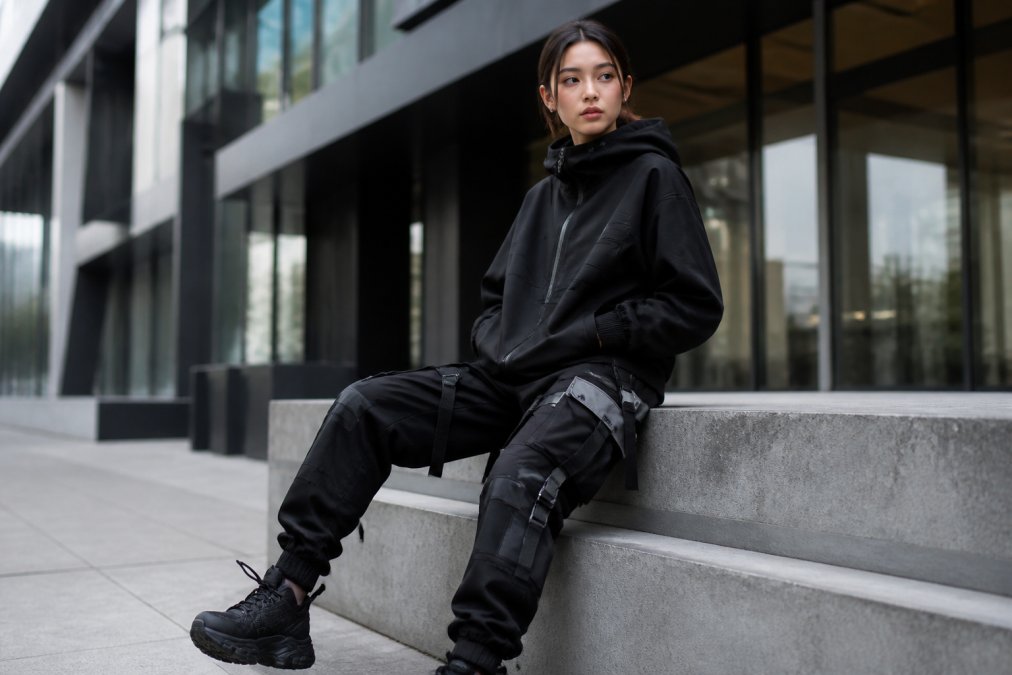
Tech-inspired streetwear borrows the visual language of performance gear, tactical equipment, and futuristic design, then applies it to everyday clothing: technical fabrics, functional details like straps and buckles, and a sharp, urban silhouette.
That definition matters because the aesthetic gets flattened into "cyberpunk" or "darkwear" costumes when it is really a styling system. At AW3SOME CLOTHES INC, we build around original graphics and heavyweight construction rather than costume pieces, because the look works best when the base garments are solid enough to carry the details.
The core elements show up again and again across the style:
- Technical fabrics: synthetic blends, ripstop, and coated cotton that hold structure
- Utilitarian hardware: straps, buckles, cargo pockets, and modular attachment points
- A muted base palette: black, charcoal, olive, and gray, with one accent
- Deliberate layering: multiple visible tiers that create depth
- Tapered or structured bottoms: cargo pants and technical joggers that balance volume up top
Start With the Foundation: Women's Techwear Outfit Ideas
The best women's techwear outfit ideas start with one reliable base layer, then build outward. Get the foundation wrong and every layer above it fights for attention.
Build From a Base Layer That Holds Its Shape
A heavyweight tee is the most versatile starting point: it sits flat under a jacket and still looks finished on its own. Look for a relaxed or oversized cut with a collar that keeps its shape after washing.
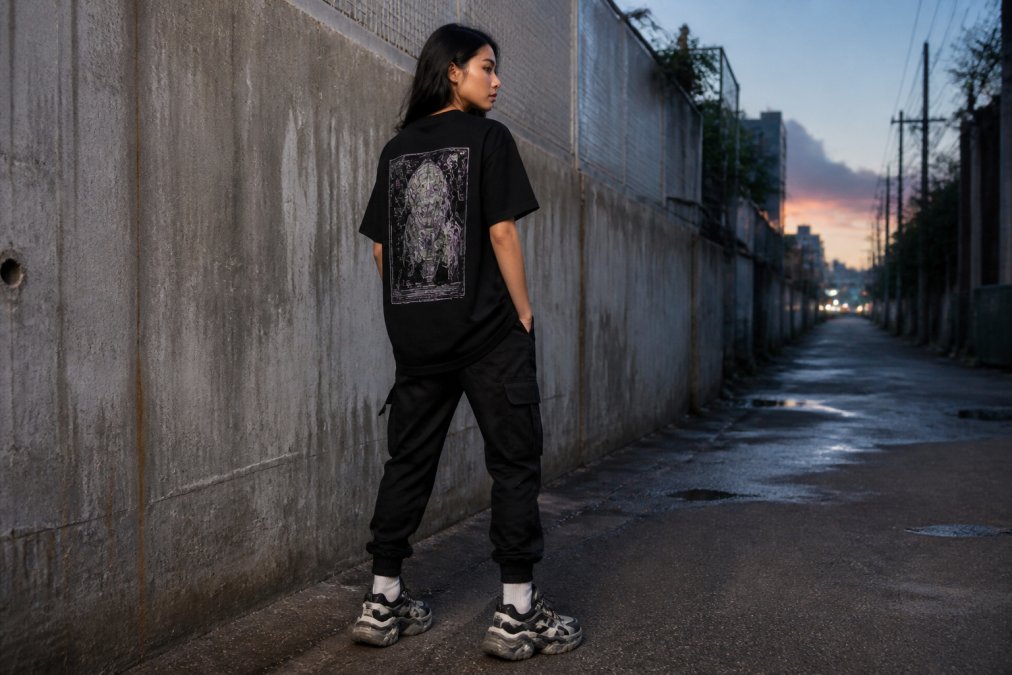
AW3SOME CLOTHES INC tees use a 7.5 oz / 245-255 GSM heavyweight cotton with shoulder-to-shoulder neck tape and a stretch-proof collar, construction that keeps a base layer looking structured. Our Tokyo Street Racing T-Shirt is a straightforward example: a compact chest logo with a full back scene, giving you a graphic focal point without competing with your outerwear.

Three foundational outfit formulas that work:
- Heavyweight graphic tee + tapered cargo pants + chunky sneakers
- Long-sleeve base + utility vest + technical joggers + trail sneakers
- Cropped windbreaker + relaxed tee + straight technical pants + boots
The first formula is the easiest entry point, master it before adding hardware.
Styling Oversized Graphic Tees Without Losing Your Silhouette
An oversized graphic tee only works when something else in the outfit is fitted: volume in one place, taper in another. Skip that balance and the look reads shapeless.
Balance Volume With Taper
If your tee is oversized, your bottoms should taper toward the ankle: tapered cargo pants, technical joggers with a cinched hem, or slim straight pants. Pairing an oversized tee with wide-leg pants isn't layering, it's just bulk.
Two more fixes that solve most silhouette problems:
- Front tuck: tuck just the front hem into a high-waist bottom to define your waistline without losing the oversized feel
- Knot or band: gather the side hem and secure it with a hair tie for a cropped effect, useful when you want to show a layered base underneath
Layering for Weather, Movement, and Depth
Layering is where tech-inspired streetwear separates itself from a plain graphic tee and jeans. The goal is three visible tiers that each do a job: a base for comfort, a mid layer for insulation or structure, and an outer shell for weather, suited to your actual climate, not a mood board.
A practical three-tier build:
- Base: heavyweight graphic tee or a long-sleeve cotton layer
- Mid: utility vest, hoodie, or a light fleece for structure
- Shell: windbreaker or technical jacket, ideally with a waterproof and breathable membrane
For movement, keep the mid layer close to the body so your arms stay free. For depth, let the base layer show at the hem and collar, that visible edge makes layering look styled rather than accidental.
Match the Layer Stack to Your Climate
The same three-tier system behaves differently depending on your climate and season. Adjust the fabric weight and breathability of each tier rather than the number of tiers.
- Hot, humid summers: skip the mid layer entirely. Use a lightweight, moisture-wicking base and a packable shell you can stow when the afternoon storms pass. A heavyweight cotton tee still works as a base if you keep the outer layer breathable.
- Mild, wet springs and falls: a heavyweight tee plus a hooded mid layer plus a shell with taped seams handles rain without bulk. This is the most versatile stack for most of the country.
- Cold, dry winters: add an insulating mid layer (fleece or a quilted liner) under a windproof shell. Keep the base fitted enough to sit flat under the insulation so you don't lose the silhouette.
- Shoulder seasons with big temperature swings: favor a vest as your mid layer. It keeps your core warm and your arms free, and it's the easiest piece to remove and carry when the temperature climbs.
A common pattern among daily wearers is to own one shell and rotate two or three mid layers. The shell does the weather work; the mid layer does the styling work.
Layering for the Workplace Without Losing the Aesthetic
Making tech-inspired streetwear read as office-appropriate is a common pain point. The tactical signals that look great on the street, harness straps, exposed buckles, oversized cargo pockets, are the first things to read as costume at work.
The fix is to keep the silhouette and the fabric story, and drop the hardware. A structured shell in a muted color over a heavyweight graphic tee and tapered technical pants reads intentional and modern without announcing itself. Swap the crossbody webbing bag for a clean leather or nylon tote, trade combat boots for a low-profile technical sneaker in a single color, and keep one utilitarian detail, a single strap, a single pocket. If your workplace leans casual, a utility vest over a heavyweight tee and straight technical pants is usually the outer limit before it tips into streetwear-only territory.
The Mechanics of a Layer That Actually Looks Layered
Depth comes from contrast at the edges, not from stacking more pieces. Three things create visible layering:
- Length contrast: the base layer should extend past the mid layer at the hem by an inch or two, and the shell should be the longest or shortest piece depending on the look you want. If every layer ends at the same point, the outfit reads as one thick block.
- Collar contrast: a crew-neck base under a hooded mid layer under a stand-collar shell gives three distinct necklines. That's what the eye reads as layering.
- Texture contrast: a smooth technical shell over a matte cotton tee over a ribbed knit mid layer creates separation even when the colors are close. If every layer is the same fabric finish, the outfit flattens.
Footwear, Accessories, and the Details That Finish the Look
Footwear and accessories decide whether the outfit reads techwear or just casual. Chunky sneakers, trail runners, and combat boots all fit because they're built with visible structure and functional soles. The difference between a finished look and a costume is how the footwear relates to the pant hem and how many accessories you allow.
Footwear: Match the Shoe to the Pant Hem
The single most useful footwear rule is that the shoe and the pant hem have to agree on volume. Get that right and almost any shoe in the category works.
- Tapered or cinched technical pants: pair with chunky sneakers or trail runners. The narrow hem sits cleanly on the shoe collar and the volume of the shoe balances the taper.
- Straight or wide technical pants: pair with a lower-profile sneaker or a boot with a defined heel. A chunky shoe under a wide hem creates a heavy, bottom-weighted silhouette that reads sloppy rather than intentional.
- Cropped pants: pair with a high-top or a boot that fills the gap at the ankle. Bare ankle plus a low shoe breaks the line and makes the outfit look unfinished.
- Combat boots: work best with pants that either tuck in or break cleanly at the boot shaft. A hem that bunches over the boot laces is the most common styling error in this category.
For color, a single muted shoe colorway (black, charcoal, olive, or bone) does more for the outfit than a technical-looking shoe in a loud color. The shoe is the anchor; the graphic tee is the focal point.
Accessories: One Signal, Not Three
Accessories should stay restrained. A crossbody bag with a buckle closure, a webbing belt, or a single harness-style strap adds the utilitarian signal without tipping into costume. One utilitarian accessory per outfit is the rule; two can work if they share a material or color story, but three reads as a uniform.
| Element | Best For | What to Look For |
|---|---|---|
| Chunky sneakers | Everyday wear | Thick midsole, muted colorway |
| Trail runners | Movement-heavy days | Grippy outsole, technical upper |
| Combat boots | Cold weather | Lugged sole, ankle support |
| Crossbody bag | Carrying essentials | Buckle closure, webbing strap |
| Utility vest | Adding structure | Multiple pockets, adjustable fit |
| Webbing belt | Defining the waist | Metal or plastic buckle, matte finish |
Accessorizing for Different Body Types
Accessories are the fastest way to adjust proportion without changing your whole outfit, useful when your base pieces don't flatter you the way you want.
- If you want to add height: a crossbody bag worn high on the torso draws the eye upward. A belt worn at your natural waist does the same.
- If you want to elongate your legs: a belt in the same color as your pants creates an unbroken vertical line. A contrasting belt breaks it.
- If you want to balance broad shoulders: a crossbody bag worn low and across the body adds visual weight at the hip, which offsets shoulder width.
- If you want to define a waist under a bulky layer: a webbing belt over a mid layer is the cleanest solution. It adds the utilitarian signal and does the proportion work at the same time.
The Details That Read as Intentional
Small choices separate a styled outfit from a thrown-together one:
- Tuck your laces. Loose laces on chunky sneakers read as careless. Tucked or short-tied laces read as deliberate.
- Match your metals. If your bag hardware is silver, keep your belt buckle and any visible zipper pulls in the same family. Mixed metals can work, but they have to be a decision, not an accident.
- Keep one focal point. If your tee has a bold back print, keep your accessories quiet. If your tee is a small chest logo, you have room for a stronger accessory.
- Check the back. A back-print tee is the most photographed part of a tech-inspired outfit. Make sure the print sits cleanly across your shoulders and isn't distorted by a bag strap.
Fit Inclusivity: Making Tech-Inspired Streetwear Work for Your Body Type
Tech-inspired streetwear has a reputation for favoring one body type, but that comes from lazy styling advice rather than the clothes themselves. The aesthetic is built on proportion, and proportion can be adjusted for any frame: decide where you want volume and where you want definition, then place your garments accordingly.

- Pear shape: keep volume up top with an oversized tee or structured vest, taper through the leg
- Apple shape: use a longer base layer and an open shell to create a vertical line down the center
- Hourglass: a front tuck or belted mid layer keeps your waist visible under bulk
- Rectangle: add a cropped mid layer to break up a long torso
- Tall frames: full-length technical pants and longer shells keep proportions balanced
- Petite frames: cropped shells and tapered pants prevent the outfit from swallowing you
Fit is a styling decision, not a limitation. Adjust the volume, not your expectations.
Caring for Technical Fabrics and DTG Graphic Prints
Technical fabrics and printed graphics fail for predictable reasons, and most trace back to heat. High dryer temperatures are the main culprit behind cracking prints and degraded synthetic membranes.
For direct-to-garment prints, wash inside out in cold water and skip the dryer entirely. Air dry flat or hang. Heat is what breaks down the print bond, and a cracked graphic is permanent.
For technical fabrics:
- Wash on a gentle cycle with mild detergent
- Avoid fabric softener, which coats synthetic fibers and reduces breathability
- Skip the dryer to protect any waterproof or breathable membrane
- Hang or lay flat to dry, away from direct sun
Conclusion
Building a tech-inspired wardrobe gets complicated fast when you're juggling fabric weights, layering rules, and fit adjustments at once. The shortcut is starting with a base layer solid enough to carry everything else.
AW3SOME CLOTHES INC builds heavyweight graphic tees with original artwork that is never reprinted, using 7.5 oz / 245-255 GSM cotton, a slight drop shoulder, and a stretch-proof collar that holds its shape. Our Midnight Racing Club Tee and Dark Samurai back-print tee both work as the structured foundation a layered tech-inspired outfit needs. Start with the base, then build outward. Shop the latest drop and style it your way.

Frequently Asked Questions
What defines the tech-inspired streetwear aesthetic for women?
Tech-inspired streetwear borrows from tactical and utilitarian design: cargo pockets, straps, modular layers, synthetic fabrics, and a darker color palette. For women, the key is combining those functional elements with pieces that fit and flatter, like a heavyweight oversized graphic tee paired with tapered cargo pants. The look reads intentional rather than costumey when you keep the palette tight and let one or two technical details carry the outfit.
How do you balance functionality and style in tech-inspired outfits?
Choose one functional element per outfit and build the rest around it. A waterproof windbreaker can anchor a look with simple tapered pants and a plain base layer. If you stack cargo pockets, a utility vest, and a harness all at once, the outfit starts to look like gear rather than clothing. The most wearable women's techwear outfit ideas mix one technical piece with everyday basics in a consistent dark or neutral palette.
What are essential pieces for a tech-inspired streetwear wardrobe?
Start with a heavyweight graphic tee, tapered cargo pants, a windbreaker or shell jacket, and chunky sneakers. Add a utility vest or crossbody strap bag for modular detail. A long-sleeve base layer helps with layering in cooler months. You do not need all of it at once. Build around two or three core pieces you will actually wear, then add accessories slowly as you figure out which silhouettes you reach for most.
How can you incorporate heavyweight graphic tees into a tech-inspired look?
Treat the tee as your anchor and keep everything else structured. A relaxed 245-255 GSM tee with a bold back print works well under an open windbreaker or layered over a long-sleeve base. Taper the bottom half with slim or straight cargo pants so the volume up top reads deliberate. AW3SOME's Tokyo Street Racing and Geometric Emblem tees both use DTG prints on heavyweight cotton, which hold detail well in this kind of layered styling.