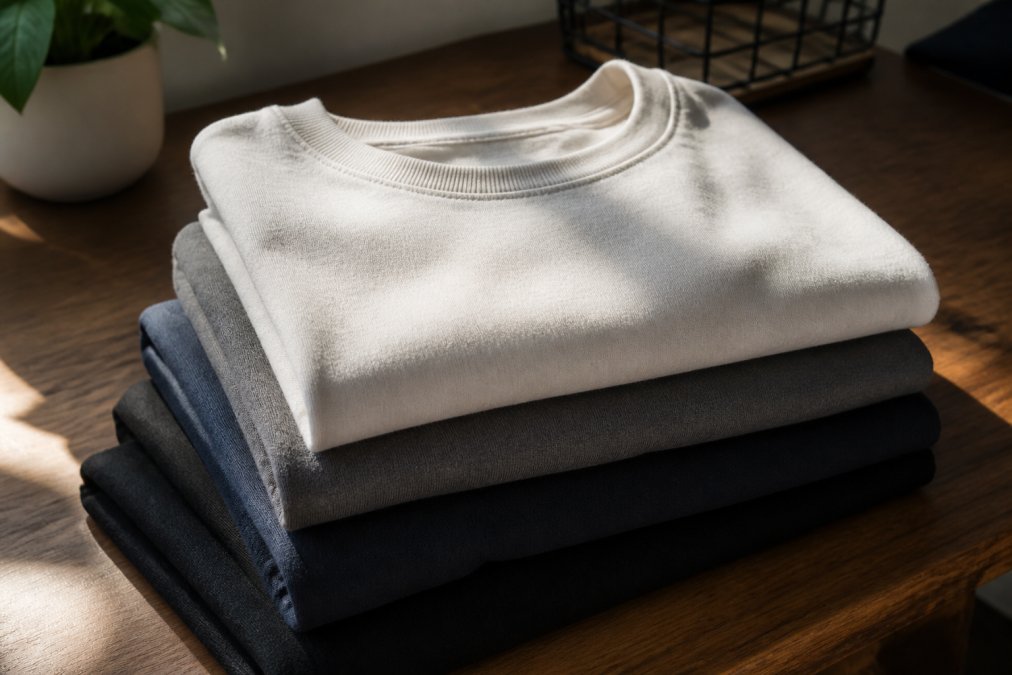
 comparison
Is Heavyweight Cotton Worth the Price in 2026
Table of Contents
- What Defines a Heavyweight T-Shirt
- GSM Fabric Weight Explained: Why Density Matters
- Heavyweight vs Lightweight T-Shirts: The Real Differences
- Durability and Longevity: Does Heavyweight Cotton Last Longer
- Does Heavyweight Cotton Shrink More Than Standard Weight
- Cost-Per-Wear Analysis: Is the Premium Price Justified
- The Verdict: When Heavyweight Cotton Is Worth the Investment
Last Updated: August 15, 2026
What Defines a Heavyweight T-Shirt
A heavyweight t-shirt is fundamentally about fabric density and durability. Heavyweight cotton typically measures between 6.0 and 7.5 ounces per square yard, or 200-255 GSM (Grams per Square Meter), well above standard t-shirts at 4.5 to 5.5 ounces. The difference is substantial: a shirt that feels insubstantial versus one with genuine presence.
Heavyweight tees often use longer-staple cotton fibers, creating a smoother surface and tighter weave that resists pilling, holds its shape, and provides a superior canvas for screen-printed graphics. When you hold a true heavyweight piece, the fabric has structure and weight that grounds the garment against your body rather than draping loosely.
GSM measures grams of fabric per square meter. A 245 GSM shirt weighs roughly 7.5 ounces per yard, while a standard 180 GSM shirt comes in around 5.3 ounces. Higher GSM means denser weave and more substantial hand-feel. Premium streetwear brands operate in the 240-260 GSM range because that's where you get genuine durability without stiffness.
AW3SOME CLOTHES INC constructs its heavyweight pieces using 100% US-spun cotton, which explains why pieces like the Floral Tech Graphic T-Shirt and Moonlit Wanderer Graphic Tee feel noticeably different from mall-brand alternatives. That density creates a smooth printing surface where graphics stay crisp and defined rather than degrading with washing.


Heavyweight tees hold their silhouette without clinging to your frame. The neckline stays stable, the hem doesn't curl, and after a dozen washes, the shirt still reads as intentional rather than tired.
GSM Fabric Weight Explained: Why Density Matters
Understanding GSM is the key to evaluating whether is heavyweight cotton worth the price. GSM directly determines how the shirt will perform over time, how it'll feel against your skin, and whether the investment makes sense.
Lower GSM (under 180) produces lightweight, breathable shirts great for summer but prone to transparency, shrinkage, and pilling. Middle-range GSM (180-210) is where most commercial t-shirts live, acceptable but lacking the structural integrity that makes a shirt feel premium.
Heavyweight GSM (240-260) changes the equation. At this density, the fabric develops genuine loft that gives the shirt body and thermal properties. The tighter weave means graphics print sharper and last longer because ink sits on a stable surface rather than a loose weave that flexes and cracks. Opacity improves dramatically too, a 245 GSM shirt provides full coverage with a single print pass, while a 180 GSM shirt often requires a second layer.
Ring-spun cotton, often used in heavyweight constructions, creates longer fiber chains that resist breakage and pilling. Most heavyweight premium tees use ring-spun because the durability gain justifies the cost difference.
A common misconception: heavier automatically means hotter. In reality, the loft created by higher GSM improves thermal properties, air pockets between fibers provide insulation without trapping moisture. A 245 GSM shirt breathes differently than a 180 GSM shirt, not worse.
Heavyweight vs Lightweight T-Shirts: The Real Differences
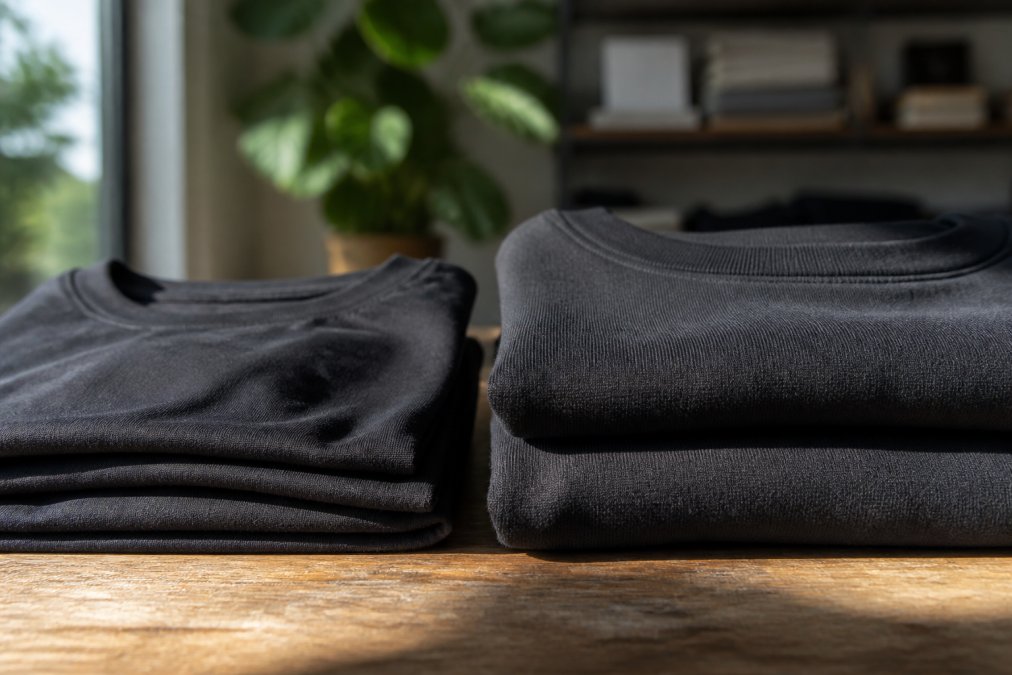
The choice between heavyweight and lightweight comes down to use case, climate, and longevity expectations. Heavyweight vs lightweight t-shirts isn't about which is objectively better, it's about which solves your specific problem.
Lightweight shirts (under 180 GSM) excel in hot climates and summer layering. They pack smaller and move freely on your body. But they're thinner, meaning graphics show wear faster, necklines stretch within months, and the garment feels disposable. After 20 washes, a lightweight tee looks tired, fabric softens unevenly, colors fade rapidly, and pilling becomes visible on high-friction areas.
Heavyweight shirts (240+ GSM) prioritize longevity and presence. They hold their shape through dozens of washes, graphics remain crisp, and structural integrity stays intact. The tradeoff is that they feel heavier on the body and take longer to dry.
A lightweight shirt's neckline can stretch a full half-inch within a year of regular wear. A heavyweight shirt's reinforced collar and denser weave resist this stretching. After two years of regular rotation, the lightweight shirt looks noticeably worn; the heavyweight still reads as intentional.
Layering changes the equation. Lightweight tees work as base layers under jackets without adding bulk. Heavyweight tees excel as standalone pieces where the structural weight creates visual presence. AW3SOME CLOTHES INC pieces like the Brutalist Prism Oversized Heavyweight Tee are engineered for this, the weight and density create deliberate drape that works specifically because the fabric has substance.

In humid, hot regions, lightweight makes sense for everyday wear. In temperate or cool climates, heavyweight provides comfort without overheating because the loft prevents wind penetration. For transitional seasons, heavyweight is objectively better.
Durability and Longevity: Does Heavyweight Cotton Last Longer
Yes, but with conditions. Heavyweight cotton lasts longer primarily because of fiber quality and weave density. Long-staple cotton fibers resist breaking during washing and wearing. The tighter weave means individual fibers don't separate and pill as easily. After 30 washes, a 245 GSM shirt shows minimal pilling; a 150 GSM shirt shows visible deterioration.
Graphics longevity is where the difference becomes undeniable. Screen-printed ink sits on top of the fabric. On a flimsy base, the ink flexes with the fabric, creating micro-cracks that expand with each wash. On a dense, stable surface like heavyweight cotton, the ink stays put. The same graphic that cracks after 15 washes on lightweight can survive 50+ washes on heavyweight.
The neckline, hem, and seams fail first on lightweight tees. The constant flexing of a loose weave stresses the stitching. On heavyweight, the fabric's rigidity protects the seams, they're not being bent and twisted as dramatically. Double-needle stitching, common in heavyweight construction, adds another layer of durability.
Shrinkage is manageable with proper care. Most heavyweight pieces shrink 3-5% in the first wash if exposed to hot water. Cold water washing reduces shrinkage to 1-2%. Shrinkage happens predictably and stops after the first wash, it's not progressive degradation.
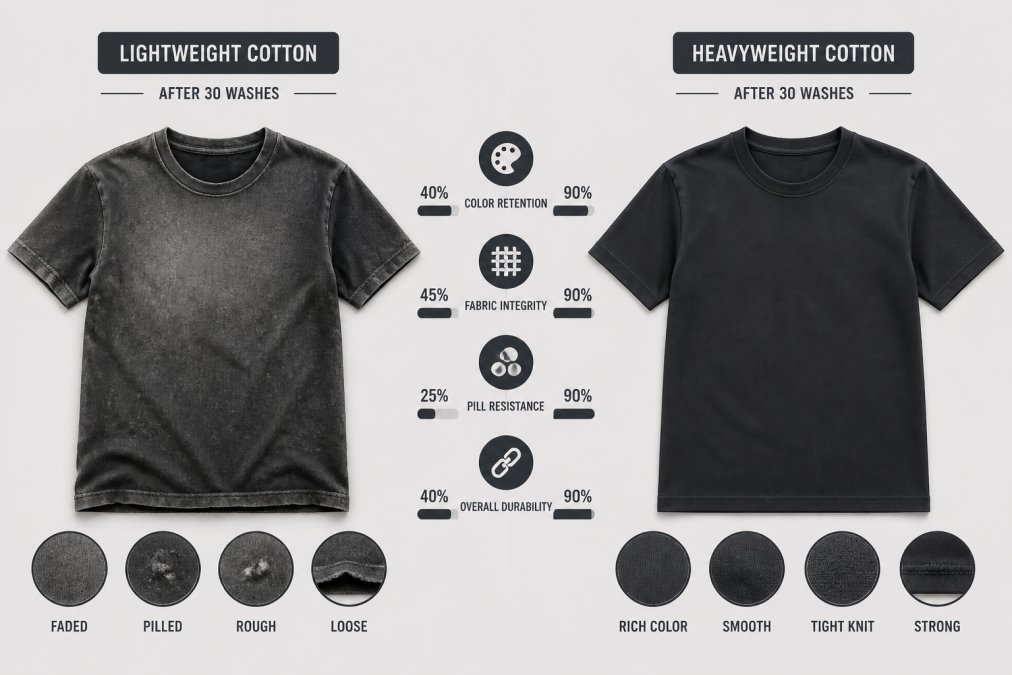
USA-spun ring-spun cotton produces longer fiber chains than carded cotton, creating stronger bonds in the weave. By year three of regular rotation, this difference becomes obvious.
Does Heavyweight Cotton Shrink More Than Standard Weight
Yes, heavyweight cotton typically shrinks more than lightweight in absolute terms, but the practical difference is smaller than most assume. Cotton fibers relax when exposed to heat and moisture. The denser the weave, the more compressed those fibers are initially, meaning they have more capacity to relax. A 245 GSM shirt might shrink 4-5% in the first hot wash; a 150 GSM shirt might shrink 2-3%.
The critical detail: shrinkage stabilizes after the first wash. Once fibers have relaxed, they won't shrink further with normal care. A heavyweight shirt washed in cold water shrinks only 1-2% on the first wash and then stays stable.
Fit retention after shrinkage is where heavyweight wins. Even after accounting for initial shrinkage, a heavyweight shirt maintains its proportions better than a lightweight shirt over time. A lightweight shirt might shrink 2% initially but then stretch back out within months of regular wear. A heavyweight shirt shrinks 4% initially but then holds that size indefinitely.
Most premium brands address shrinkage by pre-shrinking fabric before construction or by sizing garments slightly larger. AW3SOME CLOTHES INC specifies care instructions, cold water, no heat drying, because those practices virtually eliminate shrinkage concerns.
| Fabric Weight | Typical Shrinkage (First Wash) | Shrinkage (Cold Water) | Stability After First Wash |
|---|---|---|---|
| Lightweight (150 GSM) | 2-3% | 1% | Moderate; continues to stretch during wear |
| Standard (180-210 GSM) | 2-4% | 1-2% | Good; maintains size reasonably well |
| Heavyweight (240-260 GSM) | 4-5% | 1-2% | Excellent; holds size indefinitely |
Cost-Per-Wear Analysis: Is the Premium Price Justified
Is heavyweight cotton worth the price depends entirely on how many times you actually wear the shirt.
A heavyweight premium tee from AW3SOME CLOTHES INC costs $21.99-$39.53. A mall-brand lightweight shirt costs $15-$25. The upfront premium is 20-60%, but cost-per-wear tells a different story.
A lightweight shirt lasting 18 months in regular rotation (2-3 wears per week) means roughly 150 wears. At $20, that's $0.13 per wear. A heavyweight shirt at $39.53, worn the same frequency, lasts 4-5 years, 400-500 wears. That's $0.08-$0.10 per wear, equivalent to or better than the lightweight shirt despite higher upfront cost.
The real advantage emerges if you care about appearance throughout the shirt's lifespan. The lightweight shirt looks tired after 12 months; the heavyweight looks intentional after 36 months.
Environmental impact deserves acknowledgment. A heavier shirt uses approximately 50% more cotton by weight than a lightweight equivalent. However, if the heavyweight shirt lasts 3-4 times longer, the total environmental impact per wear is actually lower. One heavyweight shirt worn 400 times has lower total impact than buying three lightweight shirts for 400 wears combined.
AW3SOME CLOTHES INC's commitment to original, never-reprinted graphics means designs have scarcity value. You can't buy the same shirt six months from now. That value proposition justifies premium pricing in ways that generic basics don't.
The Verdict: When Heavyweight Cotton Is Worth the Investment
Is heavyweight cotton worth the price? Yes, with specificity.
Heavyweight cotton is worth the premium if you wear the same pieces repeatedly and care about how those pieces look over time. If you rotate pieces regularly and expect them to maintain their appearance and structure, heavyweight is a legitimate investment.
The brand matters. Not all heavyweight cotton is constructed equally. Reinforced seams, quality graphics, and proper care instructions separate pieces that genuinely last from pieces that just feel heavy. AW3SOME CLOTHES INC's emphasis on original designs and premium construction means you're paying for something beyond just fabric weight, you're paying for pieces engineered to hold up to real wear while maintaining visual impact.
Climate and use case determine whether heavyweight makes practical sense. In hot, humid climates, lightweight is more comfortable for all-day wear. In temperate climates or for pieces worn in cooler seasons, heavyweight is objectively better. For streetwear and graphic tees specifically, where visual presence matters, heavyweight is the default choice.
Limited-edition, never-reprinted designs from AW3SOME CLOTHES INC carry value that generic basics don't. You're not just buying a shirt; you're buying a specific piece that won't be reproduced.
For buyers who prioritize durability, appearance retention, and intentional wardrobe building, heavyweight cotton is worth the price. For buyers who want cheap basics to rotate frequently, lightweight is the practical choice. The decision hinges on your actual wearing patterns and how much you value long-term garment performance.
Heavyweight cotton represents a genuine upgrade if you're willing to commit to proper care and regular wear. The premium price reflects real differences in fabric quality, construction, and longevity. AW3SOME CLOTHES INC's pieces, like the Floral Tech Graphic T-Shirt and Moonlit Wanderer Graphic Tee, demonstrate how premium heavyweight construction combined with original design work creates pieces that justify their cost through durability and visual impact. If you're building a wardrobe around pieces you'll actually wear repeatedly, heavyweight is the smarter long-term investment. SHOP THE LATEST DROP →
Frequently Asked Questions
What defines a heavyweight cotton t-shirt?
A heavyweight cotton t-shirt typically measures 6.0 oz to 7.5 oz per garment or 200-255 GSM (grams per square meter). This density creates a thicker, more substantial hand-feel compared to standard 4.5-5.5 oz lightweight shirts. The heavier fabric resists pilling, holds its shape better through washing, and provides superior opacity. Long-staple cotton varieties like ring-spun cotton are often used in heavyweight construction for added softness and durability.
Does heavyweight cotton shrink more than lightweight cotton?
Heavyweight cotton can shrink 3-5% if washed in hot water, while lightweight cotton shrinks similarly under the same conditions. The difference lies in visibility: because heavyweight fabric starts with more substantial structure, the shrinkage is less noticeable relative to the garment's overall fit. Cold water washing (max 90°F) and air drying minimize shrinkage for both weights. Properly cared-for heavyweight pieces retain their fit retention and structural integrity far better than lightweight alternatives over time.
Is heavyweight cotton worth the price if I only wear casual everyday clothes?
Yes, if you wear the same pieces regularly. Heavyweight cotton delivers better cost-per-wear value because it resists fading, maintains shape, and avoids graphic cracking after dozens of washes. A $39.53 heavyweight tee worn 100+ times over 2-3 years costs roughly $0.40 per wear, compared to a $15 lightweight shirt that deteriorates after 30-40 wears ($0.38-$0.50 per wear). The investment pays off through longevity, not just prestige. For collectors and frequent wearers, the durability difference justifies the premium.
What's the difference between GSM and ounce weight for t-shirts?
GSM (grams per square meter) and ounce weight measure the same thing differently. A 7.5 oz t-shirt typically measures 245-255 GSM. GSM is the standard textile industry measurement globally, while ounce weight is common in retail. Both indicate fabric density: higher numbers mean thicker, more durable fabric. When comparing heavyweight cotton options, look for 240+ GSM or 6.5+ oz for true heavyweight construction that resists pilling and maintains structural integrity through extended wear.
This article was written using GrandRanker