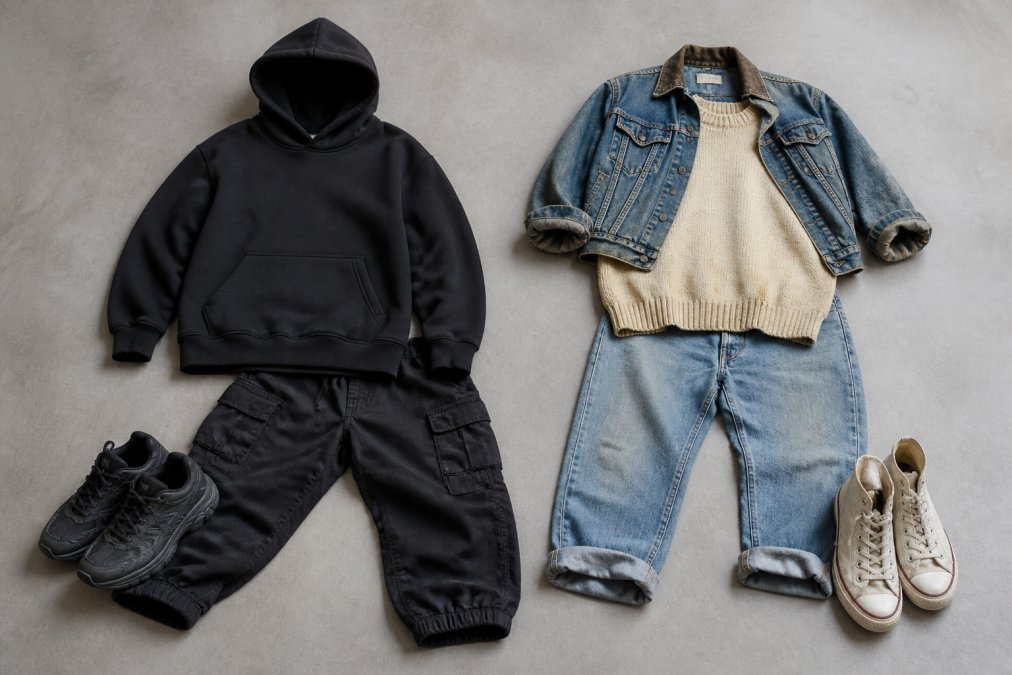
 comparison
Modern Streetwear Aesthetic vs Vintage Style: Key Differences
Table of Contents
- Modern Streetwear Aesthetic vs Vintage Style: The Core Differences
- What Defines the Modern Streetwear Aesthetic
- What Defines Vintage Style: Band Tees, Workwear, and Naturally Aged Fabric
- Urban Streetwear Trends Shaping 2026
- How to Style Heavyweight Tees: Layering Techniques and Silhouette Contrast
- Fabric Weight, Care, and Resale Value: What Actually Lasts
- Mixing Vintage Pieces With Modern Streetwear Staples
- Conclusion: Choosing Your Balance
- Frequently Asked Questions
Last Updated: September 15, 2026
Modern Streetwear Aesthetic vs Vintage Style: The Core Differences
The modern streetwear aesthetic is a deliberate, design-led look built on boxy silhouettes, dropped shoulders, and original graphics on heavyweight fabric. Vintage style is a found, time-worn look built on faded band tees, broken-in workwear, and denim that earned its character. Most people wear a mix of both.
This guide breaks down how each look reads, where they overlap, and how to combine both without looking like a costume.
How Each Look Reads at a Glance
Modern streetwear reads intentional: oversized but structured, with a crisp graphic and fabric that holds its shape. Vintage reads accidental in the best way, soft, faded, and impossible to buy new.
| Attribute | Modern Streetwear Aesthetic | Vintage Style |
|---|---|---|
| Silhouette | Boxy, dropped shoulders, tapered cuts | Relaxed, often shrunk from washing |
| Graphics | Original prints, no reprints | Band tees, collegiate graphics, worn type |
| Fabric | Heavyweight, structured, holds shape | Naturally aged, softened cotton |
| Sourcing | Direct from the brand or drop | Thrifting, resale, estate finds |
| Resale value | Depends on scarcity | Depends on era and rarity |
| Best for | A cohesive, repeatable wardrobe | One-of-a-kind character pieces |
What Defines the Modern Streetwear Aesthetic
The modern streetwear aesthetic is defined by three things working together: a boxy silhouette, a graphic made for that garment, and fabric heavy enough to hold the shape. Remove one and the look collapses into a plain oversized tee.
Boxy Silhouettes, Dropped Shoulders, and Tapered Cuts
Fit is the load-bearing element. A boxy silhouette is cut wide through the chest and hem, with shoulders sitting slightly off the natural line to create the drop. Tapered sleeve and hem cuts keep the volume from reading sloppy. The difference between "oversized" and "too big" is construction: shoulder-to-shoulder neck tape, a stretch-proof collar, and double-needle hems keep a relaxed fit looking deliberate after a dozen washes.
Original Graphic Prints and the No-Reprint Mindset
The graphic is the other half. A no-reprint approach means a design runs once and is retired, turning each piece into a small, closed edition rather than a print that returns every season.
Print method matters too. Direct-to-garment printing lays ink into the fabric surface rather than sitting on top of it as a thick plastisol layer, keeping the hand feel closer to the cotton and letting fine detail survive. It is a different tool than screen printing, not a lesser one, and it suits the layered artwork that defines the current look.
What Defines Vintage Style: Band Tees, Workwear, and Naturally Aged Fabric
Vintage style is defined by provenance and patina: a garment made decades ago, worn by someone else, and softened by time. The value is in the history, not the construction. But "vintage" is not one look, it is a stack of distinct eras, each leaving a different fingerprint on what people wear today.
The Eras That Built the Look
1970s. The decade that put graphics on the chest as a statement rather than a team uniform. Tour tees, protest slogans, and the first wave of band merchandise turned the T-shirt into a billboard. Fits were trim with shorter sleeves, so true 1970s tees read almost cropped next to a modern cut.
1980s. Sportswear and collegiate graphics went mainstream. Champion, Russell Athletic, and similar makers produced the crewneck sweatshirts and ringer tees that now anchor the vintage market, along with bold color blocking and puff-print type that cycle back into modern drops.
1990s. The decade most people mean when they say "vintage streetwear." Hip-hop and skate culture pushed oversized fits, and tour tees from this era are the most-copied vintage category, a genuine one carries cracked ink, a faded body, and a fit no modern cut reproduces because the blank no longer exists. Grunge added flannel and layered thrift styling; the rave scene introduced the all-over print.
Band Tees, Workwear, and the Patina Problem
Band tees are the clearest example of vintage value. A cracked, faded graphic tells you the shirt was actually worn, and that wear is what buyers pay for.
Workwear follows the same logic: a broken-in chore coat or worn-in denim reads as lived experience. Carhartt duck canvas, Levi's denim, and military surplus field jackets are the three workwear pillars vintage sellers consistently source.
The catch is condition. Naturally aged fabric is thinner and more fragile than new cotton, so vintage pieces need gentler handling and often cannot take the same wash cycle as a modern heavyweight tee. A 30-year-old cotton knit has already lost fiber strength to UV exposure and laundering, and careful washing cannot bring that back.
How to Tell Real Vintage From a Vintage-Style Reprint
Most "vintage" tees sold today are new garments printed to look old, not a scam, but a different product. A few checks separate the two:
- Single-stitch vs. double-stitch hems. Single-stitch construction generally points to pre-1990s manufacturing; double-stitch became the norm later.
- Tag and copyright date. A copyright year printed on the tag or graphic is a hard date stamp.
- Blank manufacturer. If the blank is a currently produced style, the tee is a reprint, not vintage.
- Print feel. Cracked, thin ink that has bonded into the fabric over decades feels different from a fresh print, even a deliberately distressed one.
Urban Streetwear Trends Shaping 2026
Three urban streetwear trends are shaping 2026: silhouette contrast, curated wardrobes over constant buying, and a harder line between original graphics and mass-produced ones.
Silhouette contrast does the most work right now. Pair a wide, boxy top with a tapered or straight-leg bottom, or the reverse, the eye reads the proportion change as intentional. Wearing volume on volume with no break point is the most common mistake.
The second trend is a shift from haul culture toward a curated wardrobe: fewer, better pieces that actually combine.
How to Style Heavyweight Tees: Layering Techniques and Silhouette Contrast
Three layering techniques that work:
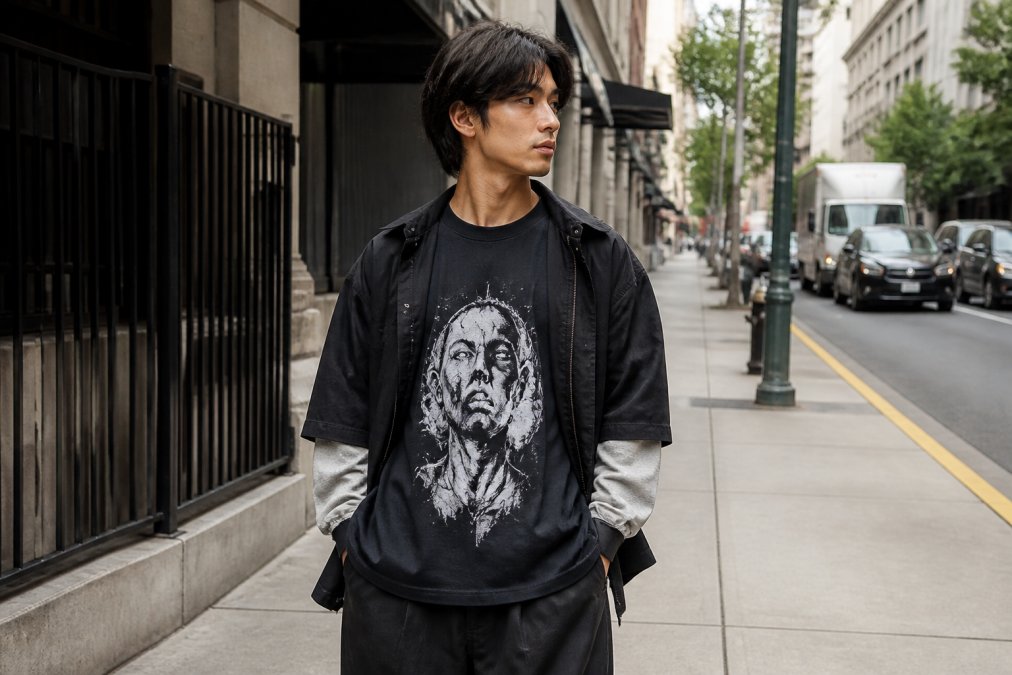
Building Aesthetic Cohesion Across a Curated Wardrobe
Fabric Weight, Care, and Resale Value: What Actually Lasts
The Textile Science Most Style Guides Skip
How Vintage and Modern Fabrics Age Differently
Care Instructions by Fabric Type
| Fabric | Wash | Dry | Notes |
|---|---|---|---|
| Modern heavyweight cotton (100%) | Cold, inside out | Low or no heat | Reshape while damp; never iron the print |
| Cotton/poly blend (90/10 or 50/50) | Cold, inside out | Low heat | Resists shrinkage; still avoid high heat on prints |
| Vintage cotton (pre-2000) | Cold, hand wash or gentle cycle | Air dry flat | Skip the dryer entirely; heat accelerates fiber breakdown |
| Vintage denim | Cold, inside out, infrequent | Air dry | Spot clean between washes to preserve indigo |
| Aged knits (sweaters, sweatshirts) | Cold, hand wash | Lay flat to dry | Never hang wet; the weight stretches the shoulders |
Preserving Aged Materials
Resale Value: What Actually Holds
Mixing Vintage Pieces With Modern Streetwear Staples
Try these combinations:
Conclusion: Choosing Your Balance
SHOP THE LATEST DROP →
Frequently Asked Questions
What defines the modern streetwear aesthetic?
The modern streetwear aesthetic centers on oversized, boxy silhouettes with dropped shoulders, minimalist or original graphic prints, and premium heavyweight fabric. It borrows from sportswear, workwear, and urban culture but updates them with cleaner lines and intentional design. Brands focused on never-reprinted graphics, like AW3SOME CLOTHES INC, treat each drop as a limited statement rather than a mass-produced staple, which separates the look from fast fashion.
How does vintage style differ from contemporary streetwear?
Vintage style leans on naturally aged fabric, faded denim washes, band tees, and retro influence from past decades. Contemporary streetwear prioritizes crisp original graphics, structured heavyweight construction, and a curated wardrobe approach. The biggest practical difference is condition: vintage pieces carry visible wear and history, while modern streetwear arrives with a defined fit and consistent fabric weight, such as 7.5 oz / 245-255 GSM cotton.
Can you mix modern streetwear with vintage pieces?
Yes, and the contrast often improves both. Pair a heavyweight modern graphic tee with faded vintage denim, or layer a worn band tee under a structured modern jacket. The key is silhouette contrast: keep one piece oversized and the other tapered. Stick to two or three colors so the vintage and modern elements read as one outfit instead of two competing wardrobes.
How do fabric weights like 7.5 oz impact the fit of streetwear?
Heavier fabric holds its shape, drapes with structure, and resists the cling that thinner cotton develops after washing. A 7.5 oz / 245-255 GSM tee sits away from the body, which supports the boxy silhouette and dropped shoulder look. GSM measures fabric weight, not quality on its own, so a heavier tee is not automatically better. It simply changes how the garment falls and how the graphic print reads.
What are the key elements of a high-quality streetwear wardrobe?
Focus on fabric weight, construction details, and graphic originality. Look for shoulder-to-shoulder neck tape, double-needle stitched hems, and a stretch-proof collar, all of which keep the silhouette intact after repeated washes. A quarter-turned body removes the center crease. Then build around a small set of colors and fits so pieces layer together. Original graphics that are never reprinted add long-term value that mass-produced prints cannot match.