 ultimate-guide
Minimalist Precision in Modern Streetwear Design
Table of Contents
- Defining Minimalist Precision in Streetwear
- Key Characteristics of Minimalist Precision Design
- Fabric Weight and Garment Construction in Minimalist Design
- Heavyweight Streetwear Essentials and Structural Integrity
- How to Style Oversized Streetwear with Minimalist Precision
- The Psychology of Minimalist Aesthetics
- Maintenance and Longevity in Minimalist Pieces
- Frequently Asked Questions
Last Updated: September 23, 2026
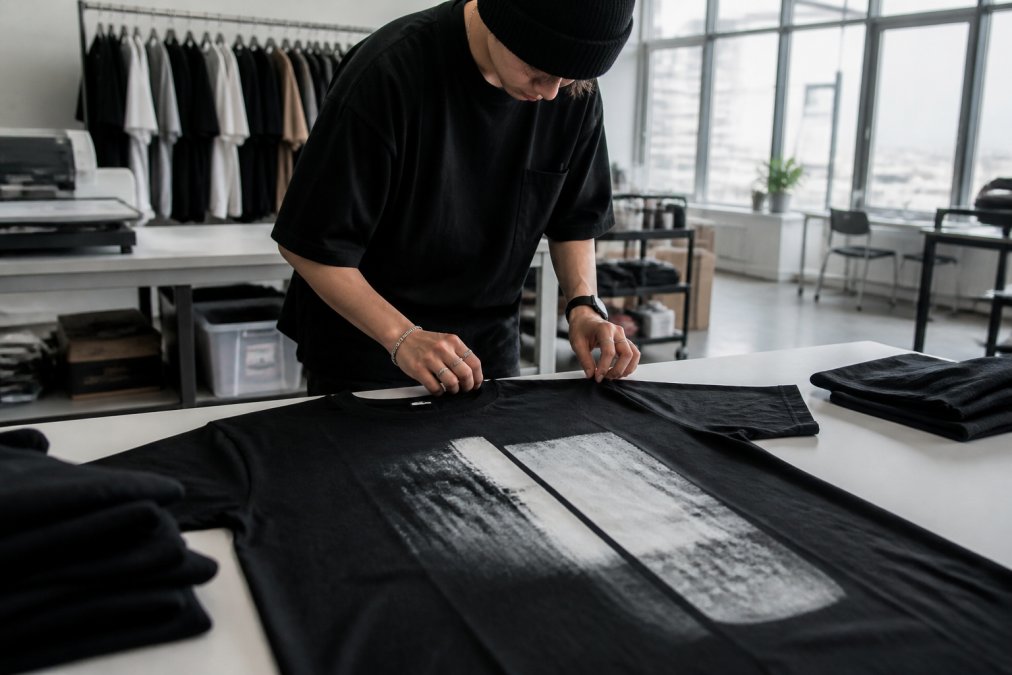
Minimalist precision streetwear strips away excess while maintaining structural integrity and intentional detail work. Every seam, color choice, and graphic placement serves a purpose. AW3SOME CLOTHES INC builds its collection around this principle: heavyweight tees with original artwork, clean silhouettes, and purposeful construction.

Trends come and go, but precision in design compounds. A well-constructed piece with thoughtful proportions outlasts seasonal hype.
Defining Minimalist Precision in Streetwear
Minimalist precision means doing exactly what's necessary and nothing more. A single back graphic carries weight through careful composition, balanced spacing, and intentional use of negative space. Precision means construction supports the aesthetic: reinforced seams, quality fabric, proper fit proportions.
This philosophy emerged as a reaction to visual overload. Early 2000s streetwear stacked logos and graphics competing for attention. Minimalist precision inverted that: clean silhouettes became the canvas, neutral palettes created breathing room, and graphics became architectural rather than decorative.
A person wearing a heavyweight tee with a single, well-placed back emblem carries more visual authority than someone wearing five competing graphics. The restraint signals intentionality.
Key Characteristics of Minimalist Precision Design
Minimalist precision operates across three core dimensions: silhouette, color, and detail. Each reinforces the others.
Clean Silhouettes and Fit
The foundation is cut and proportion. A clean silhouette means the garment's shape speaks for itself. Oversized fits work because they demand precision in other areas to avoid looking sloppy.
A refined oversized tee features intentional drop shoulders, slight side taper, proper sleeve length, and a hem that lands at a deliberate point. The fit itself becomes the design statement.
Heavyweight fabric at 7.5 oz / 245-255 GSM holds shape through wear and washing. Lighter fabrics collapse under their own weight, especially in oversized cuts. The fabric weight enables the silhouette to work.
Neutral Color Palettes and Restraint
Minimalist aesthetics rely on neutral foundations: black, white, grey, navy, cream. A neutral base allows graphics to become focal points, creates visual coherence across outfits, and ages gracefully.
Restraint means understanding saturation, tonal variation, and color interaction. Charcoal grey differs from true grey in warmth. Heather tones introduce texture without sacrificing minimalism. The color choice matters because there's nowhere to hide.
Avoid color combinations that compete. Pairing dark neutrals creates depth; a third color dilutes the effect.
Purposeful Details Over Visual Overload
Every detail answers a specific question: why is this here? Decorative elements get eliminated. Structural details, double-needle stitching, reinforced collar tape, finished hems, become visible design features because they're necessary.
Graphics follow the same logic. A back emblem or chest logo occupies specific real estate. Size, placement, and composition matter intensely because they're the only visual elements competing for attention.
DTG printing (direct-to-garment) enables this approach. Fine lines hold clarity, color transitions remain smooth, and graphic quality matches garment quality.
Fabric Weight and Garment Construction in Minimalist Design
Minimalist precision demands construction that matches its aesthetic philosophy. Cheap construction undermines the entire approach because it prevents the silhouette from reading as intended.
The Role of Fabric Weight in Silhouette Integrity
Heavyweight fabric at 7.5 oz / 245-255 GSM holds a clean silhouette without collapsing, yet drapes naturally. This balance is critical for oversized cuts, where lighter fabrics hang formless or bunch.
Premium cotton at 245-255 GSM develops softness with wear, signaling durability. The fabric becomes more personal over time, reinforcing visual minimalism through tactile quality.
16-singles yarn creates balanced fabric that resists pilling while maintaining breathability. Standard colors in 100% USA cotton provide consistent behavior. Heather finishes (90/10 cotton/poly) introduce subtle texture while maintaining structural weight.
Seam Placement and Structural Geometry
Quarter-turned construction prevents center creases that break the clean silhouette. This detail matters because a centered crease creates an unintended visual line that contradicts minimalist intent.
Shoulder-to-shoulder neck tape prevents collar stretching, a common failure point in cheaper tees. Stretch-proof collar construction ensures the neckline remains crisp, which is especially important in minimalist design.
Double-needle stitching on hems and sleeves (1" construction) prevents seam separation and provides durability. Visually, it creates a refined finish. In minimalist design, visible stitching becomes a design element because there's nowhere to hide it.
Precision pattern grading ensures graphic placement remains consistent across size runs, so a medium and large both position artwork at the same proportional distance from structural landmarks.
Graphic Tee — Geometric Emblem Back →
How Construction Enables Minimalist Aesthetics
Minimalism demands every visible element serve a purpose. Precise construction reinforces the minimalist message: nothing is accidental, everything is considered.
A well-constructed heavyweight tee maintains its intended silhouette through regular wear and washing. The fabric doesn't thin or pill, seams don't separate, and the graphic doesn't crack or peel with DTG printing. The piece becomes more reliable as it ages.
Someone wearing a well-constructed tee feels the difference immediately, the way it hangs, how it moves. Precision construction creates a garment that performs consistently enough to become a trusted foundation piece.
Heavyweight Streetwear Essentials and Structural Integrity
Building a minimalist precision streetwear wardrobe means prioritizing pieces with structural integrity, garments that maintain their intended shape through regular wear and washing.
A heavyweight tee with proper construction works across contexts: layer it under jackets or wear solo. The silhouette remains consistent, the graphic stays crisp, and the fabric doesn't thin or pill.
The Shaka Wear construction standards for heavyweight tees emphasize precision in pattern grading, seam placement, and fabric preparation. Each element compounds to create a garment that resists degradation. Original graphics from AW3SOME CLOTHES INC use DTG printing, which bonds ink directly to the fabric fibers, ensuring durability that matches the garment's construction quality.
Structural integrity means investing in fewer, better pieces. A single well-made heavyweight tee outlasts three cheaper alternatives, improving cost-per-wear and building a wardrobe of pieces you trust.
How to Style Oversized Streetwear with Minimalist Precision
Styling oversized pieces requires understanding proportion and balance, adapted to your frame. The goal is intentional silhouette paired with structure.
Adapting Oversized Silhouettes to Different Body Types
Balance volume with structure, but execution varies by frame. For taller frames, an oversized tee can land at the hip. For shorter frames, adjust the proportions of what you pair it with.
For petite frames, pair an oversized tee with high-waisted fitted trousers or a structured mini skirt. The high waistline breaks up vertical space. Footwear grounds the silhouette without adding bulk.
For larger frames, the heavyweight fabric drapes rather than clings, creating a cleaner silhouette. Pair with tailored bottoms, a structured pant with slight taper creates intentionality.
For athletic frames, ensure sleeve length and hem placement feel deliberate. A sleeve hitting mid-forearm and hem at the hip reads as styled; precision in proportions matters more when the garment is meant to be loose.
Building Aesthetic Coherence Across Outfits
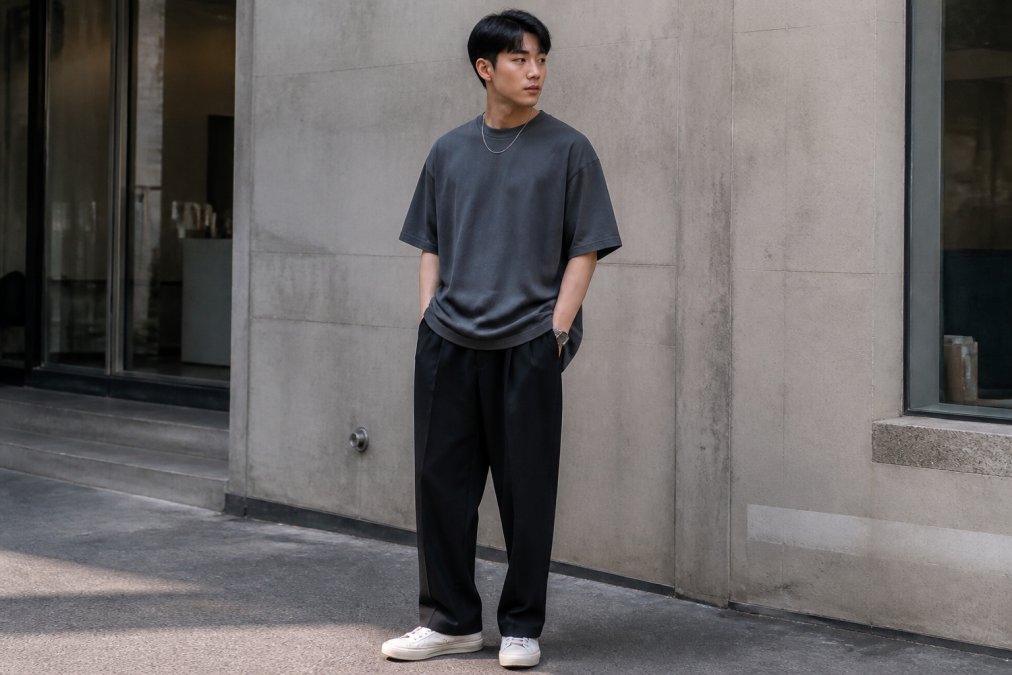
Minimalist precision extends to how outfits function as unified compositions. A black oversized tee, black tailored trousers, and white sneakers create visual coherence. The eye moves smoothly across the silhouette.
Coherence makes outfits feel intentional. The graphic becomes the focal point because everything else is neutral and structured.
Repetition strengthens coherence. Wearing the same neutral base across multiple outfits creates a visual throughline. Graphics become the variable. This approach simplifies decision-making and allows the graphic to be the focal point.
Context-Specific Styling Decisions
For casual contexts, pair the oversized tee with relaxed denim or joggers in neutral tones. Footwear can be minimal, white canvas sneakers, neutral slip-ons, or clean leather shoes.
For semi-casual contexts (creative meetings, social events, casual dining), the same tee can be styled up by pairing with tailored trousers, a structured skirt, or even tailored shorts.
Proportion as a Design Tool
The most overlooked aspect of minimalist styling is proportion as an active design choice. An oversized tee with a small, centered graphic reads differently than the same tee with a large, off-center graphic. An oversized tee with a back emblem reads differently than one with a chest logo. The graphic's placement and scale relative to the garment's proportions affects how the entire outfit reads.
The Psychology of Minimalist Aesthetics
Minimalist design works because it reduces cognitive load. The brain processes visual information rapidly. Excessive details, competing colors, and multiple focal points create friction. Minimalist compositions remove that friction. Clean lines, neutral palettes, and singular focus allow the viewer to process the image quickly and retain it.
Maintenance and Longevity in Minimalist Pieces
Minimalist pieces demand intentional care because they're designed to last. A heavyweight tee with quality construction can remain in rotation for years if maintained properly. The investment compounds.
Frequently Asked Questions
What exactly is minimalist precision in streetwear design?
Minimalist precision combines disciplined design choices, clean silhouettes, purposeful details, and structural integrity, with intentional restraint. It's not about having nothing; it's about every element serving a function. In streetwear, this means oversized fits that sit cleanly, neutral color palettes that allow graphics to stand out, and garment construction like double-needle stitching and shoulder-to-shoulder neck tape that ensures pieces hold their shape through regular wear. The goal is refined movement and aesthetic coherence without visual overload.
How does fabric weight impact minimalist streetwear?
Fabric weight, measured in GSM (grams per square meter), directly affects how a minimalist piece drapes, ages, and maintains its silhouette. A 7.5 oz (245-255 GSM) heavyweight fabric holds structure better than lighter alternatives, preventing the oversized fit from looking shapeless. Heavier fabrics also resist pilling, maintain print detail longer, and develop character through wear rather than deteriorating. This structural integrity is essential to minimalist design because the garment's cut and proportion become the primary visual statement, so the fabric must support that silhouette consistently over time.
Can minimalist streetwear still have bold graphics?
Yes. Minimalist precision doesn't mean plain clothing, it means strategic use of graphics. A bold back print or geometric emblem works within minimalist design when the rest of the piece stays clean: a monochromatic base, no competing logos, and precise placement. The graphic becomes a purposeful detail rather than visual noise. Many minimalist pieces use a compact chest logo paired with a statement back design, creating visual interest through deliberate composition rather than scattered branding. The key is restraint in placement and a clean overall silhouette that lets the artwork breathe.
Why is fit and silhouette so critical to minimalist streetwear?
In minimalist design, fit becomes the primary visual language because there's less decoration to rely on. An oversized silhouette with a slight drop shoulder and quarter-turned construction creates refined movement, the garment sits intentionally, not accidentally. Precise tailoring of sleeve length, shoulder seam placement, and hem construction ensures the piece reads designed rather than sloppy. When you remove visual overload, the cut and proportion must be flawless, which is why minimalist pieces demand higher standards for pattern grading and garment construction than heavily graphic alternatives.