 ultimate-guide
How to Build a Streetwear Wardrobe (2026 Guide)
Table of Contents
- Start With the Streetwear Wardrobe Foundations
- Build a Streetwear Capsule Wardrobe That Works
- Why Heavyweight Cotton Apparel Is a Smart Investment
- How to Style Oversized T-Shirts Without Looking Sloppy
- Layer Like a Pro: Hoodies, Overshirts, and Jackets
- Choose the Right Bottoms: Cargos, Denim, and Beyond
- Anchor the Look With a Footwear Rotation
- Avoid These Common Streetwear Mistakes
- Frequently Asked Questions
Last Updated: September 7, 2026
Start With the Streetwear Wardrobe Foundations
Building a streetwear wardrobe starts with a mindset shift: you are curating a collection of staple pieces that work together, not chasing every trend that drops. A streetwear wardrobe is a deliberate mix of oversized silhouettes, bold graphics, and functional layers that reflect street culture and counterculture roots. The goal is versatility, where each piece earns its place by pairing with several others you already own.
Most people waste money buying single statement items that match nothing else. The fix is to plan around a core palette and silhouette before spending a dime. Start with the foundations below, and the rest becomes easier.
Define Your Personal Aesthetic Before You Shop
Before you buy anything, decide which corner of street style you actually want to occupy. Minimalist, tech-inspired, retro-racing, gothic, or utility-driven aesthetics all demand different pieces. Browse saved looks and identify recurring colors, fits, and graphic styles you're drawn to. This prevents the most common mistake: owning ten random tees but having zero outfits. A defined aesthetic acts as a filter for every future purchase.

Master the Core Silhouette and Fit
Modern streetwear revolves around an oversized fit with a relaxed drape. The standard recipe is a boxy top with dropped shoulders paired with tapered or straight-leg bottoms to balance proportions. Fit matters more than brand names; a clean oversized silhouette reads intentional, while a baggy top with baggy pants can look sloppy. Learn your measurements and compare them to each brand's size chart, since sizing varies widely across labels.
Build a Streetwear Capsule Wardrobe That Works
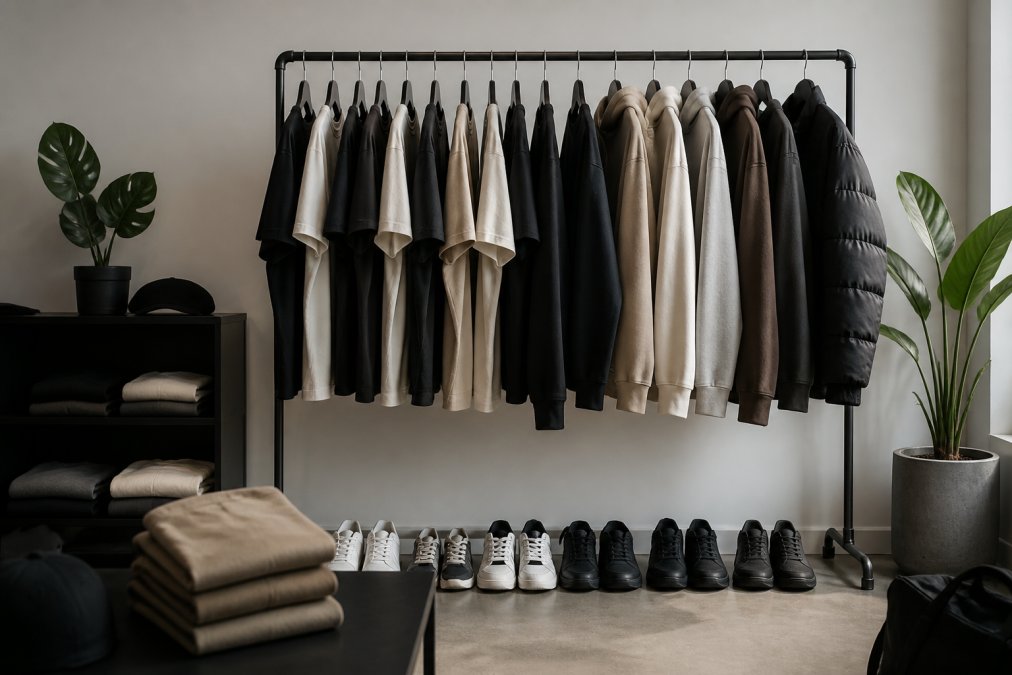
A streetwear capsule wardrobe is a tight collection of interchangeable essentials, usually 15 to 25 pieces, that covers every casual scenario. Focus on neutral base layers first: heavyweight tees in black, white, and gray, plus one or two hoodies. These become the canvas for your graphic pieces and outerwear. When every top pairs with every bottom, getting dressed takes seconds instead of deliberation.
The real power of a capsule shows in the math of mixing. With five tees, three bottoms, and two layers, you have dozens of combinations from just ten garments. This approach also protects your budget, since you buy fewer, higher-quality items instead of a pile of disposable fast fashion. Quality over quantity is the core principle here.
Why Heavyweight Cotton Apparel Is a Smart Investment
Heavyweight cotton apparel is the backbone of any serious streetwear wardrobe because it drapes better, holds its shape, and feels substantial on the body. Most premium tees fall in the 7.5 oz range, roughly 245 to 255 GSM, which can give that structured, boxy look without feeling like cardboard. Lighter tees cling and wrinkle, which ruins the relaxed silhouette streetwear depends on. A dense fabric also gives graphics a stable surface, helping prints stay crisp through repeated wears.
Consider the construction details that separate a durable tee from a disposable one. A stretch-proof collar, double-needle stitching on the hems, and shoulder-to-shoulder neck tape all signal a garment built to last. Cotton origin matters too: many premium blanks use 100% USA cotton for standard colors, which can be known for its softness and durability. These details justify a higher price per piece because the tee survives dozens of washes without losing its shape.
How to Style Oversized T-Shirts Without Looking Sloppy
The secret to styling oversized t-shirts is contrast: pair a voluminous top with bottoms that add structure and definition. Straight-leg denim, tapered cargos, or slim-fit joggers all anchor the look while letting the tee do the talking. Tuck the front of the shirt slightly into your waistband to create a cleaner line and show off the fit. This simple trick adds intentionality and prevents the "borrowed clothes" effect.
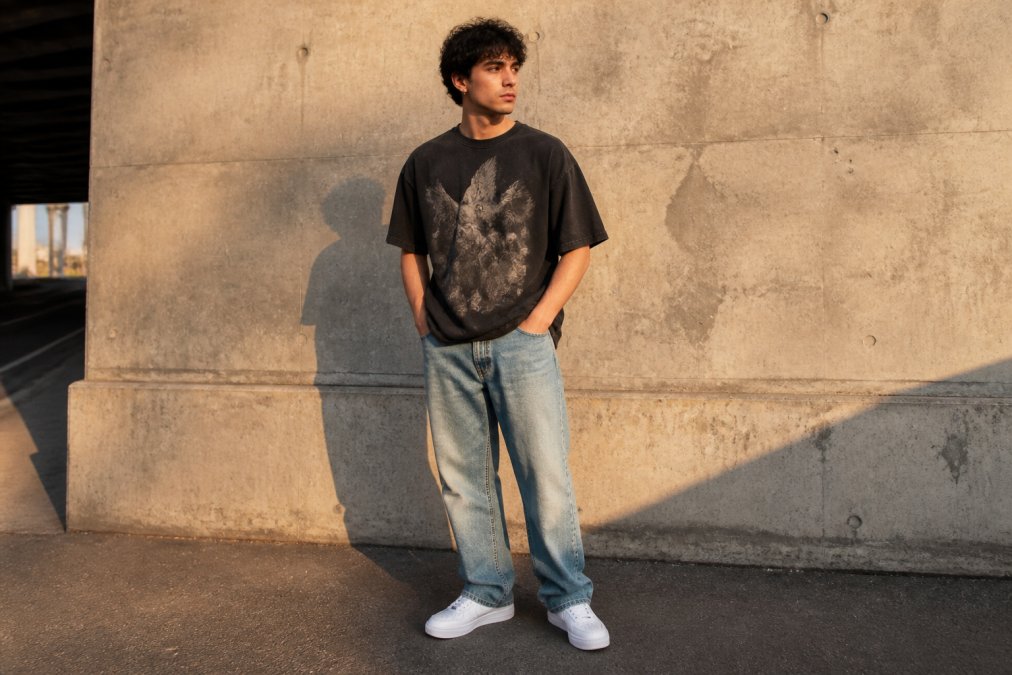
Footwear completes the equation. Chunky sneakers or classic skate shoes ground the oversized top with visual weight, while slim sneakers can make the outfit feel top-heavy. Rolling the sleeves once or twice also sharpens the look and shows off layering pieces underneath. The goal is a deliberate, styled silhouette, not just a bigger shirt.
Balance Proportions With the Right Bottoms
Proportion is the difference between intentional streetwear and an accidental laundry day outfit. If the top is oversized and boxy, the bottom should be relatively fitted or tapered to create an inverted triangle shape. If you prefer baggy pants, balance them with a more fitted or cropped top. This push-and-pull of volume keeps the eye moving and the outfit looking designed.
Layer Like a Pro: Hoodies, Overshirts, and Jackets
Layering is where streetwear outfits gain depth and visual interest, and it's the fastest way to make a simple tee look styled. The standard formula is a graphic tee or long-sleeve base, a mid-layer like a hoodie or crew neck, and an outer piece such as an overshirt or jacket. Each layer should be slightly longer or shorter than the one beneath it to create deliberate contrast. This high-low styling approach adds texture and dimension without adding bulk.
An overshirt in a contrasting texture, like flannel or canvas, instantly upgrades a plain hoodie. For transitional weather, a lightweight jacket worn open over a tee adds structure while showing off your base layer. Play with color blocking: a neutral base lets a single bold layer, like a graphic hoodie or patterned overshirt, become the focal point. Mastering two or three reliable layer combinations gives you endless outfit variety.
Adapting Your Layers for the Seasons
A well-built streetwear wardrobe is not static; it's a system that adapts to the weather. The key is to think in terms of a temperature range for each piece, not just a season. This approach allows you to extend the life of your rotation across the calendar year.
Spring (50°F-65°F): This is the prime window for the overshirt. A heavyweight flannel or a canvas work jacket worn open over a graphic tee provides enough warmth for a cool morning and can be removed when the afternoon sun peaks. This is also the time for a mid-weight hoodie (around 7.5 oz) worn as an outer layer over a long-sleeve thermal base.
Summer (70°F+): Layering is minimal, but not absent. The focus shifts to fabric weight and breathability. A single heavyweight tee in a light color is your primary layer. For cooler evenings, a lightweight, unlined overshirt in a breathable fabric like linen or a thin cotton twill can be carried and thrown on without adding bulk or trapping heat.
Fall (40°F-55°F): This is where the full layering system shines. Start with a heavyweight graphic tee as your base. Add a mid-layer like a hoodie or a crewneck sweatshirt. Your outer layer should now be a more substantial piece, such as a chore coat, a denim jacket, or a padded vest. The open front of these outer layers is crucial, it allows you to show off the graphic on your base tee while creating a vertical line that elongates the silhouette.
Winter (Below 40°F): The goal is to maintain the streetwear silhouette without sacrificing warmth. The most effective strategy is to size up on your outer layer to accommodate thicker mid-layers. A heavyweight hoodie under a larger, insulated puffer jacket or a wool overcoat creates a strong, structured look. For your base layer, consider a long-sleeve heavyweight tee or a thermal henley under a graphic tee to add insulation without adding visible bulk. Accessories like a knit beanie and a warm scarf are not just functional; they add texture and complete the outfit.
By mapping your pieces to temperature ranges, you ensure that your wardrobe works year-round, maximizing the utility of every item you own and preventing the need for a separate seasonal closet.
Choose the Right Bottoms: Cargos, Denim, and Beyond
Your bottom half carries the outfit, so investing in two or three quality pairs matters as much as your tops. Cargo pants are a streetwear staple for their utility wear aesthetic and practical pockets, and they pair perfectly with oversized tees. Straight-leg denim offers a cleaner, more versatile option that works with almost any top and shoe. Both should sit at the natural waist for a polished look, avoiding the sagging that reads as unintentional.
Color choice for bottoms sets the tone for your whole rotation. Black and washed gray are the most flexible, matching nearly any graphic or layer you own. Olive, khaki, and off-white expand your palette while staying easy to style. Start with one dark pair and one mid-tone pair, then add a third only when you've confirmed a gap in your rotation.
Anchor the Look With a Footwear Rotation
Sneakers are the anchor of streetwear, and a footwear rotation of three pairs covers nearly every outfit. A clean white low-top or classic skate shoe handles minimalist and casual looks. A chunky retro runner or dad shoe adds bulk and pairs well with oversized fits. A high-top or boot option gives you edge for darker, more technical outfits. This trio covers the full spectrum of street style without requiring a massive sneaker collection.

Vogue's guide to building a sneaker rotation emphasizes versatility over volume, a principle that applies to the whole wardrobe. Keep your footwear rotation neutral-toned so it doesn't clash with your graphic tees and outerwear. Rotate between pairs to extend their lifespan and keep each option fresh.
Avoid These Common Streetwear Mistakes
The biggest mistake new enthusiasts make is buying a full matching "fit" from one drop, which leaves them with pieces that only work together. Another frequent error is ignoring fabric weight, leading to shirts that lose their shape after a few washes and ruin the silhouette. Fit is also commonly misunderstood: true oversized is a deliberate cut, not simply buying a size up in a regular tee.
But the most expensive mistake is neglecting garment care. Streetwear relies on specific fabrics and prints that degrade quickly under improper washing. Heat is the primary enemy of both heavyweight cotton and DTG (direct-to-garment) prints. High-temperature cycles cause cotton fibers to shrink and relax, distorting the intended oversized silhouette, while heat can cause DTG inks to crack or fade prematurely.
A simple, consistent care routine preserves your investment. Washing graphic tees inside out in cold water (below 80°F) on a gentle cycle is a highly effective habit. This minimizes friction against the print and prevents heat damage. When it comes to drying, the dryer is the most destructive appliance in your laundry room. Air drying on a flat rack is the gold standard for heavyweight tees, as it prevents the fabric from stretching under its own weight and completely eliminates heat exposure. If you must use a dryer, select the lowest heat setting and remove garments while they are still slightly damp.
Sneaker care follows a similar logic. The midsole foam and adhesives in modern sneakers are sensitive to extreme heat and moisture. Leaving them in a hot car or running them through a washing machine can accelerate sole separation and yellowing. Instead, clean uppers with a soft brush and a mild solution of water and a few drops of dish soap. For scuffs on rubber soles, a standard white eraser is a surprisingly effective, chemical-free tool. Stuff sneakers with shoe trees or paper when not in use to help them hold their shape and absorb moisture.
Storage also matters. Folding heavyweight tees and hoodies is preferable to hanging them, as hangers can stretch out the shoulder seams and distort the boxy fit over time. Store your rotation in a cool, dry place away from direct sunlight, which can fade both fabric dyes and graphic prints. The FTC's guide to clothing care labels recommends following the manufacturer's instructions to avoid damaging your investment. Building a wardrobe is a marathon, not a sprint, and buying fewer, better pieces always wins, but only if you protect them. GQ's advice on investing in quality basics echoes this: a small collection of quality staples outperforms a closet full of impulse buys.
Frequently Asked Questions
What are the essential items for a streetwear wardrobe?
A solid streetwear wardrobe starts with a few staple pieces: 2-3 heavyweight cotton t-shirts in neutral colors, one or two graphic tees, a hoodie or crew neck sweatshirt, an overshirt or jacket, and a pair of straight-leg denim or cargo pants. Add one versatile pair of sneakers and you can create multiple outfits. Focus on quality fabrics and a consistent color palette to make mixing and matching effortless.
How do you style oversized heavyweight apparel?
The key to styling oversized heavyweight apparel is balancing proportions. If your t-shirt is boxy and oversized, pair it with slimmer or straight-leg pants to avoid looking shapeless. Let the tee be the focal point and keep accessories minimal. Tucking in just the front of the shirt can also add structure. The weight of the fabric helps the garment hold its shape, so it drapes well rather than clinging or wrinkling.
What is the importance of fabric weight in streetwear?
Fabric weight, measured in GSM (grams per square meter), affects how a garment drapes, feels, and lasts. Heavier fabrics, like those around 245-255 GSM, provide structure and durability, which is why they are common in premium streetwear. A heavier tee holds an oversized silhouette better than a thin one. However, GSM is not a universal measure of quality; a good garment also depends on the quality of the cotton and the construction.
How do you mix graphic tees with minimalist pieces?
Treat your graphic tee as the hero piece. Keep the rest of the outfit simple: choose plain, neutral-colored pants like black denim or olive cargos, and avoid other loud patterns. Layer with a solid-colored overshirt or jacket if needed. This high-low styling approach lets the graphic stand out without the outfit feeling busy. The goal is a balanced look where the tee adds personality and the minimalist pieces provide a clean canvas.
What is the 3-3-3 rule for clothing?
The 3-3-3 rule is a simple styling method: pick 3 tops, 3 bottoms, and 3 pairs of shoes, and create outfits using only those items. This forces you to be creative and helps you identify gaps in your wardrobe. It is a useful exercise when building a streetwear capsule wardrobe because it proves how versatile a small, well-chosen collection of staple pieces can be.
What defines a modern streetwear aesthetic?
A modern streetwear aesthetic blends comfort, counterculture influences, and bold self-expression. Key elements include an oversized fit, graphic tees, utility wear like cargo pants, and a strong sneaker culture. The look often mixes high and low fashion, pairing a premium heavyweight hoodie with vintage denim. It is less about following every trend and more about creating a personal style that feels authentic and confident.
Building a streetwear wardrobe takes patience, but the payoff is a rotation that feels effortless and looks intentional. Focus on heavyweight cotton apparel, master the oversized silhouette, and buy pieces that mix rather than match. AW3SOME CLOTHES INC designs heavyweight tees with original, never-reprinted graphics, built on a 7.5 oz blank with a relaxed fit and durable construction. Explore the current drop to find statement pieces that anchor your new rotation.