 ultimate-guide
Best Heavyweight Cotton Fabric Weight: GSM Guide
Table of Contents
- What Is the Best Heavyweight Cotton Fabric Weight?
- GSM vs Ounce Fabric Weight: The Numbers Explained
- Heavyweight Cotton T-Shirt Construction: What Actually Matters
- Fabric Weight Comparison: 5 oz vs 6 oz vs 7.5 oz vs 9 oz
- DTG Printing on Heavyweight Cotton: Pros and Cons
- Laundering and Shrinkage: How Heavy Cotton Behaves Over Time
- Breathability vs. Weight: Finding the Balance
- Our Pick: The 7.5 oz Sweet Spot for Graphic Tees
- Frequently Asked Questions
Last Updated: September 5, 2026
What Is the Best Heavyweight Cotton Fabric Weight?
The best heavyweight cotton fabric weight for a graphic t-shirt is 7.5 oz (245-255 GSM), which balances substantial structure with enough drape for everyday comfort. This range gives a tee that holds its shape, supports detailed prints, and still feels wearable rather than stiff like a canvas board. At AW3SOME CLOTHES INC, we build every graphic tee on this exact spec, and in this guide we will break down the numbers so you can judge fabric weight claims with confidence.
Most shoppers assume heavier always means better. That is not how fabric works. GSM (grams per square meter) and ounces per square yard measure density, but the best weight depends on how the shirt will be used, printed, and laundered. A 10 oz fabric might feel tough but can wear like armor in summer. Understanding the trade-offs is the difference between a tee you wear twice and one that becomes a staple.
GSM vs Ounce Fabric Weight: The Numbers Explained
Fabric weight is measured in two units: GSM (grams per square meter) and oz/yd² (ounces per square yard). Both describe the same physical property: how much a square of fabric weighs. The U.S. market commonly uses ounces, while international manufacturers and textile engineers default to GSM. Knowing both prevents confusion when comparing blanks from different suppliers.
The practical range for t-shirts runs from about 4 oz (120 GSM) up to 10 oz (300 GSM). Most mainstream brands sit between 4.5 oz and 6 oz. Heavyweight cotton starts around 7 oz (210 GSM), which is where fabric begins to feel dense in the hand and hang with noticeable structure.
How to Convert GSM to oz/yd²
The conversion is simple: divide GSM by 33.906 to get ounces per square yard. To go the other direction, multiply ounces by 33.906. A 7.5 oz fabric equals roughly 245-255 GSM depending on the mill's tolerance. Standard industry conversion tables confirm this relationship Textile conversion reference.
A quick mental shortcut: 200 GSM is close to 6 oz, 240 GSM is near 7 oz, and 280 GSM lands around 8.25 oz. This helps you evaluate product listings that only state one unit.
Heavyweight Cotton T-Shirt Construction: What Actually Matters
Fabric weight alone does not make a great t-shirt. Construction details determine whether that weight translates into durability or just feels heavy. The best heavyweight cotton t-shirt construction combines dense fabric with reinforcement at stress points where shirts typically fail.
Four construction features matter most. Shoulder-to-shoulder neck tape prevents the collar from stretching out of shape. Double-needle stitching on the neck, sleeves, and hem adds strength at the seams. A stretch-proof collar keeps the neckline from sagging into a boat neck after repeated washes. Quarter-turned construction eliminates the center crease that makes shirts look folded and stiff.
Yarn quality matters too. A 16-singles yarn in a heavyweight knit produces a smooth, tight surface that holds prints cleanly. Lower-quality yarns can feel rough or pill over time regardless of fabric weight. When comparing shirts, ask about the blank or the yarn count, not just the GSM.
Fabric Weight Comparison: 5 oz vs 6 oz vs 7.5 oz vs 9 oz
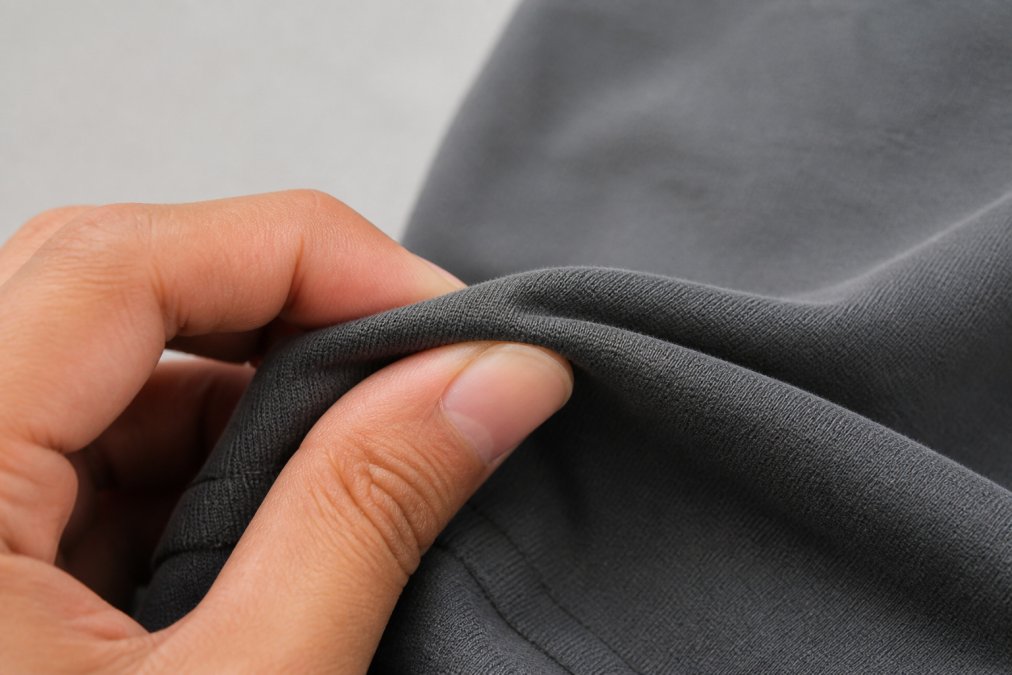
Choosing a fabric weight means matching the garment to its job. The table below summarizes how each weight class performs across the criteria that matter for everyday wear and graphic printing.
| Fabric Weight | GSM Range | Best For | Trade-offs |
|---|---|---|---|
| 5 oz / 150 GSM | 140-160 | Light layering, hot climates | Sheer, loses shape, prints may crack |
| 6 oz / 180 GSM | 170-200 | All-purpose basics | Middle ground, less structure |
| 7.5 oz / 245 GSM | 245-255 | Graphic tees, premium streetwear | Heavier, less breathable than light knits |
| 9 oz / 270 GSM | 260-290 | Outerwear layers, workwear | Stiff drape, hot for summer wear |
Lightweight (under 5 oz / 150 GSM)
Lightweight tees drape easily and breathe well in heat, but they lack the structure to hold bold graphics without wrinkling. They also tend to lose their shape faster and can be semi-sheer in lighter colors. These work best as undershirts or for casual wear in hot weather, not for statement graphic pieces.
Midweight (5-6.5 oz / 150-200 GSM)
Midweight cotton is the default for most basic t-shirts. It offers a balance of comfort and durability at a lower cost. The fabric drapes closer to the body and provides a decent print surface, though it will not hold structure the way heavier knits do. If you want a tee that feels like a blank canvas rather than a statement, this range delivers.
Heavyweight (7 oz+ / 210 GSM+)
Heavyweight cotton starts at 7 oz and delivers the dense hand feel and structural integrity that premium streetwear is known for. The fabric hangs away from the body with an oversized silhouette, holds detailed prints without wrinkling, and resists the twisting and sagging that plague lighter shirts. The trade-off is reduced breathability and a higher price point. For graphic tees, this is the range that makes artwork look intentional.
DTG Printing on Heavyweight Cotton: Pros and Cons
Direct-to-garment (DTG) printing is the standard method for detailed, full-color graphics on cotton. A dense heavyweight surface is actually an advantage for DTG because the flat, tight knit gives ink a smooth base to sit on. Prints come out sharper with better color saturation compared to printing on loose, textured lightweight fabric.
DTG works best on 100% cotton because the water-based inks need natural fibers to bond with. Blends with high polyester content resist ink absorption and can produce faded or washed-out results. The heavyweight tees at AW3SOME use 100% USA cotton in standard colors, which provides an ideal DTG surface. Heather and charcoal blends include some polyester for texture, which slightly changes how prints take.
The main drawback of DTG on heavyweight fabric is cost. Dense cotton requires more ink and longer curing times, which raises the price per unit. That cost shows up in the retail price, but it also means the print is less likely to crack or fade after washing compared to cheaper transfer methods.
Laundering and Shrinkage: How Heavy Cotton Behaves Over Time
Heavyweight cotton shrinks less than lightweight cotton, but only if it is washed correctly. The dense knit structure resists the relaxation shrinkage that makes lighter shirts pull and twist. However, hot water and high heat drying will still cause progressive shrinkage over multiple washes.
The care routine matters more than the fabric weight. Washing in cold water and tumble drying on no heat preserves the fiber structure and prevents the collar from stretching. Pre-shrunk cotton, which is processed before cutting and sewing, minimizes initial shrinkage. Most quality blanks, including the Shaka Wear blanks AW3SOME uses, are pre-shrunk so the fit stays consistent after the first wash.
A common mistake is drying heavyweight tees on high heat to speed things up. That accelerates fiber damage, fades prints, and can shrink the shirt a full size over several cycles. Line drying or low heat preserves both the fabric and the graphic.
Breathability vs. Weight: Finding the Balance
The most common question about heavyweight cotton is, "Won't it be too hot?" The answer is more nuanced than a simple yes or no. While it is true that a 7.5 oz tee traps more heat than a 4 oz undershirt, the relationship between weight and breathability is not linear. The real determining factor is not just the GSM, but the weave structure and the yarn's construction. This is the technical 'why' that most guides miss.
Breathability is a measure of how easily air passes through a fabric. In a standard t-shirt, the fabric is a jersey knit. This structure is created by interlocking loops of yarn, which naturally leaves microscopic gaps between the loops. These gaps allow for airflow and moisture evaporation. A lightweight jersey knit has very fine yarns and loose loops, creating large gaps and high breathability. As the fabric weight increases, the yarns become thicker and the loops are packed tighter together, reducing the size and number of those air gaps.
However, a high-GSM jersey knit does not become a solid barrier like a woven canvas. It still has a looped structure that allows for some airflow. The key difference is in how that airflow feels. A lightweight shirt allows air to pass through so easily that it offers little insulation. A heavyweight shirt restricts airflow, trapping a layer of warm air between the fabric and your skin. This is why a 7.5 oz tee can feel comfortable in cooler weather but stifling in direct summer sun.
The type of yarn also plays a critical role. The draft mentions 16-singles yarn, which is a measure of yarn thickness. A 16-singles yarn is relatively thick, which contributes to the fabric's density and structure. But the fiber quality matters just as much. Longer staple cotton fibers, like those found in high-quality USA cotton, can be spun into smoother, more compact yarns. These smoother yarns have fewer protruding fibers, which means they feel less scratchy against the skin and wick moisture more effectively. A shirt made from rough, short-staple cotton will feel hotter and stickier, regardless of its GSM.
Another factor is the fit. An oversized, relaxed fit, like the one AW3SOME uses, actually improves perceived breathability. Because the fabric hangs away from the body rather than clinging to it, air can circulate between the shirt and your skin. This creates a microclimate that helps regulate temperature. A tight-fitting heavyweight shirt will feel much hotter than a loose-fitting one because there is no room for air to flow. This is a crucial point for anyone considering a heavyweight tee for warmer months.
So, where is the practical ceiling? For most climates, a 7.5 oz (245-255 GSM) tee is the sweet spot for year-round wear. It provides enough structure for a premium feel and print clarity, while the jersey knit structure still allows for enough airflow to prevent overheating in moderate temperatures. It is a versatile weight that works as a standalone piece in spring and fall, and as a layering piece in winter. Moving up to a 9 oz or 10 oz fabric pushes the garment into a different category. At that weight, the fabric becomes so dense that it restricts airflow significantly, making it feel more like a light jacket than a t-shirt. This limits its versatility and makes it unsuitable for anything but the coldest weather.
Our Pick: The 7.5 oz Sweet Spot for Graphic Tees
For graphic tees, 7.5 oz (245-255 GSM) is the best heavyweight cotton fabric weight because it delivers the structure and print quality of heavier fabrics without sacrificing year-round wearability. This is not the heaviest option available, and it is not meant to be. It is the weight that makes a shirt feel intentionally substantial while still draping naturally on the body.
The 7.5 oz range excels at three things. It holds oversized and relaxed silhouettes without looking baggy. It provides a flat, dense surface that makes DTG prints look crisp and saturated. And it survives repeated washing without the twisting, shrinking, or collar sag that ruins lighter tees.
Our Pick at AW3SOME CLOTHES INC is the 7.5 oz heavyweight tee for every graphic in our lineup. Each shirt uses a Shaka Wear blank with 100% USA cotton in standard colors, 16-singles yarn, shoulder-to-shoulder neck tape, and double-needle stitching throughout. The oversized fit and slight drop shoulder let the dense fabric hang with purpose, whether you are wearing the Moonlit Wanderer or the Dark Samurai Illustration.


GSM is a specification, not a verdict. A 7.5 oz tee is not objectively better than a 5 oz tee; it is better for graphic printing, for holding an oversized silhouette, and for feeling substantial on the body. If that is what you want from a shirt, the 7.5 oz range is where the sweet spot lives. Most brands that claim "heavyweight" without stating a number are sitting at 6 oz or below. When a spec is listed, you can verify the claim. When it is not, assume the worst.
Choosing the right fabric weight comes down to how a shirt will be worn, printed, and washed. For bold original graphics that need a stable canvas, 7.5 oz heavyweight cotton delivers the structure, print clarity, and longevity that lighter knits cannot match. AW3SOME CLOTHES INC builds every tee on this spec with reinforced construction and 100% USA cotton, so the artwork stays sharp and the fit holds up. SHOP THE LATEST DROP and find a heavyweight graphic tee built to last.
Frequently Asked Questions
Is 7.5 oz cotton considered heavyweight?
Yes, 7.5 oz (about 245-255 GSM) is solidly in the heavyweight category for t-shirts. Standard tees often weigh 5-6 oz, so 7.5 oz fabric feels noticeably thicker and more durable. This weight range is popular for streetwear and graphic tees because it drapes well without feeling stiff, holds printed designs effectively, and maintains its shape through repeated washing.
What is the difference between GSM and ounces in fabric weight?
GSM (grams per square meter) and ounces per square yard (oz/yd²) measure the same thing: fabric density. They are just different units. To convert, multiply oz/yd² by 33.91 to get GSM, or divide GSM by 33.91 for ounces. For example, a 7.5 oz fabric equals roughly 245-255 GSM. Understanding both helps when comparing shirts from different brands.
Does a higher GSM always mean better quality?
Not automatically. GSM measures fabric weight, not quality. A 10 oz cotton shirt is heavier but can feel stiff or coarse if made from low-quality fibers. Quality depends on the cotton staple length, yarn quality, and construction details. A well-made 7.5 oz tee with combed cotton and reinforced stitching will outperform a poorly made 9 oz shirt in comfort and longevity.
What is the best fabric weight for a structured streetwear look?
For structured streetwear, 7 to 8 oz (about 210-270 GSM) is the sweet spot. This weight holds an oversized or boxy silhouette without collapsing, gives graphics a solid surface to sit on, and feels substantial without being too heavy for layering. At this weight, the fabric has enough body to keep its shape but remains breathable enough for all-day wear.
This article was written using GrandRanker