 how-to
How to Check T-Shirt Fit: A Complete Guide
Table of Contents
- How a T-Shirt Should Actually Fit
- How to Measure T-Shirt Size: The Essential Steps
- T-Shirt Shoulder Seam Placement: Why It Matters
- Oversized T-Shirt Fit Guide: Finding Your Silhouette
- How to Measure a Shirt Flat: The Flat Lay Method
- Shrinkage and Long-Term Fit Considerations
- Common Fit Mistakes to Avoid
- Conclusion
Last Updated: August 30, 2026
How a T-Shirt Should Actually Fit
A well-fitting t-shirt has three core characteristics: the shoulder seams sit at your natural shoulder point, the chest width allows for movement without excess fabric, and the length hits between your hip and mid-thigh. When these elements are right, the whole silhouette works.
At AW3SOME CLOTHES INC, we design our heavyweight tees with an oversized, relaxed fit that's intentional, not accidental. Understanding how to check t-shirt fit means you'll know whether that relaxed aesthetic works for your body or whether you need something different.
The shoulder seam placement rule
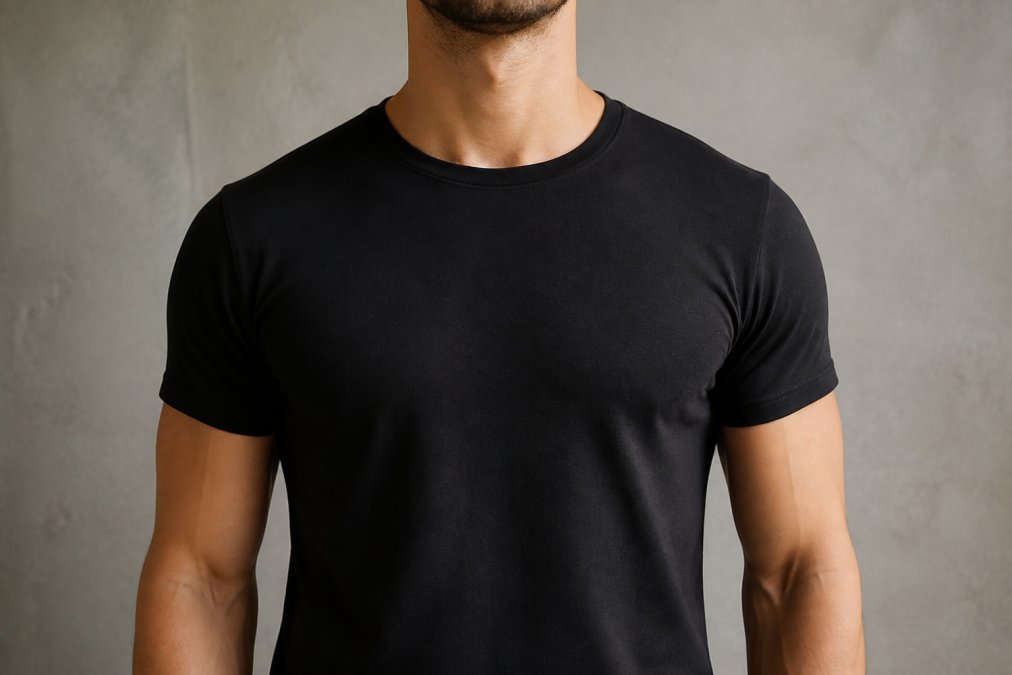
Your shoulder seam should align with your natural shoulder point, where your collarbone ends and your shoulder joint begins. If the seam sits too far inward, the shirt is too small and restricts arm movement. If it extends past your shoulder point onto your upper arm, it's too large and looks formless.
Relaxed and oversized fits intentionally move this seam slightly outward for a deliberate silhouette. But even in an oversized cut, the seam shouldn't extend more than half an inch past your natural shoulder point. Beyond that, the shirt starts to look costume-like rather than intentional.
Chest width and torso coverage
The chest width determines whether you have room to move or whether the shirt hugs too tight. For a relaxed fit, add 6-8 inches of ease to your actual chest measurement. To assess this, put on the t-shirt and try these movements: cross your arms across your chest, raise your arms overhead, and rotate your torso. If you feel pulling, the chest is too tight. If there's excessive billowing, it's too loose for the intended fit type.
The hemline should hit somewhere between your hip bone and mid-thigh. If it's shorter, it looks cropped. If it's longer, it can drown your frame. Oversized fits sit slightly longer than standard fits.
Length and hemline positioning
T-shirt length is measured from the back of the neck down to the hemline. For someone 5'8" to 5'10", a 29-inch length usually hits around mid-thigh. For someone shorter, 27-28 inches works better. For someone taller, 30-31 inches prevents the shirt from riding up.
Check this by standing sideways in front of a mirror. The hem should form a straight line around your body. If it's uneven, the shirt might be cut poorly or the fit type doesn't match your proportions.
How to Measure T-Shirt Size: The Essential Steps
Measuring correctly is the foundation of finding the right size.
Measuring chest circumference
Wear a fitted shirt and wrap a soft measuring tape around your chest at the fullest point, usually just below your armpits. Keep the tape parallel to the ground and snug but not compressing your chest.
Now add ease. For a slim fit, add 2-3 inches. For a regular fit, add 4-5 inches. For a relaxed or oversized fit, add 6-8 inches. This total is what you're looking for in a t-shirt's chest width. Ease is the extra room built into the garment to allow for movement and comfort. An oversized fit like AW3SOME CLOTHES INC's relaxed silhouette intentionally includes more ease, so the shirt drapes rather than clings.
When you check t-shirt fit online, compare the product's chest width measurement to your calculated target.
Taking sleeve length and bicep fit measurements
Measure from your shoulder point straight down your arm to where you want the sleeve to end. For most t-shirts, this is mid-bicep or just below. The sleeve should cover your shoulder and upper arm without extending so far that it bunches at your wrist.
Bicep fit matters too. A t-shirt with a narrow armhole will restrict movement. A relaxed bicep area gives you more freedom. When you try on a shirt, raise your arm and check if the fabric pulls or if you have room to move.
Measuring torso length and waistband coverage
Measure from the base of your neck straight down to your hip bone (where your pants naturally sit). A t-shirt's total length should be roughly equal to your torso length plus 2-4 inches to account for the hemline sitting below your hip.
For example, if your torso length is 24 inches, a t-shirt measuring 27-28 inches total will hit around mid-thigh. The shirt should cover your waistband fully when you're standing normally.
T-Shirt Shoulder Seam Placement: Why It Matters
The shoulder seam is the single most important fit indicator because it controls everything else. Your shoulders are the widest part of your upper body, and the seam connects the front and back panels, so its position determines how the fabric drapes across your chest, back, and arms.
If the seam is too inward, you lose arm mobility and the neckline tightens. If it's too outward, the shirt loses structure and looks formless. In a relaxed or oversized fit, the seam intentionally sits slightly past your natural shoulder point, but shouldn't extend more than half an inch beyond where your shoulder naturally ends.
When you check t-shirt fit, start here. Stand in front of a mirror and look at where the seam sits. If it aligns with your natural shoulder point, you've found a shirt that will work with your proportions.
Oversized T-Shirt Fit Guide: Finding Your Silhouette
An oversized fit is a deliberate design choice. It should have structure and proportion, not just be a larger size. The shoulder seam sits slightly past your natural shoulder point. The chest width is noticeably looser than your actual chest measurement. The length is longer, often hitting mid-thigh or lower. The overall silhouette is intentional.
The mistake most people make is confusing oversized with "any size bigger than mine." An oversized medium might fit better than a large, depending on how the garment is cut. This is why understanding how to check t-shirt fit is crucial.
Understanding relaxed fit vs. oversized
A relaxed fit has modest additional ease compared to a standard fit. The shoulder seam sits close to your natural shoulder point, maybe a quarter inch outward. The chest width is 4-6 inches larger than your actual chest. The length is slightly longer than standard.
An oversized fit takes this further. The shoulder seam extends a half inch or more past your natural shoulder point. The chest width is 8+ inches larger than your actual chest. The length is noticeably longer. The silhouette is intentionally loose and relaxed.
Neither is objectively better. Relaxed fits work well for people who want comfort without a dramatic silhouette change. Oversized fits suit those who prefer a bolder, more dramatic look. AW3SOME CLOTHES INC's heavyweight tees feature a relaxed, oversized cut with a slight drop shoulder, giving you that modern streetwear silhouette while maintaining enough structure to look intentional.
Fabric drape and how material affects fit
Heavier fabrics have more structure and drape more deliberately. The 7.5 oz / 245-255 GSM used in AW3SOME tees has enough weight to maintain an oversized silhouette intentionally. Lightweight fabrics cling and shift more easily, so an oversized lightweight shirt can look shapeless.
Cotton vs. cotton blends also matter. 100% cotton has natural drape and breathability. Cotton-poly blends add stretch and durability. Standard colors in AW3SOME tees are 100% USA cotton; Heather Grey is 90/10 cotton/poly; Charcoal Grey is 50/50. When you assess how to check t-shirt fit, feel the fabric. A substantial, well-constructed shirt will fit differently than a flimsy one, even in the same size.
How to Measure a Shirt Flat: The Flat Lay Method
The flat lay method is the most accurate way to measure a t-shirt without wearing it.
Lay the t-shirt on a flat surface and smooth out any wrinkles. Use a soft measuring tape to take these measurements:
Chest width: Measure across the front of the shirt from armpit to armpit at the widest point. Double this number to get the full chest circumference.
Shoulder width: Measure from shoulder seam to shoulder seam across the back of the shirt.
Sleeve length: Measure from the shoulder seam down the sleeve to the cuff.
Total length: Measure from the base of the neck straight down to the hemline.
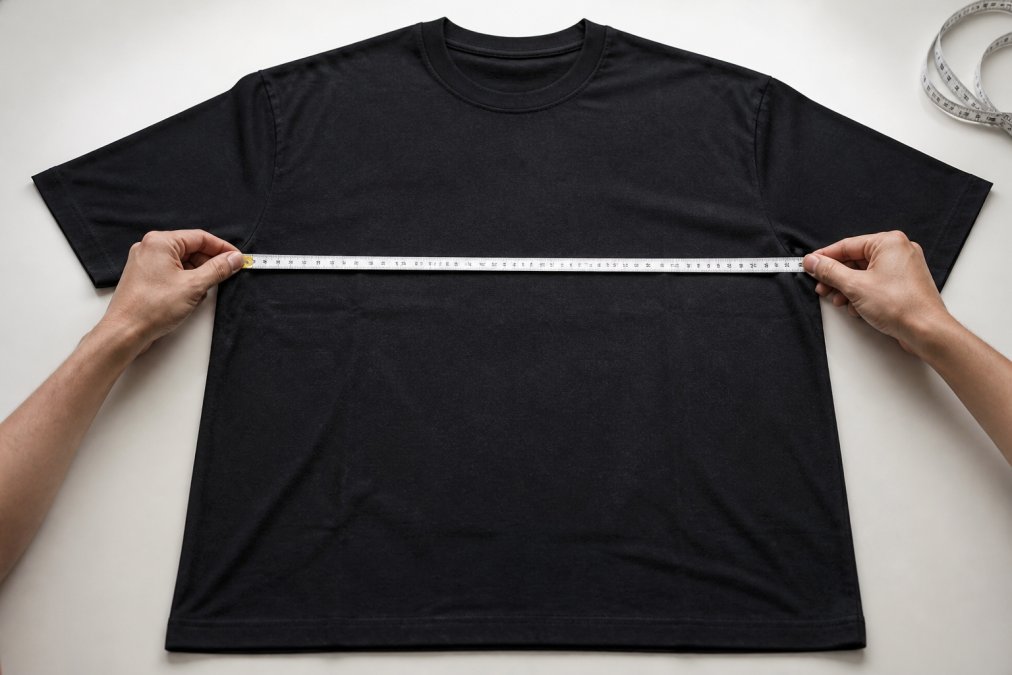
The flat lay method is more reliable than wearing and measuring because the shirt isn't stretched by your body. Always measure the same way for consistency, measure chest width at the fullest point, shoulder width from seam to seam, and length from the base of the neck.
Shrinkage and Long-Term Fit Considerations
Cotton naturally shrinks when exposed to heat and moisture. A shirt that measures 40 inches chest width today might measure 38.5 inches after several washes if you use hot water and a dryer.
Account for shrinkage when you buy. If a shirt fits with just enough ease, expect it to feel tighter after washing. If you want the shirt to maintain its fit long-term, buy it slightly looser than you might normally.
Cold water and air drying minimize shrinkage. Hot water and high heat maximize it. Heavyweight fabrics like AW3SOME's 245-255 GSM construction shrink less than lightweight fabrics because they're more densely woven. The yarn structure is tighter, so there's less room for the fibers to contract.
Common Fit Mistakes to Avoid
Buying based on size alone. S, M, L, XL mean nothing without understanding how the specific shirt is cut. Always check measurements, not just the size label.
Ignoring shoulder seam placement. This is the most common mistake. Start with the shoulder seam. Everything else follows from there.
Confusing oversized with poorly fitting. An oversized shirt should look intentional. If it looks sloppy, it's probably just the wrong size, not a style choice.
Not accounting for fit type. A relaxed fit will feel looser than a slim fit in the same size. Know what you're buying.
Forgetting about proportions. A shirt that fits someone 5'6" won't fit the same on someone 5'11". Buy based on your actual measurements.
Washing without considering shrinkage. Hot water and a dryer will shrink cotton. If you plan to use them, buy slightly larger.
Ignoring fabric weight. A lightweight shirt and a heavyweight shirt in the same size will fit differently. Fabric weight affects drape, structure, and how the garment ages.
Getting the right fit transforms how you feel in your clothes. A shirt that fits properly looks intentional, moves with you, and lasts longer. The process is straightforward: understand your measurements, know what to look for, and measure before you buy. At AW3SOME CLOTHES INC, we build our heavyweight tees with precision construction and quality materials so they hold their fit through years of wear. Start by checking t-shirt fit using the methods in this guide, and you'll never settle for a poor-fitting shirt again.
Frequently Asked Questions
How do I check my t-shirt size using a measuring tape?
Lay your t-shirt flat on a clean surface and use a tape measure to measure across the chest from armhole to armhole, then double that number for the full chest width. Measure sleeve length from the shoulder seam to the cuff, and torso length from the base of the neck to the hemline. Compare these measurements to a sizing chart for accurate sizing.
What are the signs that a t-shirt fits correctly?
A well-fitting t-shirt has shoulder seams that align with your natural shoulder point, chest width that allows one to two fingers of ease, sleeves that end mid-bicep, and length that covers your waistband without excessive fabric. The neckline should sit comfortably without gaping or choking, and the silhouette should drape naturally without bunching or pulling.
How should an oversized heavyweight t-shirt fit?
An oversized heavyweight t-shirt should sit relaxed through the chest and torso with intentional extra room, but shoulder seams should still align close to your natural shoulder point. The hemline typically extends past the waistband, and the overall silhouette creates a relaxed, comfortable appearance. Fabric weight affects drape, so heavier materials hold their shape better than lighter options.
Should I account for shrinkage when checking t-shirt fit?
Yes. Most cotton t-shirts experience some shrinkage, particularly in the torso length and sleeve length. When selecting your size, consider ordering slightly larger if you plan to wash in hot water or use a dryer. Always check the fabric content and care instructions, 100% cotton typically shrinks more than cotton-blend options.
This article was written using GrandRanker