 How-to
How to Find Unique Graphic Hoodies for Women
Table of Contents
- Where to Find Unique Graphic Hoodies for Women
- How to Identify Original Graphic Hoodie Designs
- How to Choose a Hoodie Fit That Works for Your Body
- Oversized Graphic Hoodie Outfit Ideas for Everyday Wear
- Evaluating Fabric Quality and Print Durability
- Original Graphic Hoodie Designs: What Sets Them Apart
- Graphic Hoodie Fabric and Print Care for Longevity
- Common Mistakes to Avoid When Shopping for Graphic Hoodies
- Frequently Asked Questions
Last Updated: October 16, 2026
Where to Find Unique Graphic Hoodies for Women
Unique graphic hoodies for women live in specific corners of the internet: independent marketplaces, niche brands, and artist collaborations. Mainstream retailers mostly sell designs you've seen a hundred times.

The best unique graphic hoodies come from sources that prioritize fresh artwork over mass production.
Independent Designer Marketplaces
Etsy and Redbubble connect you directly to independent artists who upload work and print on demand, giving you access to thousands of designs you won't find in stores.
The trade-off is consistency: print quality varies by printer, and some sellers use cheaper methods that fade faster. Check reviews and ask about the printing process first.
Look for sellers with hundreds of positive reviews and detailed photos of the actual garment, and ask about fabric weight, shrinkage, and wash durability.
Niche Streetwear Brands
Smaller streetwear brands often release limited runs built on original artwork instead of licensed characters or trends. Many drop new designs monthly or quarterly, so inventory changes constantly.
Follow brands on Instagram and set notifications, many announce drops there first.
Niche brands typically price higher than mass-market retailers because you're paying for original design, better construction, and limited availability.
Artist Collaborations and Limited Drops
Some independent artists partner with manufacturers for limited releases, small batches, sometimes just 100 to 500 pieces, that sell out permanently.
Discord servers and email newsletters alert you to upcoming drops. Join communities around artists or brands you like so you hear early.
Limited drops create urgency, but that's part of the appeal. You own something most people can't get.
How to Identify Original Graphic Hoodie Designs
Original designs feel fresh because they reflect individual artistic vision. Copied or mass-produced designs feel generic, you've seen similar versions everywhere.
Check for Reprinting Policies
Ask directly: does this brand ever reprint sold-out designs? Honest sellers say no or explain their schedule clearly. Vague answers are a red flag.
Some brands reprint designs after six months or a year. Others genuinely never reprint. That matters if exclusivity appeals to you. A design loses its edge if the same graphic drops again next season.
Look for Design Authenticity Markers
Authentic original designs show specific artistic choices:
- Hand-drawn or custom digital artwork instead of stock imagery
- Unusual color combinations that feel intentional
- Details that suggest the artist spent time on the piece
- A consistent visual style across the brand's catalog
- Artist credit or signature on the design
Mass-produced designs often use clip art, generic templates, or heavily filtered photos, impersonal by design.
Compare designs across the brand's catalog: do they look like they came from the same creative mind, or feel randomly assembled? Consistency signals real artistic direction.
How to Choose a Hoodie Fit That Works for Your Body
Fit changes how a graphic hoodie looks and feels: the right fit flatters your frame, the wrong one makes you uncomfortable.
Oversized vs. Fitted Silhouettes
Oversized hoodies sit loose through the shoulders and body, draping instead of hugging. This fit works for layering, creates a relaxed streetwear aesthetic, and pairs well with fitted jeans or leggings for balance.
Fitted hoodies follow your natural shape more closely and show off graphic placement better because the design sits flat against your body.
Your preference depends on personal style and how you want to layer. Try both if you can.
Sizing and Measurement Guidance
Check the brand's size chart before ordering, don't assume your usual size works everywhere. Some run large, others small.
Measure a hoodie you already own, chest width (armpit to armpit), sleeve length (shoulder seam to wrist), and total length (shoulder seam to hem), and compare those three numbers to the size chart.
If the size chart seems unclear, ask the seller for fit feedback; many describe how their hoodies compare to popular brands.
Oversized Graphic Hoodie Outfit Ideas for Everyday Wear
An oversized graphic hoodie works for dozens of outfits. The key is balancing proportions.
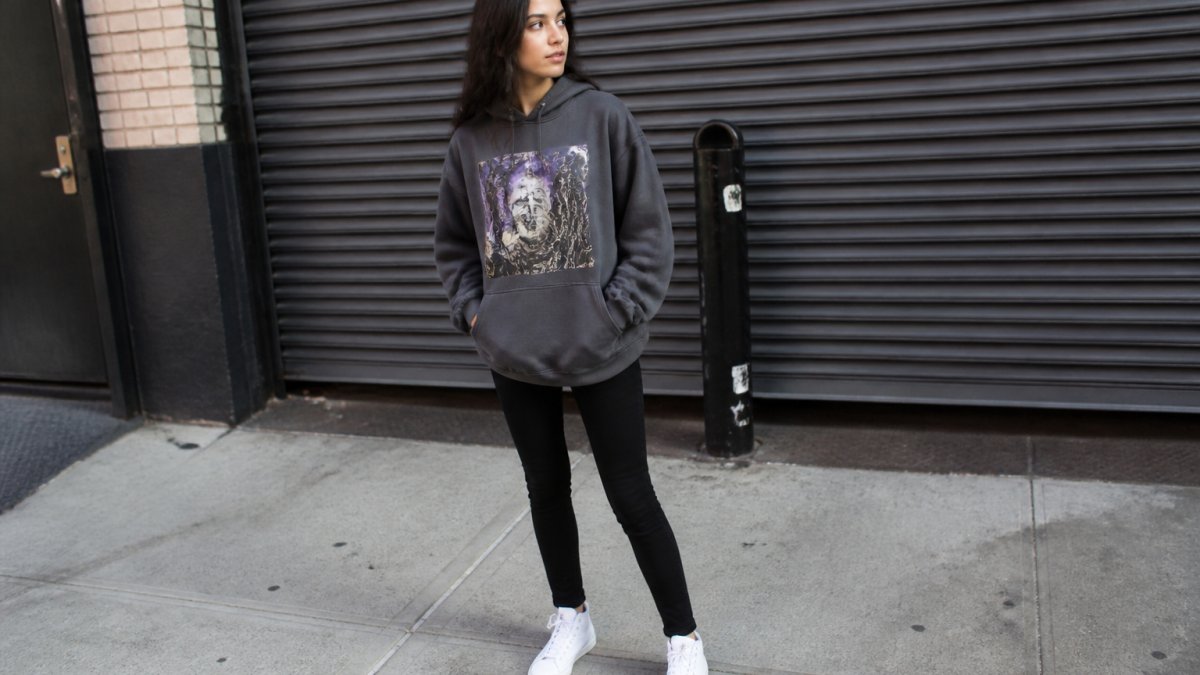
Pair an oversized graphic hoodie with fitted black jeans and white sneakers for a classic casual look; the tight jeans anchor the loose top.
Layer an oversized hoodie over a fitted long-sleeve shirt and let the sleeves show at the wrists, especially good in cool weather.
Oversized hoodies work as a beach cover-up too, throw one over a swimsuit with slides or sandals.
Evaluating Fabric Quality and Print Durability
Most shoppers judge a graphic hoodie by how it looks on the rack, but the details that determine whether it survives a year of washing follow predictable patterns. Here's a pre-purchase checklist.
Read the Fabric Weight Correctly
Fabric weight is usually listed in two units that describe the same thing:
- Ounces per square yard (oz/yd²) is the common U.S. convention for sweatshirt fleece and jersey.
- Grams per square meter (GSM) is the metric equivalent. To convert, multiply oz/yd² by roughly 33.9. A 7.5 oz fabric is about 245-255 GSM.
Weight tells you how dense a fabric feels, but it is not a universal quality score, a mid-weight fleece with tight knitting and reinforced seams can outlast a heavier, loosely knit garment. Use weight as one data point, and convert units so you can compare brands on equal terms.
Soldiers Graphic Hoodie — Gothic Eagle & Skull Back Print →
Check Construction Details That Predict Longevity
Look for these features, which show up on product pages and in close-up photos:
- Shoulder-to-shoulder neck tape covers the seam where the collar meets the body and reduces stretching at the neckline.
- Double-needle stitching at the neck, sleeve hems, and bottom hem creates two parallel rows of stitches that distribute stress better than a single row.
- Ribbed cuffs and hem should snap back when stretched. If they stay stretched, they will bag out with wear.
- Quarter-turned construction means the fabric is cut and turned so the center of the garment avoids the fabric's natural center crease, which helps the hoodie hang straight.
- Side seams should be straight and even. Puckering or wavy seams suggest rushed sewing.
Quality-focused brands often publish these specs directly. If a listing is silent on construction, ask before buying.
Understand How DTG Prints Age
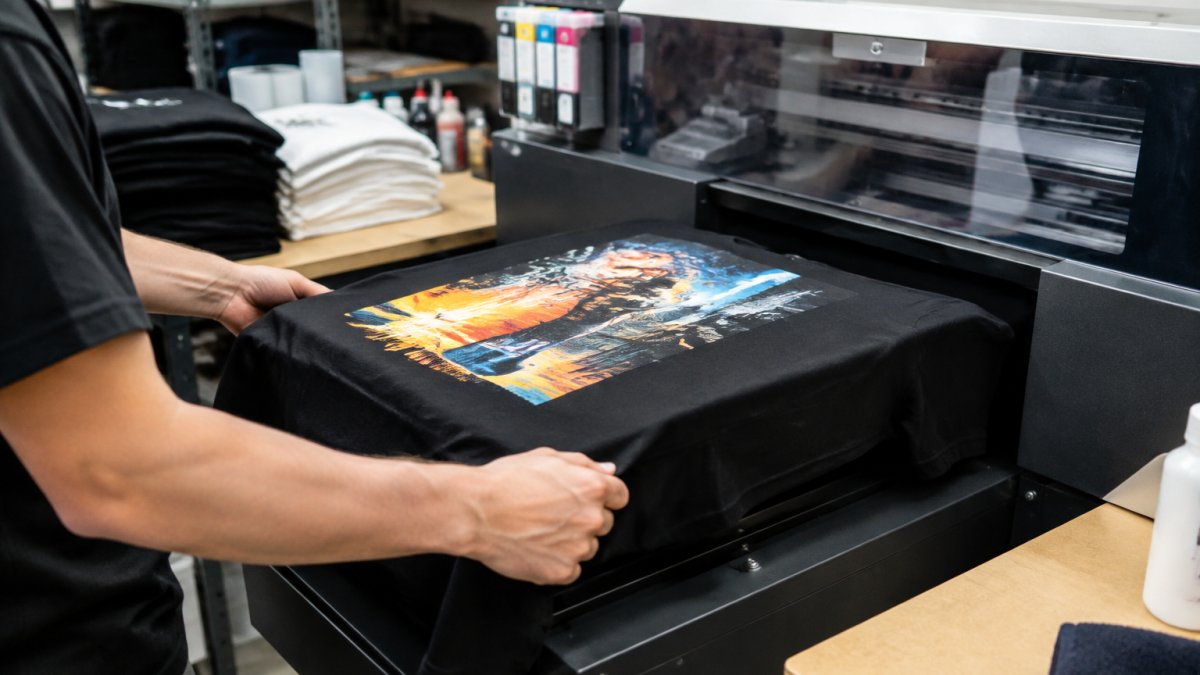
Direct-to-garment (DTG) printing jets water-based ink directly into fabric fibers, where it bonds with the cotton. Because the ink sits in the fibers rather than on top, a well-applied DTG print typically feels soft and moves with the garment.
Durability depends on a few variables:
- Fabric content. DTG bonds best to cotton. High polyester blends can reduce ink absorption and affect how the print ages. If a hoodie is a cotton/poly blend, ask the seller how their prints perform on that specific fabric.
- Pre-treatment. Most DTG processes require a pre-treatment solution so ink adheres evenly. Inconsistent pre-treatment is a common cause of faded or patchy prints.
- Wash routine. Heat and abrasion are the main enemies. Cold water, inside-out washing, and air drying extend print life more than any single product feature.
DTG is not inferior to other methods, screen printing and DTG each have trade-offs in color range, detail, and feel. Know what you're buying so you can care for it correctly.
Ask These Questions Before You Buy
A short message to the seller tells you more than any product photo:
- What is the fabric weight in oz/yd² or GSM, and what is the fiber content?
- Which printing method do you use, and how do you pre-treat the fabric?
- Do you have care instructions specific to the print?
Sellers who answer specifically and quickly usually stand behind their product; vague or evasive answers are your cue to keep looking.
Original Graphic Hoodie Designs: What Sets Them Apart
"Original" gets used loosely in streetwear marketing. The useful question isn't whether a brand calls its designs original, but whether you can verify it. Here's a practical test for any listing.
Four Signals of a Genuinely Distinctive Design
1. Artist attribution. Can you find the name of the person who made the artwork?
2. Limited-run language with specifics. "Limited edition" means little on its own. Look for concrete details: a stated run size, a drop date, or a clear no-reprint statement.
3. Visual consistency across the catalog. Scan the brand's designs side by side.
4. Design decisions that resist trends. Original work often includes choices that wouldn't survive a focus group: unusual color combinations, dense compositions, or references that require a second look.
How to Check for Mass-Market Repetition
Before you buy, run a reverse-image search on the design. If the same artwork appears on multiple unrelated storefronts, it's likely a stock or licensed graphic rather than an exclusive design.
Also check the brand's other products: if the same graphic appears on a hoodie, t-shirt, tote bag, phone case, and mug, it's probably part of a broad print-on-demand catalog rather than a focused apparel collection. That doesn't make it bad, but the exclusivity is limited.
Compare Original vs. Mass-Produced Side by Side
Put two listings side by side and ask:
- Does one have a named artist and the other does not?
- Does one state a run size or no-reprint policy, while the other uses generic "limited" language?
- Does one catalog feel cohesive, while the other feels like a trend sampler?
- Does one design reward a closer look, while the other reads instantly and forgettably?
You won't always get clean answers, but the exercise sharpens your eye, over time, the difference between a design someone cared about and one assembled for volume becomes easy to spot.
Graphic Hoodie Fabric and Print Care for Longevity
How you wash and store a graphic hoodie determines how long it lasts.
Wash in cold water on a gentle cycle, hot water breaks down fibers and fades prints faster.
Turn the hoodie inside out before washing to protect the print from friction with other clothes.
Avoid the dryer, heat damages both fabric and print.
Don't bleach or use harsh detergents. Stick to mild detergent designed for colors.
Common Mistakes to Avoid When Shopping for Graphic Hoodies
Most shoppers make predictable errors that lead to regret.
Buying without checking fit first. Ordering without measuring leads to hoodies that don't fit right.
Ignoring the seller's reviews. Bad reviews warn you about real problems, fading prints, shrinking fabric, unresponsive customer service.
Not asking questions before buying. Good sellers want you to be happy.
The best unique graphic hoodies come from sellers who care about quality and originality. Take time to find them.
Finding the right unique graphic hoodie means knowing where independent artists and quality brands operate.
Frequently Asked Questions
Where can I find graphic hoodies with truly original designs?
Independent designer marketplaces, niche streetwear brands, and artist collaboration platforms are your best bets for unique graphic hoodies. Look for brands that explicitly state they don't reprint designs, which ensures exclusivity. Artist platforms and limited-drop brands typically release new designs regularly, so checking back monthly helps you catch fresh pieces before they sell out.
How can I tell if a graphic hoodie design is actually original?
Check the brand's reprinting policy first, many legitimate streetwear labels clearly state designs are one-time only. Look for design markers like artist signatures, limited edition numbering, or dated drops. Research the brand's design philosophy and release schedule; brands committed to originality typically showcase their design process and artist credits prominently on their site.
What should I look for in the fit and fabric of a graphic hoodie?
Consider whether you prefer oversized or fitted silhouettes based on your style. Check the fabric blend, 100% cotton offers breathability, while cotton-poly blends provide durability and stretch retention. Look at construction details like reinforced seams, quality drawstrings, and kangaroo pockets. Read sizing reviews to understand if a brand runs true to size, small, or large before purchasing.
How do I care for a graphic hoodie so the print lasts?
Machine wash in cold water and avoid bleach to protect the graphic. Air dry or use low heat to prevent print cracking. Turn the hoodie inside out before washing to reduce friction on the design. Avoid tumble drying, which can damage both fabric and print. Store flat or on a hanger to maintain shape and prevent graphic distortion over time.