 how-to
How to Identify Authentic Graphic Tees: 7 Steps
Table of Contents
- How to Identify Authentic Graphic Tees: The Essentials
- Step 1: Examine the Care Label and Neck Tag
- Step 2: Inspect Fabric Weight and Fiber Content
- Step 3: Analyze Print Quality and Technique
- Step 4: Check Stitching, Seams, and Hem Details
- Step 5: Evaluate Fit, Cut, and Construction Quality
- Best Streetwear Brands for Graphic Tees and Original Design
- How to Care for Graphic Tees to Preserve Authenticity
Last Updated: August 29, 2026
How to Identify Authentic Graphic Tees: The Essentials
Counterfeits flood the streetwear market every season. Modern reproduction techniques have gotten sophisticated, screen-printed fakes now mimic DTG finishes, cotton blends are engineered to feel premium, and counterfeit care labels are printed with alarming accuracy. What separates an authentic graphic tee from a convincing replica comes down to seven specific inspection points.
This guide walks you through every checkpoint: construction details, tag signals, stitching quality, and why print technique matters. By the end, you'll have a clear system for evaluating any graphic tee, whether you're shopping vintage, buying limited drops, or assessing something you already own.
Step 1: Examine the Care Label and Neck Tag
Start with the care label. Authentic care labels have crisp, legible text, not blurry, faded, or printed at odd angles. The label should feel substantial, sewn securely into the neck seam with tight, even stitching. Counterfeiters often cut corners: labels peel at the edges, text is pixelated from cheap printing, or the label hangs loose.
Authentic vintage tees often have minimal labeling, sometimes just a screen-printed brand name directly on the garment. Modern authentic pieces use woven labels with consistent, tight weaves. Counterfeit labels sometimes have loose weaves or irregular patterns.
On authentic pieces, the neck tag sits flat against the seam without creating bulk. The stitching around the tag should be tight and even, typically double-stitched for durability. Fake tees often have tags that bunch up or have loose, uneven stitching.
Check copyright dates if printed. Real vintage tees will have copyright dates matching the era of the design. Licensed merchandise always includes copyright information on the tag or garment.
Step 2: Inspect Fabric Weight and Fiber Content
Fabric weight is one of the most revealing indicators of authenticity.
Authentic heavyweight graphic tees typically weigh 7.5 ounces per square yard (245-255 GSM for modern pieces). This weight creates a specific hand feel: substantial but not stiff, with slight drape. When you hold an authentic heavyweight tee, it feels durable and premium with density and structure.
Counterfeit tees often use lighter-weight fabric to cut costs. A fake might weigh 5-6 ounces, feeling noticeably thinner and flimsy. Run your hand across the fabric, does it have substance, or does it feel papery?
Examine the fiber content. Most authentic vintage tees are 100% cotton. Modern pieces may use cotton blends (90/10 cotton/poly or 50/50), but these should be clearly labeled. Feel the fabric texture, authentic cotton has a slightly textured surface with visible fiber structure. Synthetic or low-quality blends often feel smoother and more uniform, almost plasticky.
Check for consistency across the entire garment. Authentic tees maintain consistent weight and texture. Counterfeits sometimes have thinner panels or uneven fabric density.
Step 3: Analyze Print Quality and Technique
Print quality is where authentic graphic tees truly distinguish themselves.
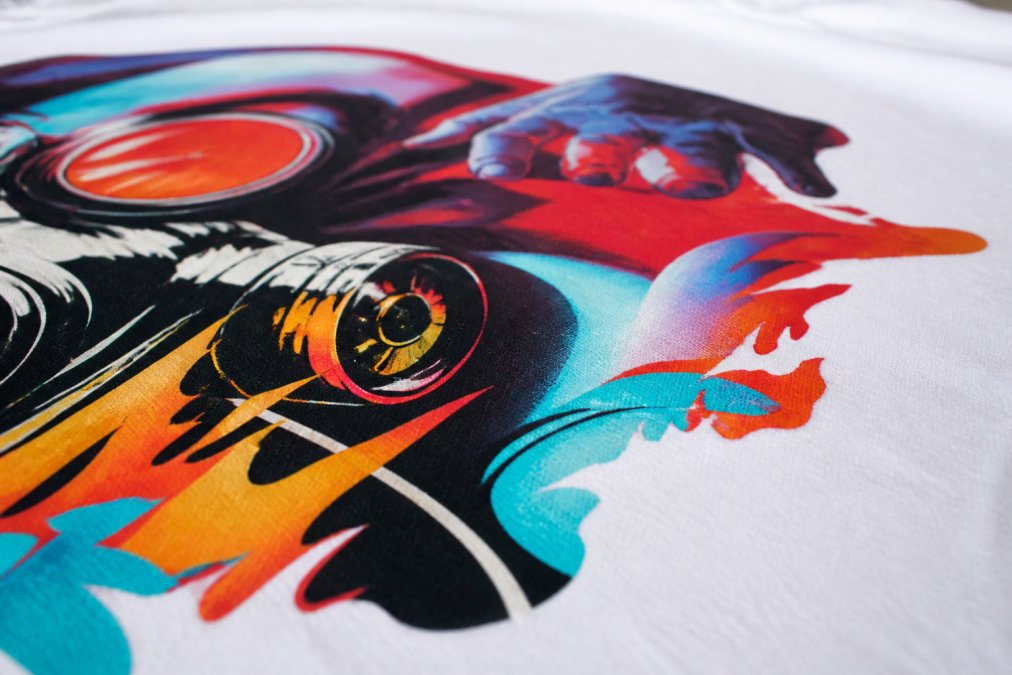
DTG (direct-to-garment) printing creates a specific aesthetic. The ink sits directly on the fabric surface with crisp detail and vibrant color saturation. Authentic DTG prints have sharp edges where the design meets the blank fabric, with no bleeding, feathering, or soft edges unless intentionally designed. Colors remain vivid and consistent across the entire print.
Examine the print surface closely. Authentic DTG prints feel relatively smooth when you run your finger across them, the ink has bonded with the fabric. Counterfeits sometimes use inferior processes that create a tacky, raised surface. The ink might feel plasticky or sticky, indicating poor adhesion.
Look at color transitions. In authentic prints, boundaries between colors are precise. Counterfeit prints often show color bleeding or muddy transitions. Inspect the back of the print, authentic DTG typically shows minimal ink on the reverse side, while screen printing creates more noticeable transfer.
Look for print cracking. Authentic DTG prints age gracefully. After multiple washes, they may show minor cracking patterns indicating genuine wear. Counterfeit prints sometimes crack prematurely because the ink hasn't properly bonded.
Step 4: Check Stitching, Seams, and Hem Details
Seam construction reveals whether a tee was made with care or rushed through production.
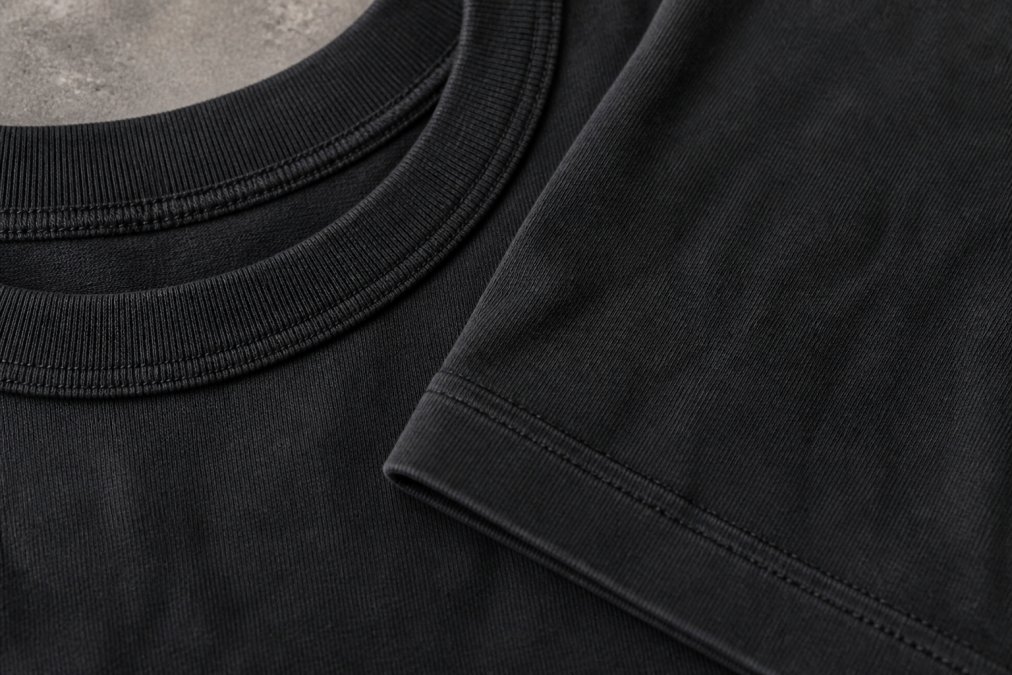
Authentic graphic tees use double-needle stitching on critical seams. The neckline should have double-needle stitching that's tight, even, and creates a reinforced seam. Sleeve hems and bottom hems should show this same construction. The two parallel lines should be perfectly aligned with consistent spacing.
Counterfeit tees often use single-needle stitching, which is cheaper. Loose, uneven stitching is a major red flag. Look for stitches that are too far apart, inconsistent spacing, or stitching that pulls the fabric unevenly.
Examine the seam allowances. On authentic pieces, they're consistent and hidden inside the garment. Seams should be straight without puckering or bunching. Check the shoulder seams, they should run straight across from armpit to armpit, not offset or crooked.
Look at the side seams. Authentic tees have straight side seams creating clean lines from armpit to hem. Inspect the hem construction, authentic tees use 1" double-needle hems on sleeves and bottom, creating reinforced, durable hems that resist unraveling.
Check for loose threads. Authentic pieces are finished cleanly with minimal loose threads. Counterfeits sometimes have visible loose threads or fraying edges indicating incomplete finishing.
Step 5: Evaluate Fit, Cut, and Construction Quality
Fit and cut reveal how a tee was designed and produced.
Authentic graphic tees have consistent, intentional fit. Most modern pieces use an oversized or relaxed fit with a slight drop shoulder, meaning the shoulder seam sits slightly off the actual shoulder point for a more comfortable, contemporary silhouette. The armhole should be generous but not sloppy.
Counterfeits often have inconsistent fit due to less precision in production. Armholes might be too tight or loose. The shoulder seam might be in an odd position. Overall proportions might feel off.
Examine the quarter-turned construction. On authentic pieces, side seams should be positioned slightly toward the back rather than directly on the sides. This creates a more flattering fit and reduces twisting when washed. Counterfeits often skip this step.
Check for consistent sleeve length. Both sleeves should be identical. Uneven sleeves indicate poor quality control. Look at the neckline, it should be symmetrical and consistent, not stretched out or misshapen.
When you hold an authentic tee, it should feel solid and well-made with fabric that has structure. Counterfeits often feel flimsy or poorly assembled, with loose seams and overall fragility.
Best Streetwear Brands for Graphic Tees and Original Design
When shopping for authentic graphic tees, knowing which brands prioritize quality and originality matters. The best brands commit to original artwork, premium construction, and limited production runs.
AW3SOME CLOTHES INC stands out in this space. The brand focuses exclusively on bold, original graphic designs that are never reprinted. Every tee uses heavyweight Shaka Wear fabric (7.5 oz/245-255 GSM) with double-needle construction and DTG printing. The oversized fit with slight drop shoulder and quarter-turned seams reflects intentional design. Because designs are never reprinted, each piece carries genuine exclusivity.
The commitment to original artwork means AW3SOME CLOTHES INC doesn't recycle designs. New drops feature completely fresh graphics, eliminating the reproduction problem entirely. You know what you're buying is current and original, not a reissue. Quality construction is consistent across the line: 100% USA cotton (or stated blend), DTG printing, double-needle stitching, and reinforced hems.
When evaluating any graphic tee, use the five-step authentication system above. Authentic pieces should pass every checkpoint: quality care label, substantial fabric weight, crisp DTG print, tight double-needle stitching, and intentional fit. Brands that invest in these details are worth supporting.
How to Care for Graphic Tees to Preserve Authenticity
Once you've authenticated your graphic tee, proper care preserves both the garment and the print.
Wash in cold water. Hot water fades colors and weakens fabric fibers. Turn the tee inside out before washing to protect the graphic from direct agitation. Use gentle detergent or detergent formulated for graphics. Avoid bleach entirely.
Wash with similar colors to prevent cross-contamination. Dry on low heat or air dry, high heat shrinks fabric and can crack DTG prints. If using a dryer, remove the tee while still slightly damp.
Fold rather than hang for storage. Hanging stretches the shoulders and neckline over time. Store in a cool, dry place away from direct sunlight to prevent fading. Avoid ironing directly over the graphic, iron the back side only or use a pressing cloth.
| Care Step | Method | Frequency |
|---|---|---|
| Washing | Cold water, inside out, mild detergent | After 2-3 wears |
| Drying | Low heat or air dry | Every wash |
| Storage | Fold, cool/dry location, away from sun | Between wears |
| Ironing | Back side only or with pressing cloth | As needed |
| Inspection | Check print, seams, fit | Monthly |
Authenticity in graphic tees comes down to construction details most people overlook. A real tee shows quality in its care label, fabric weight, print technique, stitching, and fit. When you know what to look for, spotting counterfeits becomes straightforward. AW3SOME CLOTHES INC demonstrates what authentic construction looks like: heavyweight 245-255 GSM fabric, DTG printing with crisp detail, double-needle stitching throughout, and intentional fit with quarter-turned seams. Whether you're building a collection or shopping for everyday wear, these authentication steps protect your investment. SHOP THE LATEST DROP →

Frequently Asked Questions
Q: How can I tell if a graphic tee is authentic versus a counterfeit?
A: Authentic graphic tees show consistent stitching, crisp print quality, and proper care labels. Check for double-needle construction on seams, examine the fabric weight (quality tees typically weigh 7.5 oz / 245-255 GSM), and inspect the print for sharp edges without cracking or peeling. Counterfeits often have loose stitching, blurry graphics, and flimsy fabric. Verify the brand's manufacturing claims and purchase directly from official sources to guarantee authenticity.
Q: What is GSM in t-shirts, and does it matter for identifying authentic graphic tees?
A: GSM stands for grams per square meter and measures fabric weight. A quality graphic tee typically uses 7.5 oz (245-255 GSM) fabric, which feels substantial and durable. However, GSM alone doesn't determine authenticity, a counterfeit can use heavy fabric too. Instead, combine GSM assessment with other checks: fiber content (100% USA cotton for standard colors), stitching quality, and print durability. Premium brands clearly state their fabric specs.
Q: How should I care for graphic tees to keep them looking authentic and new?
A: Wash graphic tees inside-out in cold water with mild detergent to protect the print. Avoid bleach, fabric softener, and high heat, these cause fading and cracking. Air-dry flat or hang to prevent shrinkage and distortion. Store away from direct sunlight. Quality graphic tees with proper DTG printing resist wash wear when cared for correctly. Follow the care label instructions on your specific tee for best results.
Q: Are vintage graphic tees harder to authenticate than modern ones?
A: Vintage tees require different authentication markers than modern pieces. Look for era-specific details: single-stitch construction (common pre-1990s), period-correct care labels, and authentic copyright dates. Reproduction vintage tees are increasingly sophisticated, check for distressing that looks artificially aged rather than naturally worn, and verify the brand's manufacturing history. Modern authentic tees are easier to verify through direct purchase channels and consistent construction standards.
This article was written using GrandRanker