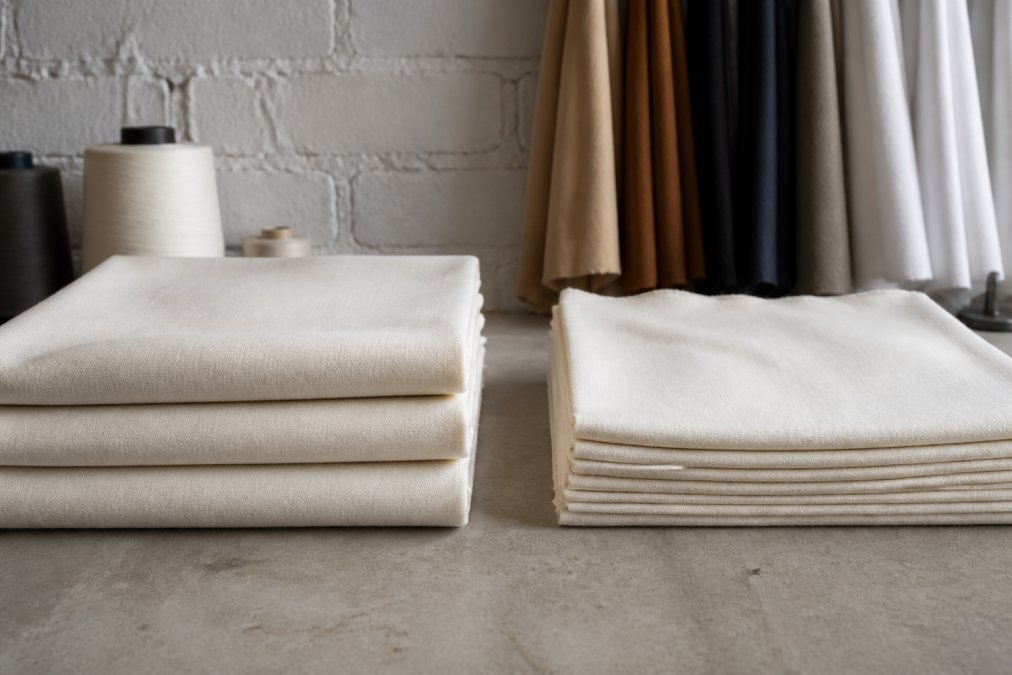
 comparison
Premium Heavyweight Cotton vs Standard Cotton for Streetwear
Table of Contents
- Quick Comparison: Premium Heavyweight Cotton vs Standard Cotton
- What Is GSM in T-Shirts and Why It Decides How a Tee Feels
- Fabric Weight, Density, and Garment Construction
- Drape, Silhouette, and the Boxy Fit Streetwear Buyers Want
- Durability, Shrinkage, and How Each Fabric Ages
- Breathability, Hand Feel, and Layering Versatility
- How to Style Oversized Heavyweight Shirts
- Care and Maintenance for Heavyweight Cotton Tees
- Where to Find Premium Heavyweight Cotton Tees
- Frequently Asked Questions
Last Updated: September 13, 2026
Quick Comparison: Premium Heavyweight Cotton vs Standard Cotton
Premium heavyweight cotton and standard cotton differ mainly in fabric weight, density, and how the finished garment holds its shape. Premium heavyweight cotton and standard cotton differ mainly in fabric weight, density, and how the finished garment holds its shape. That gap changes drape, opacity, and how a tee survives repeated washing.
This guide from AW3SOME CLOTHES INC breaks down what that difference means in practice, from GSM to silhouette to care. A quick verdict first:
| Factor | Premium Heavyweight Cotton | Standard Cotton |
|---|---|---|
| Fabric weight | Roughly 6-8 oz / 200-255+ GSM | Roughly 4-5 oz / 150-180 GSM |
| Drape | Falls straight, holds structure | Clings, collapses easily |
| Opacity | High, rarely see-through | Often semi-sheer |
| Shape retention | Better through repeated washes | Loosens and twists faster |
| Hand feel | Dense, substantial | Light, soft, thin |
| Print surface | Flat and stable for DTG | Can pucker and distort |
| Best for | Structured streetwear silhouettes | Lightweight everyday basics |
Neither fabric is objectively better. Heavier cotton suits boxy, structured streetwear. Standard cotton suits warm-weather basics and lighter layering. The right choice depends on the silhouette you want.
What Is GSM in T-Shirts and Why It Decides How a Tee Feels
GSM stands for grams per square meter, and it measures fabric weight, not quality. A higher GSM means more fiber packed into the same area, which usually means a denser, more substantial hand feel.
Two tees can share the same GSM and feel completely different depending on yarn and knit. That is why GSM alone never tells the full story. As textile weight and measurement guidance from the American Society for Testing and Materials notes, fabric weight is one measurement among several that determine performance.
For streetwear, GSM is a useful starting filter. It tells you roughly how a tee will drape, how opaque it will be, and how much structure it will hold. It does not tell you fiber quality, yarn type, or construction, which matter just as much.
Fabric Weight, Density, and Garment Construction
Fabric density and garment construction decide whether a heavyweight tee actually feels premium or just heavy. Density comes from fiber quality and how tightly the yarn is knit. Construction comes from how the shirt is cut and sewn.
The details that separate a well-built heavyweight tee from a heavy blank:
- Shoulder-to-shoulder neck tape stops the neckline from stretching out
- Double-needle stitched neck and hems resist seam failure
- Quarter-turned body removes the center crease that distorts prints
- Stretch-proof collar keeps its shape after repeated washes
A heavy fabric with weak construction still twists, sags, and loses shape. Weight without build quality is just weight.
Ring-Spun vs Carded Cotton
Drape, Silhouette, and the Boxy Fit Streetwear Buyers Want
Drape is how a fabric falls against the body, and it is where heavyweight cotton separates itself. A dense fabric falls straight from the shoulder instead of clinging to the torso, which is the entire point of a boxy, oversized silhouette.
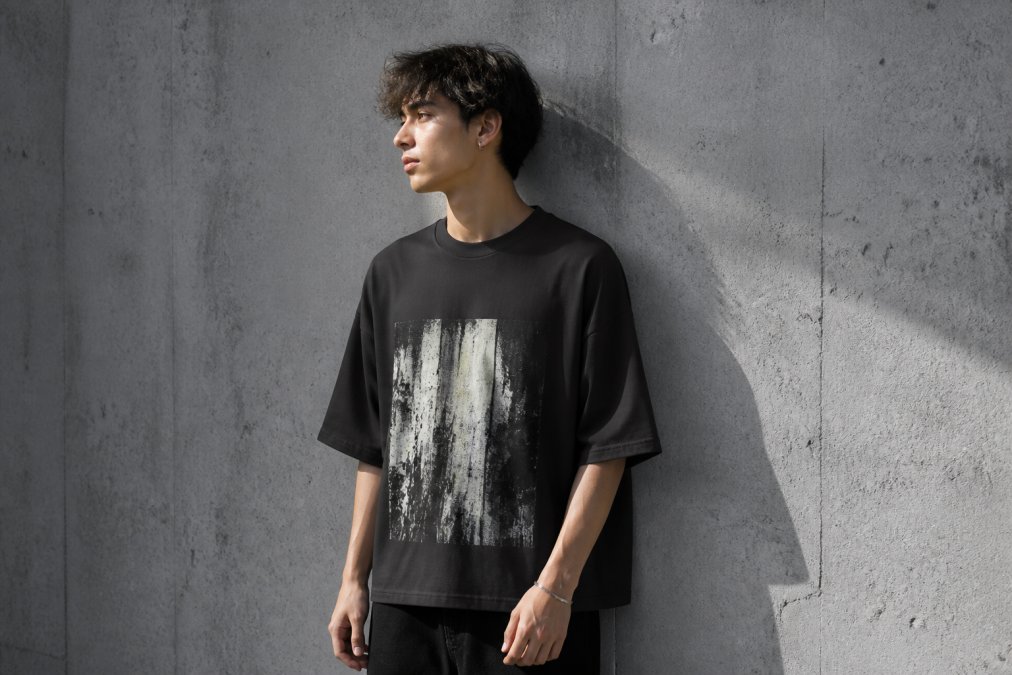
Standard cotton collapses and follows the body's contours. That reads as fitted, not structured. Heavyweight cotton keeps its own shape, so the silhouette stays boxy even after movement. A slight drop shoulder and a relaxed cut complete the effect. If the fabric is too light, the drop shoulder just looks like a shirt that does not fit.
Durability, Shrinkage, and How Each Fabric Ages
Durability in cotton comes down to fiber length and yarn structure, not weight alone. Long-staple fibers and ring-spun yarn resist pilling and breaking better than short carded fibers, so a well-made midweight tee can outlast a poorly made heavy one.
Shrinkage is a separate issue. Cotton relaxes and contracts with heat, so how you wash and dry matters more than the label's weight. Cold washing and low or no-heat drying limit shrinkage on any cotton tee. Hot water and high heat accelerate it.
Standard cotton tends to loosen and twist at the seams faster because the yarn has less structural integrity. Heavyweight cotton holds its shape longer, though it still ages. A heavyweight tee that has been washed cold and dried flat keeps its proportions far better than one thrown in a hot dryer.
Breathability, Hand Feel, and Layering Versatility
Breathability in cotton jersey is governed by two things: how open the knit structure is and how much air the fiber itself can move. A standard 4-5 oz tee is knit loosely, so air passes through the fabric easily and sweat evaporates quickly. A dense heavyweight jersey knit has tighter loops and less open space between yarns, so it traps more warm air against the skin. That is a trade-off, not a defect, the same density that makes a heavyweight tee hold its shape also makes it run warmer.
Hand feel is where the two fabrics diverge most, and it changes over time. Standard cotton feels soft and light the moment you put it on, but the thin yarn structure means it thins and loses body with repeated washing. Heavyweight cotton starts with a denser, slightly crisp hand feel, some people describe it as dry or papery when new, then softens across the first several washes while keeping its weight and structure. The fabric does not collapse the way a light tee does. If you want a tee that feels broken-in on day one, standard cotton delivers that faster. If you want a tee that still feels substantial after a year of wear, heavyweight cotton is the better long-term hand feel.
Layering is where heavyweight cotton earns its place in a streetwear rotation. A structured tee sits cleanly under an open flannel, overshirt, coach jacket, or bomber without bunching at the shoulders or riding up at the hem. The fabric holds its own volume, so the outer layer drapes over it instead of fighting it. Standard cotton tends to wrinkle and cling under layers, which is why it works better as a standalone warm-weather piece.
Seasonally, that plays out in a predictable pattern:
- Summer, standalone: Standard cotton wins on breathability. A light tee moves air and dries fast.
- Spring and fall, layered: Heavyweight cotton wins. It adds structure under an overshirt without adding bulk.
- Winter, base layer: Heavyweight cotton works as a mid-layer under a jacket because it holds its shape and does not cling to the body.
- Year-round, indoor: Heavyweight cotton is comfortable in air conditioning and does not feel flimsy.
A common pattern among streetwear buyers is to keep both fabric weights on hand: light tees for hot days and heavyweight tees for everything else. The two are not competing so much as covering different parts of the year.
How to Style Oversized Heavyweight Shirts
Styling oversized heavyweight shirts comes down to balance. The tee is the volume, so the rest of the outfit should support it rather than compete.
- Tuck the front slightly into straight or relaxed denim to define the waist without losing the boxy line
- Keep bottoms clean and structured: straight-leg jeans, chinos, or cargos hold up against the tee's weight
- Layer over a long-sleeve for cooler months; the density keeps the outer tee from bunching
- Skip skinny bottoms, which make an oversized top read as a sizing mistake rather than a choice
- Let the graphic lead: one strong print per outfit is enough
The goal is a silhouette that looks intentional. Heavyweight cotton does most of that work for you because it holds the shape you set.
Care and Maintenance for Heavyweight Cotton Tees
Heavyweight cotton does not need special products or a complicated routine, but it does respond to heat differently than standard cotton. The same density that gives a heavyweight tee its structure also means the fabric holds moisture longer in the dryer, so heat exposure has more time to do damage. Understanding that mechanism is what separates a tee that keeps its shape for years from one that sags after a few months.
Why heat is the main enemy. Cotton fibers relax and contract when exposed to heat and moisture. In a standard lightweight tee, the thin yarn structure gives the fabric room to move without visibly distorting. In a dense heavyweight knit, the tighter yarn structure means shrinkage and distortion show up as shortened body length, twisted side seams, or a collar that no longer sits flat. Cold washing and low or no-heat drying limit that movement on any cotton tee, but the payoff is more visible on a heavyweight because there is more structure to preserve.
A care routine that protects the build, not just the fabric:
- Wash cold (max 30C / 90F) to limit shrinkage and color fade. Hot water accelerates fiber contraction.
- Tumble dry on no heat or hang dry. If you must use heat, use the lowest setting and remove the tee while it is still slightly damp.
- Turn the tee inside out before washing to protect the graphic surface from abrasion against other garments.
- Do not iron directly over the print. Heat can crack DTG graphics. If you need to smooth wrinkles, iron the reverse side or use a pressing cloth.
- Do not dry clean. The solvents and pressing can distort the knit and the collar.
- Use non-chlorine bleach only if needed. Chlorine bleach weakens cotton fibers over time.
- Fold, do not hang, for long-term storage. Hanging a heavyweight tee on a wire hanger can stretch the shoulder area and distort the neckline.
Protecting the structural details. The features that make a heavyweight tee feel premium, shoulder-to-shoulder neck tape, a stretch-proof collar, double-needle stitched hems, and a quarter-turned body, are also the features most affected by careless washing. Neck tape prevents the collar from stretching out, but only if the tee is not pulled over the head by the collar or hung wet by the neckline. Double-needle hems resist seam failure, but high heat can still cause the stitching to pucker. Quarter-turned construction removes the center crease that distorts prints, but only if the tee is not twisted in the wash or dried in a hot drum that sets new creases.
What to expect over time. A heavyweight tee washed cold and dried flat or on no heat will hold its proportions far better than the same tee washed warm and dried hot. It will still soften with age, that is normal and generally desirable, but it should not lose its body or twist at the seams the way a standard cotton tee often does. If a heavyweight tee starts to feel thin or limp, the cause is usually heat exposure or over-washing, not the fabric itself.
Where to Find Premium Heavyweight Cotton Tees
The clearest way to judge heavyweight cotton is to feel it. Weight, density, and construction are hard to assess from a product photo, which is why checking the specs matters.
AW3SOME CLOTHES INC builds its tees on 7.5 oz / 245-255 GSM heavyweight cotton with an oversized, relaxed fit, shoulder-to-shoulder neck tape, double-needle stitched hems, and a stretch-proof collar. Standard colors use 100% USA cotton, with Heather Grey at 90/10 and Charcoal Grey at 50/50. Graphics are printed with DTG for a smooth, durable finish on the dense fabric surface.
If you want to see how heavyweight cotton drapes in person, start with a piece like the Moonlit Wanderer or the Dark Samurai back-print tee. Both show how a structured fabric holds a large graphic without distortion.

Frequently Asked Questions
What is the difference between standard cotton and premium heavyweight cotton?
Premium heavyweight cotton uses more yarn per square inch, which changes how the shirt drapes, how it holds its shape, and how well it supports printed artwork compared to standard cotton. The difference shows up most in structure and longevity, not just thickness.
Does fabric weight (GSM) determine the quality of a t-shirt?
No. GSM measures fabric weight per square meter, not overall quality. A 245-255 GSM tee with ring-spun yarn, shoulder-to-shoulder neck tape, and double-needle stitching will outlast a heavier tee with weak construction. Fiber quality, yarn type, and finishing matter as much as the number on the label. Treat GSM as one data point among several.
How does heavyweight cotton affect the drape and fit of a shirt?
Heavier cotton falls in straighter lines instead of clinging to the body, which creates the boxy, structured silhouette streetwear buyers look for. A 245-255 GSM tee with a slight drop shoulder sits away from the torso and holds that shape after washing. Lighter cotton tends to collapse at the shoulder seam and cling at the waist, which reads more casual than intentional.
Is heavyweight cotton more durable than standard lightweight cotton?
Heavier fabric generally resists thinning and holds its shape longer because there is more yarn per square inch. Construction details matter just as much: shoulder-to-shoulder neck tape, a stretch-proof collar, and double-needle stitched hems prevent the failures people notice first, like stretched necks and split seams. A well-built 245-255 GSM tee will typically outlast a thin tee with basic stitching.
Will heavyweight cotton shrink or lose its shape after washing?
Shrinkage depends on the fabric finish and how you wash it, not just the weight. Cold water washing (max 30C or 90F) and tumble drying on no heat limit shrinkage and protect the print. Quarter-turned construction, where the body panel is cut across the fabric roll rather than along it, also helps the shirt keep a straight fit and avoid the twisting that shows up in cheaper tees.
Heavyweight cotton is not automatically better than standard cotton, but for structured streetwear silhouettes it does something standard cotton cannot: it holds its shape. If you want tees built on that principle, with original graphics that are never reprinted, AW3SOME CLOTHES INC stocks heavyweight pieces in an oversized fit with reinforced construction. Browse the latest drop and find a graphic that fits how you actually dress.