 Ultimate guide
Why Heavyweight Streetwear Costs More: A Breakdown
Table of Contents
- What GSM Means for T-Shirts
- Heavyweight vs Lightweight T-Shirt: The Core Difference
- Why Heavyweight T-Shirt Quality Justifies Higher Prices
- Construction, Stitching, and Durability Impact on Cost
- The Real Cost Breakdown: Material, Labor, and Production
- Oversized Heavyweight Shirt Fit and Its Production Complexity
- Brand Positioning, Exclusivity, and Perceived Value
- Price Per Wear: Is Heavyweight Streetwear Worth It?
- Frequently Asked Questions
Last Updated: October 12, 2026
What GSM Means for T-Shirts
GSM stands for grams per square meter, a direct measurement of fabric weight and density. It tells you how much a single square meter of fabric weighs, nothing more. A 7.5 oz heavyweight tee at 245-255 GSM simply means the cotton is denser and more substantial than lighter alternatives.

Understanding GSM matters because it correlates with durability and hand feel. Heavier fabric resists pilling, holds its shape through repeated washing, and typically feels more substantial in your hands. But GSM alone doesn't determine quality. A 245-255 GSM cotton can feel premium or cheap depending on fiber quality, yarn construction, and how the garment is finished.
The confusion starts when people treat GSM as a universal quality metric. It isn't. A 200 GSM fabric with superior fiber and construction can outperform a 280 GSM fabric made poorly. What matters is the combination: weight plus fiber quality plus construction.
At AW3SOME CLOTHES INC, our tees use 7.5 oz (245-255 GSM) USA cotton in standard colors, with specific blends for heather and charcoal variations. This weight sits in the heavyweight category, substantial enough to feel premium without being stiff or difficult to wear.
Heavyweight vs Lightweight T-Shirt: The Core Difference
The core difference between heavyweight and lightweight t-shirts comes down to fabric density and how that density affects wear and longevity. A lightweight tee typically weighs 4.5-5.5 oz (around 150-180 GSM). A heavyweight tee weighs 7.0-8.0 oz (240-280 GSM). The difference is immediately noticeable when you hold them.
Lightweight tees feel airy and breathable. They're ideal for layering or warm weather because they don't trap heat. They're also cheaper to produce and ship. The trade-off: they wear out faster. The thinner fabric is more prone to pilling, thinning at stress points, and losing shape after 20-30 washes.
Heavyweight tees feel dense and grounded. They hold their shape wash after wash. The thicker fabric resists pilling and thinning. Stress points like collar and sleeve cuffs don't fray or stretch out as quickly. They also feel more intentional, like you're wearing something built to last, not something disposable.
The cost difference reflects production reality. Heavyweight requires more cotton per garment, more time on the production line, and more careful handling to avoid defects. Lightweight can be produced faster with less material waste.
| Attribute | Lightweight (150-180 GSM) | Heavyweight (245-255 GSM) |
|---|---|---|
| Fabric Weight | 4.5-5.5 oz | 7.0-8.0 oz |
| Durability | 15-20 washes before visible wear | 50+ washes with minimal degradation |
| Pilling Resistance | Low | High |
| Hand Feel | Soft, thin, breathable | Dense, substantial, grounded |
| Production Cost | Lower material and labor | Higher material and labor |
| Best For | Layering, warm weather | Everyday wear, longevity |
Why Heavyweight T-Shirt Quality Justifies Higher Prices
Heavyweight t-shirt quality justifies higher prices because the material and construction work together to extend garment life significantly. A well-made heavyweight tee can be worn many times before showing meaningful wear. A lightweight tee often shows visible thinning or pilling after fewer wears.
This lifespan difference is where the real value emerges. A heavyweight tee at a higher upfront cost costs less per wear over time. If a lightweight tee costs less and lasts fewer wears, the cost per wear can be higher. A heavyweight tee at a higher upfront cost lasting many wears can cost less per wear over time.
The construction details matter more in heavyweight fabric. Double-needle stitching on the neck, sleeves, and hem prevents unraveling and maintains shape. Shoulder-to-shoulder neck tape reinforces the collar so it doesn't stretch out. Quarter-turned body construction eliminates the center crease that can weaken over time. These techniques cost more to execute but are essential in heavyweight garments because the fabric itself demands precision.
Fiber quality also becomes more critical. Premium USA cotton with higher thread count (16-singles yarn, for example) feels smoother and resists pilling better than lower-grade cotton. You're paying for cotton that was grown, harvested, and spun with more care.
Construction, Stitching, and Durability Impact on Cost
Construction and stitching are where heavyweight tees either justify their price or disappoint. The production techniques required for heavyweight fabric are more labor-intensive and require more precision than lightweight alternatives.
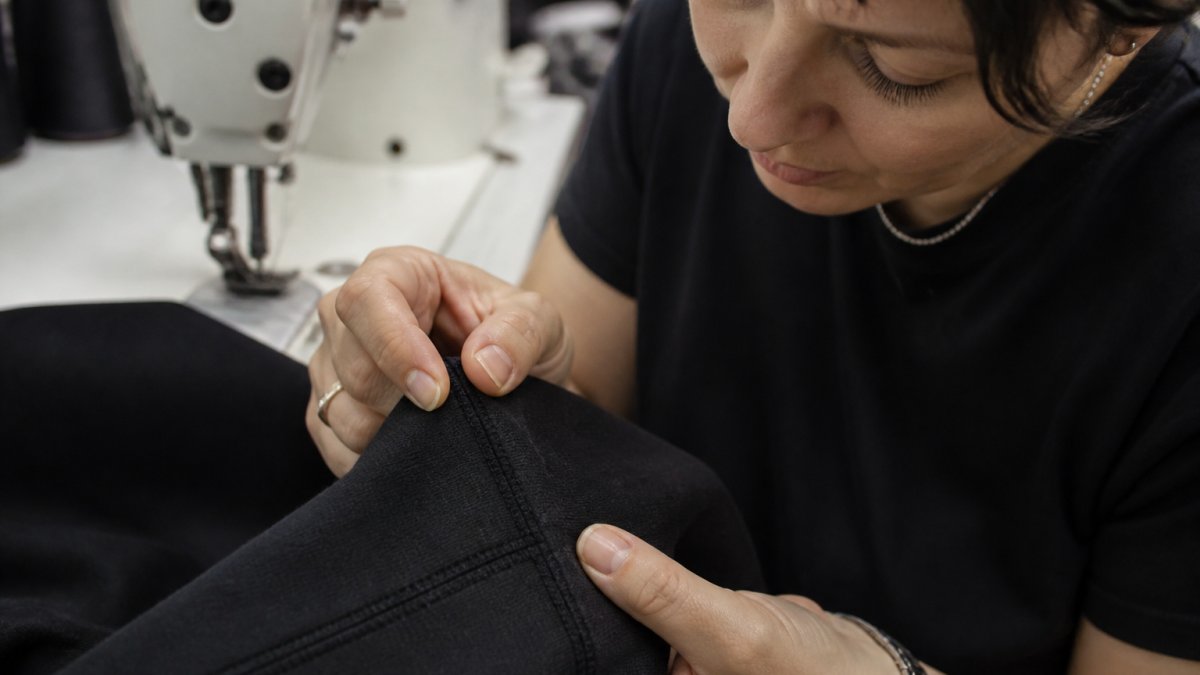
Double-needle stitching on the neck, sleeves, and hem requires the garment to pass through the machine twice, once for each needle. This adds time and labor cost.
Shoulder-to-shoulder neck tape adds another layer of labor. The tape is sewn in by hand or specialized machine, reinforcing the neckline so it resists stretching. Without it, even a quality heavyweight tee's collar can become misshapen after many washes.
Quarter-turned body construction means the front and back panels are rotated slightly before sewing. This eliminates the center crease that forms from folding during storage and shipping. The crease can become a weak point where the fabric thins faster.
Finishing details matter too. Reinforced hems prevent fraying. Stretch-proof collars use specialized thread or construction to maintain shape. Each detail adds production time and cost. On a lightweight tee made for speed and volume, many of these steps are skipped.
The Real Cost Breakdown: Material, Labor, and Production
Understanding why heavyweight streetwear costs more requires separating material costs from labor and production overhead.
Raw cotton material for a heavyweight tee costs significantly more than lightweight. A 7.5 oz tee requires roughly 50% more cotton fiber than a 5 oz tee. USA-grown cotton costs more than imported alternatives.
Labor costs scale with complexity. Cutting, sewing, and finishing a heavyweight tee takes longer. Double-needle stitching requires more machine time. Hand-finishing details add labor.
Printing adds another layer. Direct-to-garment (DTG) printing works on any fabric but requires precise heat and pressure settings. Heavyweight fabric's density means the print head must work harder to achieve full saturation. More ink is used. The process takes slightly longer.
Quality control becomes more rigorous for heavyweight. Defect rates must be lower because the higher material and labor cost makes each defective unit more expensive to write off. More inspection stations, more testing, and stricter standards add overhead.
Overhead and distribution also factor in. A brand positioning itself around heavyweight quality typically operates at lower volume than mass-market brands. Lower volume means fixed costs (facilities, equipment, staff) are spread across fewer units, raising per-unit cost.
The total difference between a lightweight tee and a heavyweight tee isn't just material. It's material plus labor plus quality control plus brand positioning plus lower production volume.
Oversized Heavyweight Shirt Fit and Its Production Complexity
Oversized fit adds production complexity that increases cost. An oversized heavyweight tee requires more precise pattern grading because the additional fabric must be distributed correctly across the garment without creating bunching or strange drape.
A slight drop shoulder, where the shoulder seam sits slightly lower than the natural shoulder point, requires careful pattern adjustment. Too much drop and the tee looks sloppy. Too little and it doesn't read as oversized.
Heavyweight fabric complicates this further. A lightweight tee with poor grading might still look acceptable because the thin fabric drapes loosely. A heavyweight tee with poor grading will bunch, pull, or sit awkwardly because the dense fabric doesn't hide mistakes.
Quarter-turned construction becomes even more critical in oversized fits. The center crease is more visible in a relaxed silhouette, so preventing it requires precision. The cutting must account for the oversized dimensions while maintaining the quarter-turn offset.
Neck tape application is more complex on an oversized garment. The neckline is wider, requiring longer tape and more careful application to maintain consistent tension and appearance.
These production requirements mean oversized heavyweight tees demand higher-skilled labor, more careful quality control, and more pattern development cost. A brand offering sizes S through 7XL with proper grading is investing significantly more in pattern engineering than a brand offering just S-XL.
Brand Positioning, Exclusivity, and Perceived Value
Perceived value is a real economic factor. A brand that positions itself as exclusive, limited-edition, and never-reprinted commands higher prices because customers are buying into scarcity and uniqueness, not just the physical product.
Exclusivity requires different business operations. Limited releases mean smaller production runs, which reduces economies of scale. A brand producing 10,000 units of one design pays less per unit than a brand producing 500 units of that design.
Never-reprinted positioning also creates urgency. Customers know if they miss a drop, the design is gone forever. This urgency justifies higher prices because the product has built-in scarcity.
Brand positioning also reflects design investment. Exclusive original graphics require more design time, more iteration, and more creative risk than generic designs. A brand dropping new designs constantly is investing more in creative talent and development than a brand recycling the same five designs.
The marketing and community-building around exclusivity also costs money. Building a brand that people want to collect requires consistent communication, community engagement, and storytelling. These costs are built into the final price.
Perceived value isn't fake, it's a legitimate part of the product. If a customer values owning something exclusive and unique, and the brand delivers on that promise, they're getting real value. The price reflects that.
Price Per Wear: Is Heavyweight Streetwear Worth It?
The price-per-wear calculation is the most honest way to evaluate whether heavyweight streetwear justifies its cost.
A heavyweight tee worn many times can have a lower cost per wear. A lightweight tee worn fewer times can have a higher cost per wear.
But this calculation depends on your actual behavior. If you buy a tee and wear it twice before moving on, price per wear is irrelevant. You're just overpaying.
Heavyweight streetwear makes sense for people who actually wear their clothes. If you buy pieces because you love them and wear them regularly, heavyweight quality pays for itself.
The exclusivity factor also affects value calculation. A limited-edition design that you can't get anywhere else has value beyond the physical product.
Climate and use case matter too. A heavyweight tee in a warm climate might be uncomfortable, you'd wear it less, making price per wear worse.
Consider also the resale market. Exclusive, limited-edition heavyweight tees from brands with strong communities often retain value. You might sell a worn piece for a percentage of the original price.
The honest answer: heavyweight streetwear is worth it if you wear what you buy, value the exclusivity and design, and expect the garment to last.
Heavyweight streetwear costs more because the material, labor, construction, and brand positioning all demand higher investment. AW3SOME CLOTHES INC's tees use 7.5 oz USA cotton with reinforced construction designed for durability. SHOP THE LATEST DROP →
Frequently Asked Questions
Does heavier fabric always mean better quality?
Not necessarily. GSM (grams per square meter) measures fabric weight, not quality alone. A 7.5 oz heavyweight T-shirt feels more substantial and durable than lighter alternatives, but quality also depends on fiber type, construction methods, and finishing. Dense cotton with reinforced stitching and proper care will outperform a heavy fabric with weak seams. Weight is one factor among several.
What makes a heavyweight T-shirt different from a regular T-shirt?
Heavyweight T-shirts use denser fabric (typically 7.5 oz or 245-255 GSM) compared to standard tees at 4.5-5.5 oz. This density creates a thicker hand feel, better print retention, reduced pilling, and improved durability through repeated washes. The garment drapes differently, sitting more structured and substantial, and typically lasts longer before showing wear.
How does garment construction affect the cost of streetwear?
Premium construction adds measurable costs: double-needle stitching reinforces seams, shoulder-to-shoulder neck tape prevents stretching, and quarter-turned bodies eliminate center creases. These details require skilled labor, precise machinery, and quality materials. Cheaper alternatives skip reinforcement, use single-needle stitching, or cut corners on finishing. Better construction means longer garment life, fewer repairs, and higher production expenses that reflect in the final price.
Why does heavyweight streetwear cost more?
Heavyweight streetwear costs more due to denser fabric (7.5 oz vs. 5 oz standard), reinforced construction with double-needle stitching, higher-quality cotton sourcing, and more labor-intensive production. DTG printing on heavyweight fabric requires precise equipment and ink formulation. Brand positioning, limited releases, and original artwork also influence pricing. When you factor material weight, durability, and craftsmanship, the cost difference reflects genuine production expenses rather than pure markup.