 How-to
Samurai Graphic T-Shirt Buying Guide: Fit, Fabric, Print
Last Updated: November 6, 2026
Quick Summary
Check five things before buying a samurai graphic t-shirt: fabric weight and construction, print method, fit and size chart, artwork originality, and care requirements. Our tees use 7.5 oz, 245-255 GSM heavyweight cotton with DTG printing, so confirm the weight in ounces or GSM rather than trusting the word heavyweight.
- Compare a size chart's garment measurements to a tee you already own, not just your usual size.
- Our tees sit at 7.5 oz, or 245-255 GSM, with standard colors in 100% USA cotton.
- DTG lays ink into cotton fibers and holds fine detail well on a smooth, dense surface.
- Wash DTG prints inside out, cold at 30°C or 90°F, and tumble dry on no heat.
- A design with a clear focal point and intentional lines signals original artwork over clip art.
Table of Contents
- What to Check Before You Buy a Samurai Graphic T-Shirt
- Samurai Artwork: Motifs, Authenticity, and Print Detail
- Why an Oversized Heavyweight Graphic T-Shirt Holds Artwork Better
- Graphic T-Shirt Fabric Weight Guide: What GSM and Ounces Tell You
- Fit and Sizing Across Body Types
- How to Style an Oversized Graphic T-Shirt Without Looking Sloppy
- DTG Printed Graphic T-Shirt Care: Washing and Longevity
- Shop the Samurai Drop at AW3SOME
- Frequently Asked Questions
What to Check Before You Buy a Samurai Graphic T-Shirt
A samurai graphic t-shirt buying guide saves you from the most expensive mistake in streetwear: paying premium money for a shirt whose print cracks after five washes. At AW3SOME CLOTHES INC, we build our tees around original artwork and heavyweight cotton. Below, we'll show you how to judge fabric, fit, print method, and design authenticity before you buy.
Here is the short version. Check five things in this order: fabric weight and construction, print method, fit and size chart, artwork originality, and care requirements. Most shoppers reverse that order and start with the graphic. That is why so many heavyweight tees end up as pajamas by month three.
A Step-by-Step Buying Checklist
Use this checklist before checkout. It takes about five minutes and prevents most returns.
- Confirm the fabric weight in ounces or GSM, not just the word "heavyweight"
- Check the collar for neck tape and a stretch-proof rib
- Look for double-needle stitching on hems and sleeves
- Identify the print method: DTG, screen print, or something undisclosed
That last point matters more than most buyers realize. A shirt is only as exclusive as the artwork on it.
Samurai Artwork: Motifs, Authenticity, and Print Detail
Samurai imagery carries real cultural weight, and the best samurai graphic designs treat it that way. This section explains how to judge a samurai design's artwork and print detail before you buy.
Reading the Motifs
Japanese visual tradition offers a deep vocabulary. Common motifs and what they signal:
- Oni masks, demon faces from folklore, often rendered with horns, fangs, and exaggerated brows. Strong oni designs show deliberate asymmetry and carved-looking linework.
- Kabuki faces, stylized stage makeup with bold kumadori lines. Authentic-feeling versions keep the line logic of the makeup rather than turning it into random stripes.
- Warrior armor (yoroi), layered plates, lacing, and a helmet (kabuto) with a crest. Look for consistent plate direction and lacing patterns; generic designs often scatter armor shapes without structure.
- Bushido-inspired scenes, figures, landscapes, or calligraphic elements tied to the warrior code. These are the hardest to pull off and the easiest to fake with stock silhouettes.
- Waves and wind, often used as framing devices around a central figure. Clean, repeating line rhythm is a good sign.
A hand-drawn design shows line variation, deliberate composition, and a focal point. A lazy one looks like clip art stretched across the back, with motifs floating without relationship to each other.
A Practical Authenticity Check
You do not need to be a historian to judge whether a design respects its source. Ask three questions:
- Does the composition have a focal point? A real design directs the eye. A generic one fills space evenly.
- Are the lines intentional? Zoom in. Consistent line weight and clean curves suggest care; wobbling or blurry edges suggest a low-resolution asset.
- Does the motif make sense together? Armor, masks, and waves can coexist, but they should relate. Random collage is the tell.
One honest note: cultural motifs deserve respect. A samurai graphic should feel like a tribute to the tradition, not a costume. If a listing cannot tell you anything about the artwork's origin, treat that as a signal.
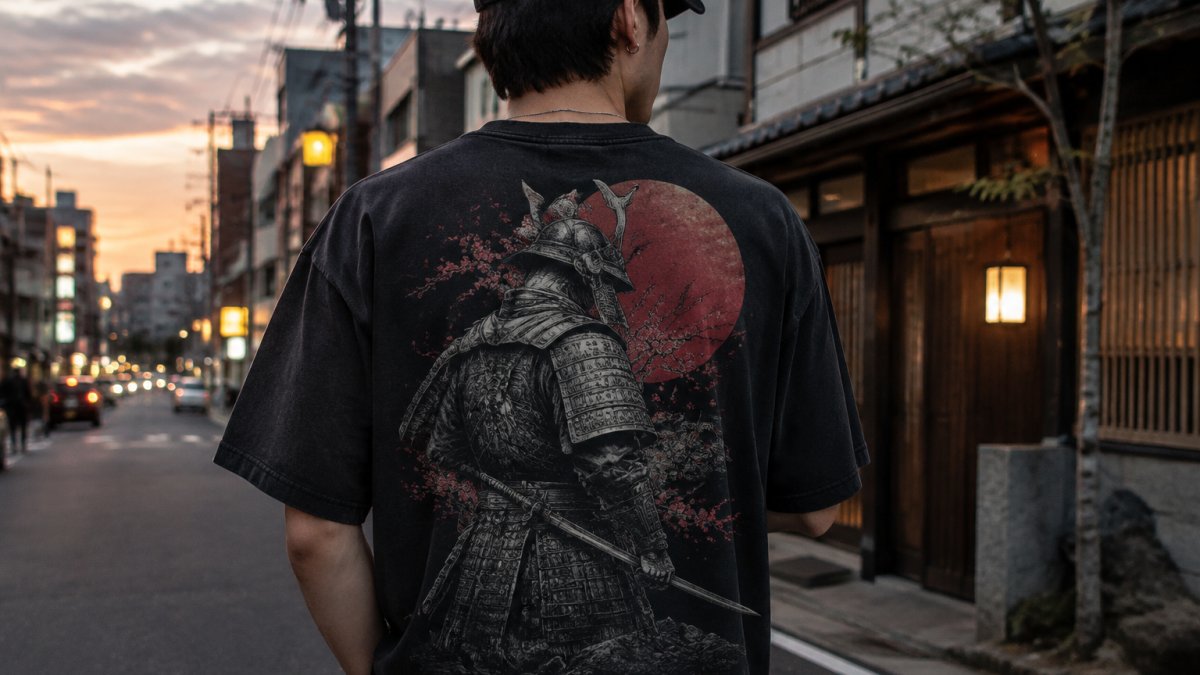
Judging Print Detail Up Close
Print detail is where authenticity shows up close. Crisp edges, consistent ink coverage, and fine linework that survives a zoom test all signal a printer who cared. Blurry edges or faded gradients at the seams signal the opposite.
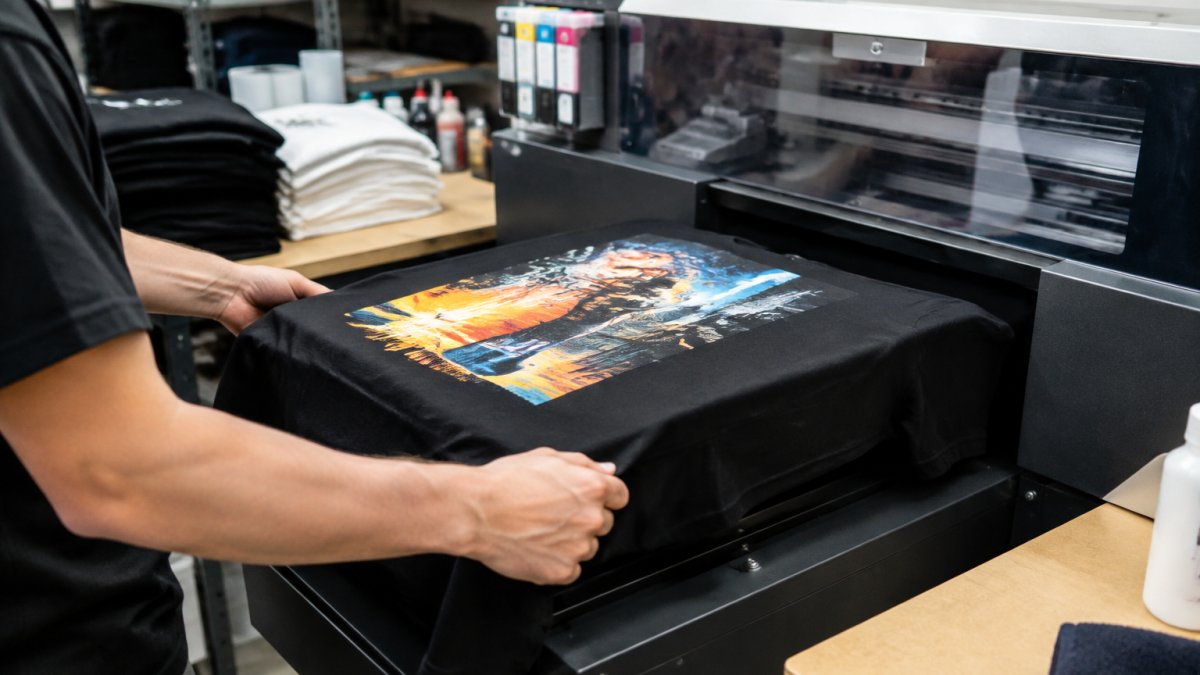
How the graphic is applied matters here. Direct-to-garment (DTG) printing lays ink directly into the cotton fibers and holds fine detail well on a smooth, dense surface.
When you evaluate a print, check these points:
- Edge sharpness, outlines should be clean, not feathered.
- Gradient smoothness, shading should step gradually, not band into visible stripes.
- Coverage at seams, ink should not thin out or crack where the print crosses a seam.
- Detail retention, small elements like eyes, lacing, or text should stay legible.
We print our graphics with DTG.
Why an Oversized Heavyweight Graphic T-Shirt Holds Artwork Better
An oversized heavyweight graphic T-shirt gives print artwork a stable surface.
Construction matters as much as weight. Our tees use shoulder-to-shoulder neck tape, double-needle stitched necks, and 1-inch double-needle hems.
The trade-off is real, though.
Graphic T-Shirt Fabric Weight Guide: What GSM and Ounces Tell You
Fabric weight is measured in GSM (grams per square meter) or ounces per square yard, and it tells you how dense the cotton is.
Here is how the common ranges compare in practice:
| Fabric Weight | Feel | Print Behavior | Best For |
|---|---|---|---|
| Under 5 oz | Light, drapey | Ink distorts with stretch | Layering, warm weather |
| 5-6 oz | Midweight, soft | Good on simple graphics | Everyday basics |
| 7-8 oz | Dense, structured | Holds fine detail well | Statement back prints |
| 9 oz and up | Very stiff | Excellent structure | Heavy workwear styling |
Our tees sit at 7.5 oz, or 245-255 GSM. If you want to learn how to judge premium heavyweight cotton beyond the number on the label, read our fabric identification guide.
Watch out: a high GSM number on a poorly constructed shirt still means a collar that stretches out and hems that pucker. Weight is one signal among several.
Fit and Sizing Across Body Types
Fit is where most online tee purchases go wrong. A relaxed, oversized cut with a slight drop shoulder looks intentional on some frames and sloppy on others. The difference is usually one size, not the shirt itself. This section gives you a measurement-based method you can repeat for any brand.
Measure a Shirt You Already Own
The most reliable sizing tool is a tee in your closet that fits the way you want. Lay it flat and measure:
- Chest, armpit to armpit, straight across.
- Body length, from the highest point of the shoulder to the bottom hem.
- Shoulder, seam to seam across the top of the back.
- Sleeve, from the shoulder seam to the sleeve hem.
Write those four numbers down. Then compare them to the size chart of the shirt you are considering. Do not assume your usual size carries over from other brands; a relaxed cut from one maker can match a different labeled size from another.
Reading a Size Chart Like a Buyer
A useful size chart lists garment measurements, not just body measurements. Garment measurements tell you how the shirt is actually cut. Body measurements tell you who it is designed to fit. When both are present, compare your own body measurements to the body column and your favorite tee's flat measurements to the garment column.
Our tees run S through 7XL. For detailed measurements and fit notes, use our premium heavyweight tees size guide.
Fit by Body Type
A relaxed, oversized cut with a slight drop shoulder changes how proportions read.
- Broad shoulders or athletic build: size for the shoulder seam first, then confirm chest room. A drop shoulder that sits too far down the arm can make the frame look narrower than it is.
- Long torso: check body length before anything else.
- Shorter frame: a boxy cut can overwhelm the leg line. Sizing down one step often keeps the relaxed look without losing proportion.
- Between sizes: size down for a cleaner silhouette, up for a boxier look. Decide which you want before you order.
The Shrinkage Question
Shrinkage depends on fiber, construction, and how you wash and dry. Use the care label and your own wash routine as the guide. When in doubt, compare the garment measurements to a tee you already own and account for the fit you want after washing, not just out of the bag.
Watch out: a size chart that lists only body measurements, with no garment measurements, leaves you guessing at how the shirt is actually cut. Ask for flat measurements before you commit.
How to Style an Oversized Graphic T-Shirt Without Looking Sloppy
Styling an oversized graphic tee comes down to balancing volume. A boxy top needs a cleaner bottom half, or the whole outfit reads as shapeless.
- Pair with slim or straight jeans to offset the relaxed top
- Half-tuck the front hem to define the waist
- Layer a flannel or moto jacket over the top for structure
- Keep pants full-length; cropped hems plus a boxy tee shortens the leg line
- Let the back print be the focal point and keep accessories minimal
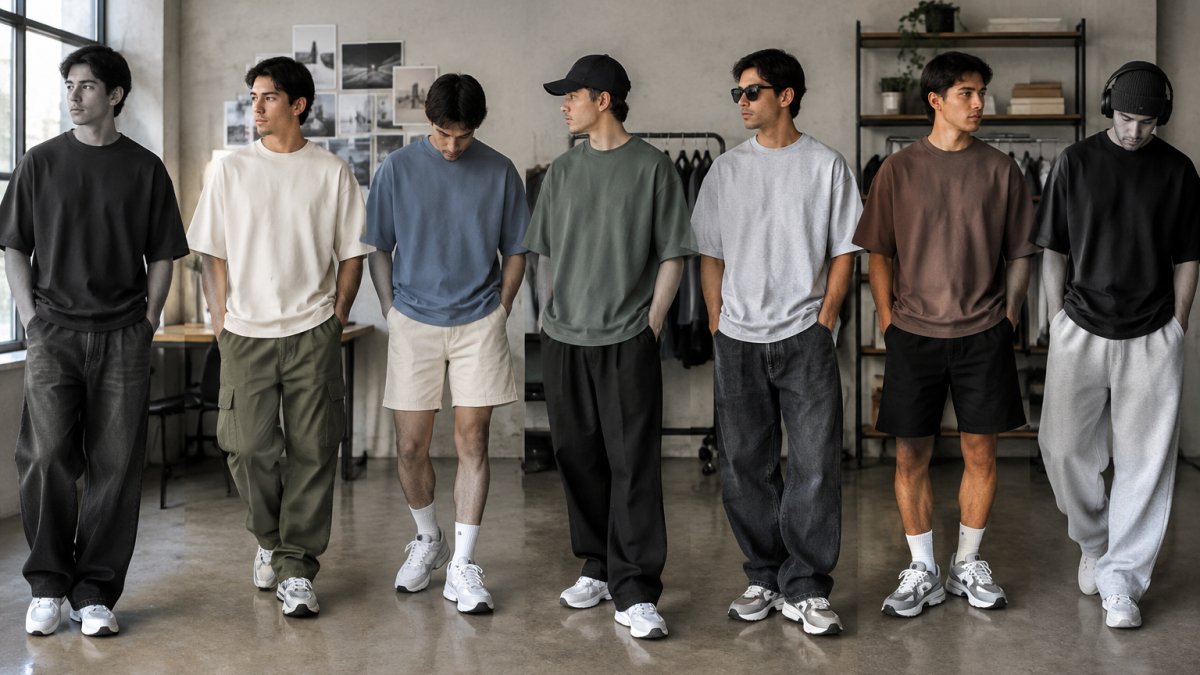
Denim is the natural partner for a dark samurai back print. Worn indigo or black straight-leg jeans keep the urban-grunge energy intact. If you want deeper outfit formulas, our guide to styling oversized heavyweight shirts breaks down full looks.
DTG Printed Graphic T-Shirt Care: Washing and Longevity
DTG printed graphic T-shirt care is simpler than most people expect, but the details matter. Turn the shirt inside out, wash cold at 30°C or 90°F, and tumble dry on no heat.
Our care label is specific for a reason:
- Machine wash cold, max 30°C or 90°F
- Non-chlorine bleach only, as needed
- Tumble dry with no heat
- Do not iron
- Do not dry clean
If you must press out wrinkles, iron the inside of the shirt only, never the print. For a safe method, follow this step-by-step ironing guide for screen-printed shirts; the same low-heat, inside-out logic protects DTG prints.
Shop the Samurai Drop at AW3SOME
Buying a samurai graphic t-shirt is a decision about artwork, fabric, and fit, in that order of visibility and that order of importance reversed. Get the fabric and construction right, confirm the print method, size from the chart, and the design takes care of itself.
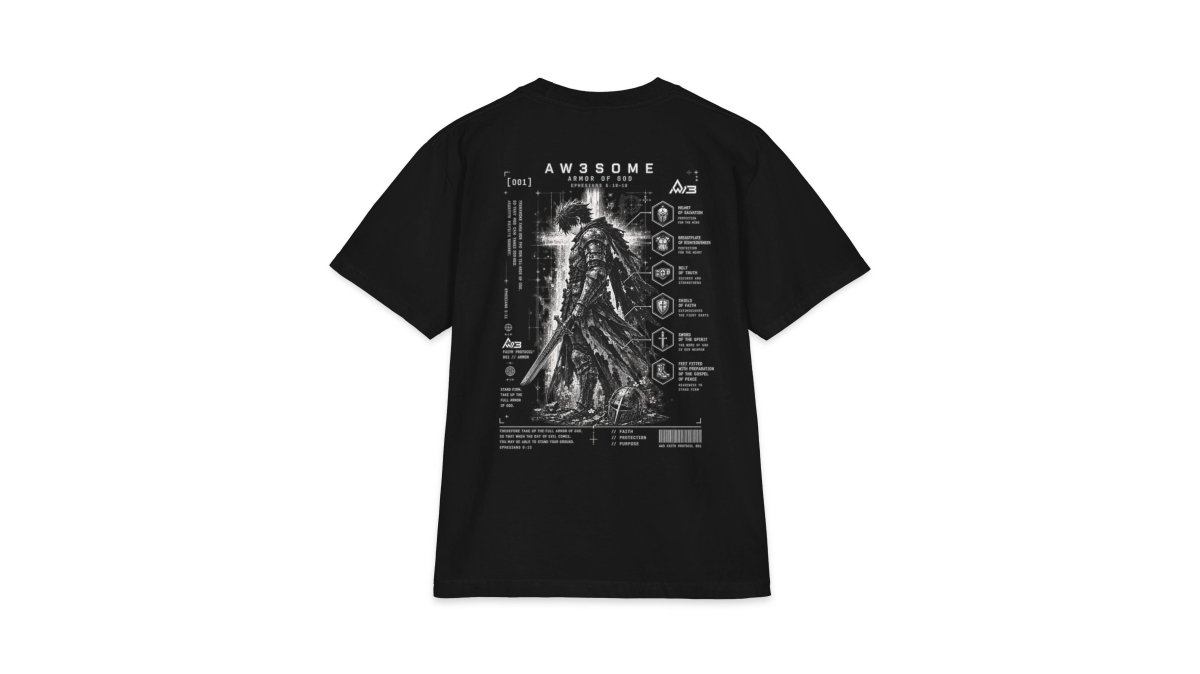
Our Dark Samurai Illustration Back Print tee features 7.5 oz heavyweight cotton, an oversized relaxed fit with a slight drop shoulder, a stretch-proof collar, and original back artwork. If you are ready to see it, shop the Dark Samurai graphic tee and check the size chart before you order.

The gap between a tee you wear weekly and one that fades into the drawer is almost always fabric and construction, not the graphic.
Frequently Asked Questions
What should I look for when buying a samurai graphic T-shirt?
Check four things: the fabric weight and fiber content, the fit and size chart, the print method, and whether the artwork is original. Our tees are 245-255 GSM (7.5 oz) cotton. Look for reinforced neck tape and double-needle hems, which help the shirt keep its shape. Ask whether the design is DTG printed and how it should be washed, because care instructions affect how long the graphic lasts.
How should a samurai graphic T-shirt fit?
Decide between a true-to-size fit and an oversized one before you order. An oversized heavyweight graphic T-shirt with a slight drop shoulder should sit relaxed across the chest and hit around mid-hip, not past the thigh. Measure a tee you already like, compare it to the brand's size chart, and size down if you want a closer fit.
How do I wash a graphic T-shirt without damaging the print?
Turn the shirt inside out, wash cold (max 30C or 90F), and skip chlorine bleach unless the care label allows it. Tumble dry on no heat or hang dry, and do not iron directly over the graphic. Follow the label on your specific tee, since blends like 90/10 or 50/50 cotton-poly can behave differently.
How can I tell whether a T-shirt graphic is well made?
Look at line sharpness, edge definition, and whether the print sits flat against the fabric without cracking or stiff patches. Check that the print is centered and that the shirt was quarter-turned to remove the center crease. Ask what print method was used and read the care instructions, since both affect how the graphic holds up.